“The world ultimately is what we say it is.””
Quotes by Friedrich Strauss
“With instinctive unanimity, they hate all firmitas because it bears witness to a healthiness quite different from theirs, and seek to throw suspicion on firmitas on conciseness, on fiery energy of movement, on abundant and delicate play of the muscles. They have agreed together to invert the nature and names of things and henceforth to speak of health where we see weakness, of sickness and tension where we encounter true health. That is how David Strauss comes to be accounted a ‘classic’.””
Untimely Meditations
“criticism can be reduced to one proposition: modern man has been trying to preserve biblical morality while abandoning biblical faith. That is impossible.””
The Rebirth of Classical Political Rationalism: An Introduction to the Thought of Leo Strauss
“O age! O learning! It is a pleasure to live, my Wilibald, if not yet to settle down to repose. Learning is flourishing, minds are awakening. Be hanged, barbarism, and make up thy mind to be banished.””
“Kant bases upon the fact, that in all religions old and new which are partly comprised in sacred books, intelligent and well-meaning teachers of the people have continued to explain them, until they have brought their actual contents into agreement with the universal principles of morality. Thus did the moral philosophers amongst the Greeks and Romans with their fabulous legends; till at last they explained the grossest polytheism as mere symbolical representations of the attributes of the one divine Being, and gave a mystical sense to the many vicious actions of their gods, [...] in order to bring the popular faith, which it was not expedient to destroy, into agreement with the doctrines of morality. The later Judaism and Christianity itself he thinks have been formed upon similar explanations, occasionally much forced, but always directed to objects undoubtedly good and necessary for all men. Thus the Mahometans gave a spiritual meaning to the sensual descriptions of their paradise, and thus the Hindoos, [...] interpreted their Vedas. In like manner, [...] the Christian Scriptures of the Old and New Testament, must be interpreted throughout in a sense which agrees with the universal practical laws of a religion of pure reason””
The life of Jesus critically examined / by Dr. David Friedrich Strauss. Tr. from the 4th German ed. by George Eliot. 1913 [Leather Bound]
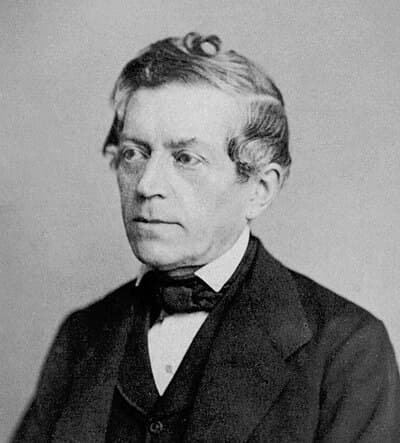 Friedrich Strauss
Friedrich Strasser was an Austrian painter and revolutionary figure known for his involvement in the political upheaval of 1848. Born in Austria, he initially pursued a career in painting, where he de...