William Oughtred: A Great Seventeenth-Century Teacher of Mathematics
1916
William Oughtred: A Great Seventeenth-Century Teacher of Mathematics
1916
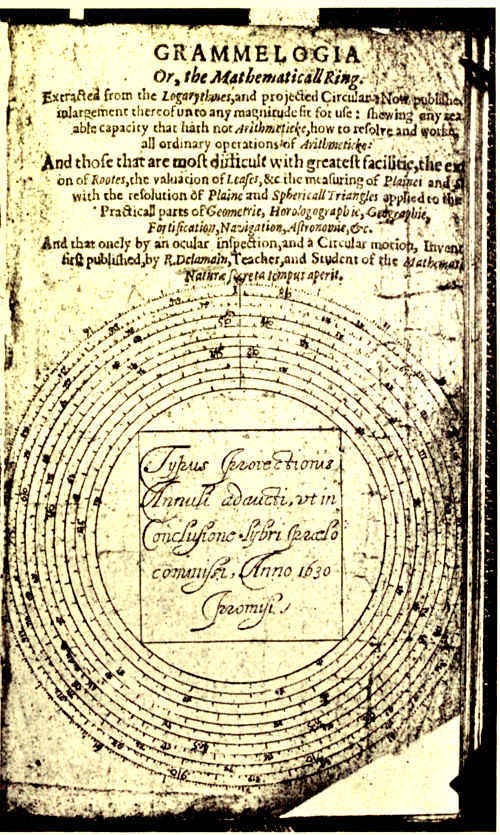
Before calculators, before computers, there was the slide rule: a deceptively simple device that powered the scientific and industrial revolutions for over three centuries. This is the story of its inventor, William Oughtred, a 17th-century English clergyman who pursued mathematics not as a profession but as an obsessive private passion alongside his duties as a country vicar. Florian Cajori's 1916 biography resurrects a figure often relegated to footnotes, revealing a man who invented not only the slide rule but also the multiplication sign (×), the double colon (::) for proportion, and numerous other symbols that still pepper mathematical notation today. Born at Eton, educated at Cambridge, Oughtred spent his life at the intersection of Reformation England and the emerging scientific revolution, teaching generations of students at a time when mathematics was transitioning from a gentleman's hobby to a fundamental discipline. Cajori paints a vivid picture of Oughtred's world: the intellectual ferment of early modern England, the competing claims to his inventions, and the quiet determination of a man who saw the beauty in numbers and spent his life making that beauty accessible to others. The book endures not merely as biography but as a meditation on how one person's obsession can reshape human thought.
Editions
Link to this book
Add a free, dofollow link to Lex on your blog, forum, syllabus, or reading list.

<a href="https://lex-books.com/book/william-oughtred-a-great-seventeenth-century-teacher-of-mathematics-3604e71e-225c-4a47-8745-757d7d2ddc47"><img src="https://lex-books.com/badges/read-on-lex.svg" alt="Read William Oughtred: A Great Seventeenth-Century Teacher of Mathematics by Florian Cajori free on Lex" width="160" height="40"></a>[](https://lex-books.com/book/william-oughtred-a-great-seventeenth-century-teacher-of-mathematics-3604e71e-225c-4a47-8745-757d7d2ddc47)[url=https://lex-books.com/book/william-oughtred-a-great-seventeenth-century-teacher-of-mathematics-3604e71e-225c-4a47-8745-757d7d2ddc47][img]https://lex-books.com/badges/read-on-lex.svg[/img][/url]Read William Oughtred: A Great Seventeenth-Century Teacher of Mathematics by Florian Cajori free on Lex: https://lex-books.com/book/william-oughtred-a-great-seventeenth-century-teacher-of-mathematics-3604e71e-225c-4a47-8745-757d7d2ddc47Cite this book
Reading this edition for a paper or guide? Copy a citation.
Cajori, Florian. William Oughtred: A Great Seventeenth-Century Teacher of Mathematics. Lex, lex-books.com/book/william-oughtred-a-great-seventeenth-century-teacher-of-mathematics-3604e71e-225c-4a47-8745-757d7d2ddc47.Cajori, F. (1916). William Oughtred: A Great Seventeenth-Century Teacher of Mathematics. Lex. https://lex-books.com/book/william-oughtred-a-great-seventeenth-century-teacher-of-mathematics-3604e71e-225c-4a47-8745-757d7d2ddc47Cajori, Florian. William Oughtred: A Great Seventeenth-Century Teacher of Mathematics. Lex. https://lex-books.com/book/william-oughtred-a-great-seventeenth-century-teacher-of-mathematics-3604e71e-225c-4a47-8745-757d7d2ddc47.