Mahmud Sami al-Barudi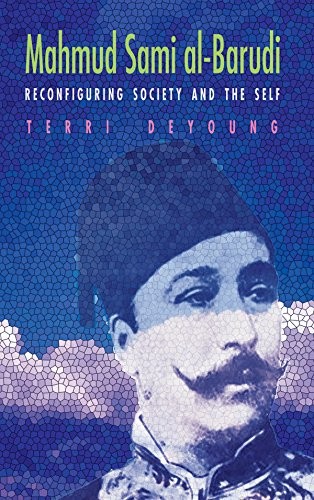
Mahmud Sami al-Barudi
About this book
To explore the life of Mahmud Sami al-Barudi is to gain a nuanced perspective on the many facets-the perils and promises-of change in the rapidly modernizing Egypt of the nineteenth century. Al-Barudi, sole scion of a Turko-Circassian elite family that clung precariously to a legacy of position and power, turned his military education into a government career that ended with his elevation to the office of prime minister. He served briefly before the British invasion in 1882 put an end to Egypt's independence for seventy years. As prime minister, al-Barudi focused on drafting and passing into law Egypt's first constitution, an achievement that was summarily swept aside by the British occupation. Similarly, the prime minister's efforts to modernize and improve the educational system were systematically undermined by the policies of colonial rule in the 1880s and 1890s. Although his reforms ultimately failed, al-Barudi was recognized among his contemporaries as the most consistent supporter of liberalism and eventually democratic representation and constitutionalism. For his boldness, he paid a price. He was exiled by the British to Ceylon for seventeen years and returned to Egypt in 1901 as a blind, prematurely aged, and broken man. Even before he made an impact as a political leader, al-Barudi had made a name for himself as the most original and adventurous poet of his generation. DeYoung charts the development of al-Barudi's poetry through his youth, his career in government, his philosophical and elegiac reflections while in exile, and his return to Egypt at the beginning of a new century. Connecting the themes found in his more influential poems-among the more than 400 lyrics he composed-to the turbulent events of his political life and to his equally fierce desire to innovate artistically throughout his literary career, DeYoung offers a vivid portrait of one of the most influential pioneers of Arabic poetry.
Details
- OL Work ID
- OL20304562W
Subjects
Egypt, biographyCriticism and interpretationArab PoetsBiography