Someone else's house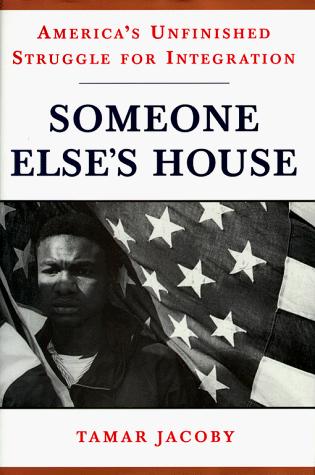
Someone else's house1998
About this book
Thirty-five years after the 1963 March on Washington, blacks and whites are still trying to achieve Martin Luther King, Jr.'s historic dream of racial inclusion. In Someone Else's House, Tamar Jacoby asks what happened to the King dream, calling the nation back to its most hopeful and promising ideal of race relations.
Moving beyond the stale blame game of left and right, Jacoby uses history to show what's worked and what hasn't. Her story of the unfinished struggle for integration leads through the volatile worlds of New York in the 1960s, the center of liberal idealism about race; Detroit in the 1970s, under the city's first black mayor, Coleman Young; and Atlanta in the 1980s and 1990s, ruled by a coalition of white businessmen and black politicians.
Jacoby's conclusions are as straightforward and clear as her history is nuanced. The ideals of the early civil rights movement - integration, forgiveness and a sense of one community based not on color but on shared national purposes - remain the only possible American answer for race relations. But if we can only listen to history, Jacoby tells us, we can still find our way back to that path.
Details
- First published
- 1998
- OL Work ID
- OL1847298W
Subjects
Race relationsAfrican AmericansSegregationHistoryNoirs américainsRelations interethniquesFallstudiensammlungRassenintegrationGeschichte 1960-1997Etnische betrekkingenSégrégationEtudes de CasAfro-Americans