Manhood in America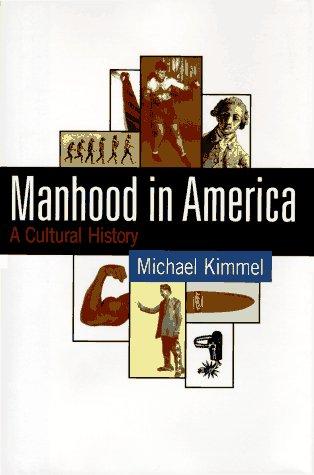
Manhood in America1996
About this book
In a time when psychologists are rediscovering Darwin, and much of our social behavioral is being reduced to ancient, hard-wired patterns, Michael Kimmel's history of manhood in America comes as a much needed reminder that our behavior as men and women is anything but stable and fixed.
Kimmel's authoritative, entertaining, and wide-ranging history of men in America demonstrates that manhood has meant very different things in different eras. Drawing on advice books, magazines, political pamphlets, and popular novels and films, he makes two surprising claims: First, manhood is homosocial - that is, men need to prove themselves to each other, not to women. Second, definitions of manliness have evolved in response to women's movements. When women act, men react.
Originally, manliness was an internal virtue and a democratic ideal - British men were viewed as fops, and American men had to be independent, honest, and responsible. By the 1890s, however, manhood changed to masculinity, something that had to be constantly proven through the new explosion of sports, fraternities, and fashion. Finally, in 1936, Lewis Terman, the creator of the IQ test, developed an "M-F" test to analyze adolescents' masculinity and femininity.
Until well into the 1960s, the test penalized boys who preferred to draw flowers instead of forests, or who knew that a teacup was used for drinking tea. But just as Terman's categories and questions seem outdated to us, so will our own standards seem temporary to our successors.
Details
- First published
- 1996
- OL Work ID
- OL2947913W
Subjects
MenPsychologyMasculinityMen, psychologySocial sciencesMen's studies