American visions of Europe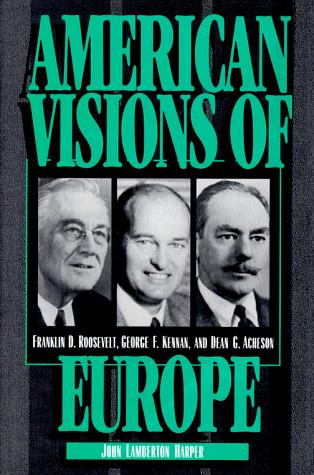
About this book
The problem of internecine conflict in Europe dominated the thoughts of U.S. statesmen during the four decades after 1914. This study in the varieties of modern American experience of Europe traces the development of three distinct personal answers to the question of what to do with Europe: Roosevelt's partial internationalism, aiming at the retirement of Europe from world politics while avoiding American entanglement; Kennan's partial isolationism, aspiring to restore Europe's centrality and autonomy through temporary American engagement; and Acheson's accommodating interventionism, establishing the United States as a permanent power in Europe at the behest of European and U.S. interests.
Details
- OL Work ID
- OL3948220W
Subjects
EuropeUnited StatesRoosevelt, Franklin D. (Franklin Delano), 1882-1945Kennan, George Frost, 1904-Foreign relationsUnited states, foreign relations, europeEurope, foreign relationsKennan, george f. (george frost), 1904-2005Acheson, dean, 1893-1971United states, foreign relations, 20th centuryDiplomatic relationsAußenpolitikEuropabild