Twenty-Five Years of the Philadelphia Orchestra, 1900-1925
1925
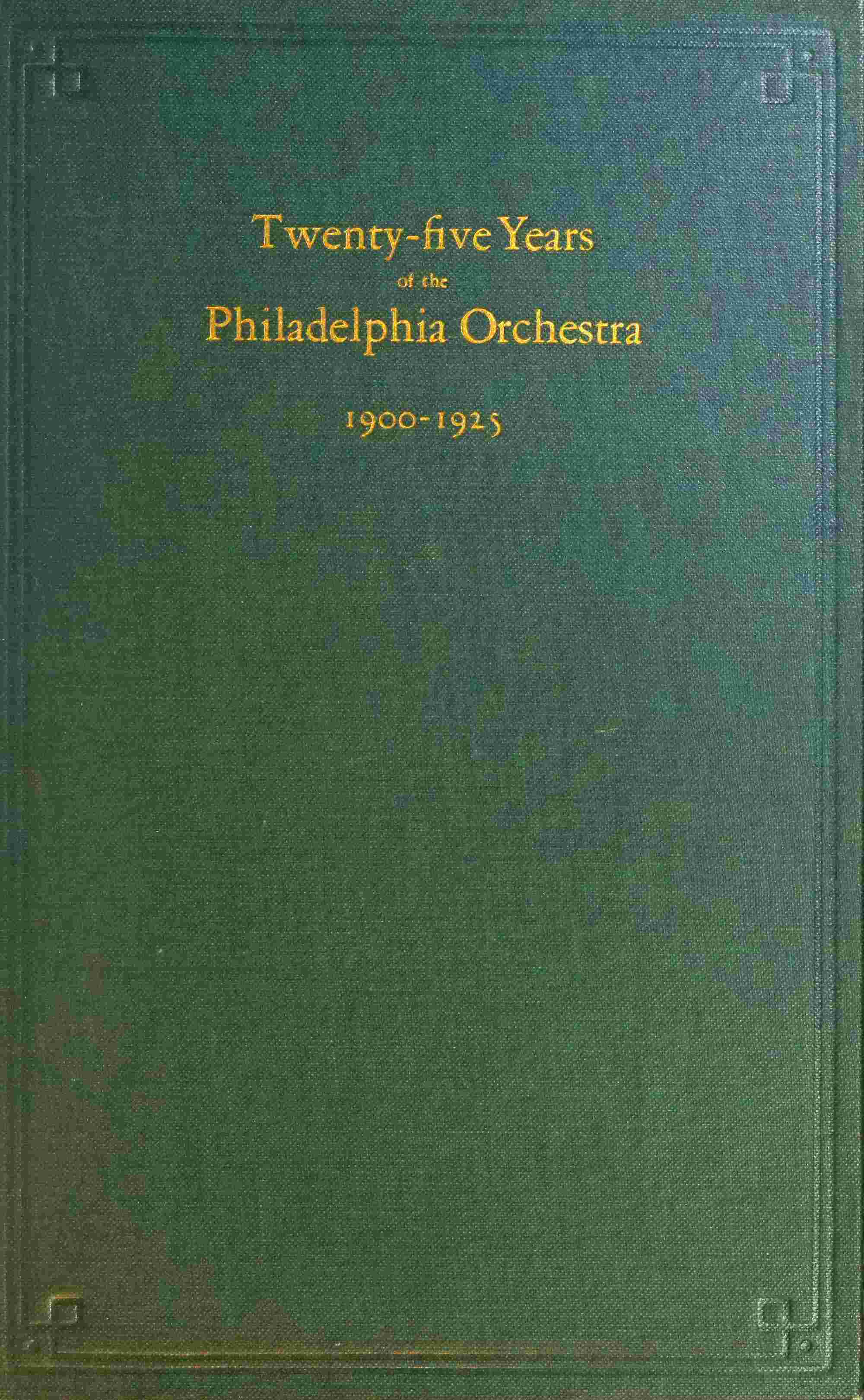
Twenty-Five Years of the Philadelphia Orchestra, 1900-1925
1925
This is the firsthand account of one of American music's most improbable success stories. Frances Anne Wister, writing in 1925 with intimate access to the orchestra's founders, traces the meteoric rise of the Philadelphia Orchestra from a daring experiment in 1900 to one of the world's great ensembles. The narrative begins not in 1900 but in colonial Philadelphia, with church music and the first public concerts, weaving through instrument makers, teachers, and the Musical Fund Society that laid the cultural groundwork. Then comes the turning point: the discovery of German conductor Fritz Scheel playing at Woodside Park, the benefit concerts that proved a professional orchestra could work, and the leap of faith that created the orchestra against formidable odds. Wister profiles the key figures who made it possible and documents the constant struggle: steep deficits, innovative educational outreach like the 1903 Beethoven Cycle with lectures, and the gamble of hosting Richard Strauss. For anyone curious about how American cultural institutions were built, how a city discovered it could have a world-class orchestra, and what it took to make art survive in a young nation.
Editions
Link to this book
Add a free, dofollow link to Lex on your blog, forum, syllabus, or reading list.

<a href="https://lex-books.com/book/twenty-five-years-of-the-philadelphia-orchestra-1900-1925-6dae3286-7cbe-4c9f-ae92-2f8b71185d94"><img src="https://lex-books.com/badges/read-on-lex.svg" alt="Read Twenty-Five Years of the Philadelphia Orchestra, 1900-1925 by Frances Anne Wister free on Lex" width="160" height="40"></a>[](https://lex-books.com/book/twenty-five-years-of-the-philadelphia-orchestra-1900-1925-6dae3286-7cbe-4c9f-ae92-2f8b71185d94)[url=https://lex-books.com/book/twenty-five-years-of-the-philadelphia-orchestra-1900-1925-6dae3286-7cbe-4c9f-ae92-2f8b71185d94][img]https://lex-books.com/badges/read-on-lex.svg[/img][/url]Read Twenty-Five Years of the Philadelphia Orchestra, 1900-1925 by Frances Anne Wister free on Lex: https://lex-books.com/book/twenty-five-years-of-the-philadelphia-orchestra-1900-1925-6dae3286-7cbe-4c9f-ae92-2f8b71185d94Cite this book
Reading this edition for a paper or guide? Copy a citation.
Wister, Frances Anne. Twenty-Five Years of the Philadelphia Orchestra, 1900-1925. Lex, lex-books.com/book/twenty-five-years-of-the-philadelphia-orchestra-1900-1925-6dae3286-7cbe-4c9f-ae92-2f8b71185d94.Wister, F. A. (1925). Twenty-Five Years of the Philadelphia Orchestra, 1900-1925. Lex. https://lex-books.com/book/twenty-five-years-of-the-philadelphia-orchestra-1900-1925-6dae3286-7cbe-4c9f-ae92-2f8b71185d94Wister, Frances Anne. Twenty-Five Years of the Philadelphia Orchestra, 1900-1925. Lex. https://lex-books.com/book/twenty-five-years-of-the-philadelphia-orchestra-1900-1925-6dae3286-7cbe-4c9f-ae92-2f8b71185d94.