Trial of Susan B. Anthony
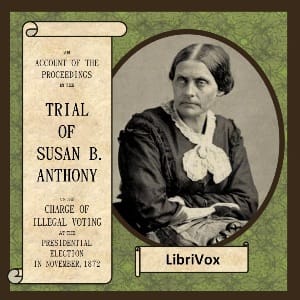
In 1872, Susan B. Anthony and thirteen other women walked into a polling station in Rochester, New York, and cast ballots in a federal election. They knew it was illegal. They did it anyway. Within weeks, they were under arrest, facing charges that could send them to prison, and the case would become a constitutional crisis that still echoes two centuries later. This is the official transcript of Anthony's 1873 trial, complete with her devastating cross-examination of the prosecution's witnesses and her own impassioned speech to the court, in which she declared that "resistance to tyranny is obedience to God." The prosecution argued that women were not citizens under the 14th Amendment; Anthony argued that citizenship preceded voting, not the other way around. The judge refused to let the jury render a verdict, and convicted her himself. The precedent was lost, but the argument was won. This pamphlet, published in 1874 by the Rochester Democrat & Chronicle, captures a moment when women refused to wait for permission to participate in democracy. It is foundational American civil disobedience, a legal document that reads like theater, and a reminder that the right to vote was never given it was taken.
Editions

Link to this book
Add a free, dofollow link to Lex on your blog, forum, syllabus, or reading list.

<a href="https://lex-books.com/book/trial-of-susan-b-anthony-2d3b4830-e86f-4e01-9fae-d54970fbaa25"><img src="https://lex-books.com/badges/read-on-lex.svg" alt="Read Trial of Susan B. Anthony by Anonymous free on Lex" width="160" height="40"></a>[](https://lex-books.com/book/trial-of-susan-b-anthony-2d3b4830-e86f-4e01-9fae-d54970fbaa25)[url=https://lex-books.com/book/trial-of-susan-b-anthony-2d3b4830-e86f-4e01-9fae-d54970fbaa25][img]https://lex-books.com/badges/read-on-lex.svg[/img][/url]Read Trial of Susan B. Anthony by Anonymous free on Lex: https://lex-books.com/book/trial-of-susan-b-anthony-2d3b4830-e86f-4e01-9fae-d54970fbaa25Cite this book
Reading this edition for a paper or guide? Copy a citation.
Anonymous. Trial of Susan B. Anthony. Lex, lex-books.com/book/trial-of-susan-b-anthony-2d3b4830-e86f-4e01-9fae-d54970fbaa25.Anonymous (n.d.). Trial of Susan B. Anthony. Lex. https://lex-books.com/book/trial-of-susan-b-anthony-2d3b4830-e86f-4e01-9fae-d54970fbaa25Anonymous. Trial of Susan B. Anthony. Lex. https://lex-books.com/book/trial-of-susan-b-anthony-2d3b4830-e86f-4e01-9fae-d54970fbaa25.