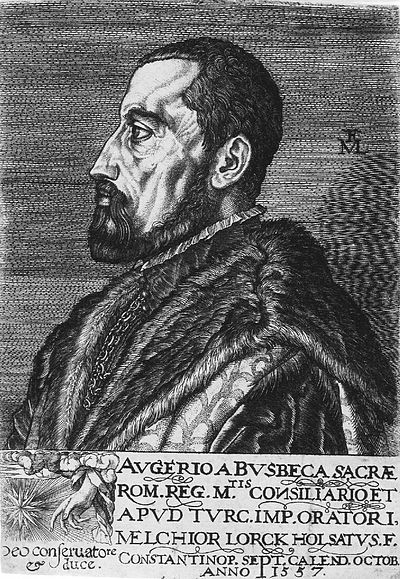
Travels into Turkey
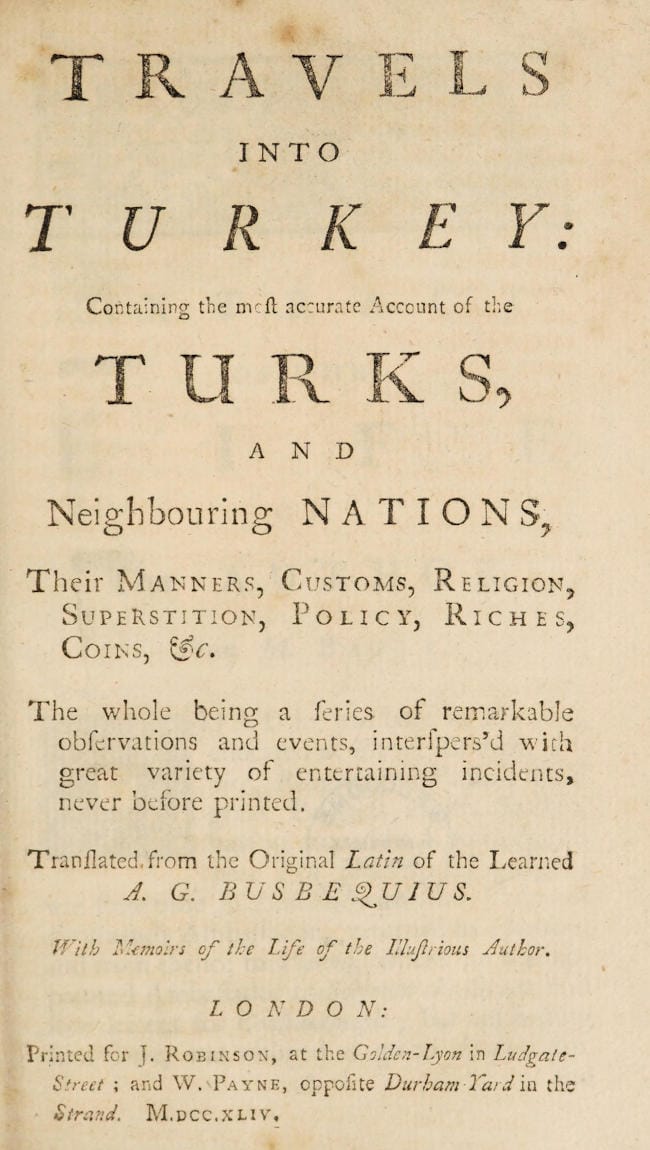
The voice is what stays with you. Busbecq writes not as a tourist but as a diplomat caught between empires, and his account crackles with the tension of someone who understood that the Ottoman Empire was not some exotic curiosity but a civilization operating at least at parity with Europe, often surpassing it. He arrived in Constantinople in 1554 as the Holy Roman Emperor's ambassador and found himself transfixed by what he saw: a society organized with a precision that put European chaos to shame, a military that moved as one body, a court where power was performed with meticulous ceremony. Yet Busbecq is no mere admirereporteur. His genius lies in what he does not say, in the unease that creeps through his meticulous observations. He watches the Turks and sees, with growing discomfort, what Europe lacks. This is not Orientalismavant la lettre; it is something more unsettling: a Western writer quietly interrogating his own civilization's complacency through the mirror of its rival. One of the earliest substantial Western accounts of the Ottoman Empire, this is essential reading for anyone who wants to understand how Europe first faced its nemesis.
Editions
Link to this book
Add a free, dofollow link to Lex on your blog, forum, syllabus, or reading list.

<a href="https://lex-books.com/book/travels-into-turkey-38051a32-6396-4ada-a366-4071f2f512a5"><img src="https://lex-books.com/badges/read-on-lex.svg" alt="Read Travels into Turkey by Ogier Ghislain de Busbecq free on Lex" width="160" height="40"></a>[](https://lex-books.com/book/travels-into-turkey-38051a32-6396-4ada-a366-4071f2f512a5)[url=https://lex-books.com/book/travels-into-turkey-38051a32-6396-4ada-a366-4071f2f512a5][img]https://lex-books.com/badges/read-on-lex.svg[/img][/url]Read Travels into Turkey by Ogier Ghislain de Busbecq free on Lex: https://lex-books.com/book/travels-into-turkey-38051a32-6396-4ada-a366-4071f2f512a5Cite this book
Reading this edition for a paper or guide? Copy a citation.
Busbecq, Ogier Ghislain de. Travels into Turkey. Lex, lex-books.com/book/travels-into-turkey-38051a32-6396-4ada-a366-4071f2f512a5.Busbecq, O. G. D. (n.d.). Travels into Turkey. Lex. https://lex-books.com/book/travels-into-turkey-38051a32-6396-4ada-a366-4071f2f512a5Busbecq, Ogier Ghislain de. Travels into Turkey. Lex. https://lex-books.com/book/travels-into-turkey-38051a32-6396-4ada-a366-4071f2f512a5.