Tragedy of Mariam
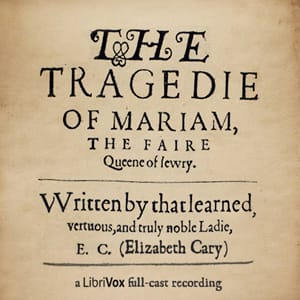
The Tragedy of Mariam (1613) is the first original drama written in English by a woman, and it remains a stunning reclamation of voice in an era that granted women none. Elizabeth Cary drew on Josephus's Jewish histories to construct a closet drama that unfolds in the shadow of Herod the Great's palace, where Mariam waits for news of her husband's fate in Octavius's war. She has every reason to want Herod dead: he murdered her brother and grandfather to secure his throne. Yet when the news arrives that Herod has fallen, Mariam discovers her liberation is not so simple. She is caught between justified rage, contradictory loyalty, and the crushing weight of being a woman whose existence was defined entirely by her husband's will. When Herod unexpectedly returns, Mariam must face him with a terrible choice: speak the truth of her hatred and be destroyed, or bury it and survive. This is drama as psychological archaeology, a woman forced to examine the contradictions of love, duty, and selfhood in a world designed to erase her. Four centuries later, it retains its power as a foundational act of literary rebellion.
Editions

Link to this book
Add a free, dofollow link to Lex on your blog, forum, syllabus, or reading list.

<a href="https://lex-books.com/book/tragedy-of-mariam-05e6b674-1235-427c-98ba-74df99dc9ab6"><img src="https://lex-books.com/badges/read-on-lex.svg" alt="Read Tragedy of Mariam by Elizabeth Cary free on Lex" width="160" height="40"></a>[](https://lex-books.com/book/tragedy-of-mariam-05e6b674-1235-427c-98ba-74df99dc9ab6)[url=https://lex-books.com/book/tragedy-of-mariam-05e6b674-1235-427c-98ba-74df99dc9ab6][img]https://lex-books.com/badges/read-on-lex.svg[/img][/url]Read Tragedy of Mariam by Elizabeth Cary free on Lex: https://lex-books.com/book/tragedy-of-mariam-05e6b674-1235-427c-98ba-74df99dc9ab6Cite this book
Reading this edition for a paper or guide? Copy a citation.
Cary, Elizabeth. Tragedy of Mariam. Lex, lex-books.com/book/tragedy-of-mariam-05e6b674-1235-427c-98ba-74df99dc9ab6.Cary, E. (n.d.). Tragedy of Mariam. Lex. https://lex-books.com/book/tragedy-of-mariam-05e6b674-1235-427c-98ba-74df99dc9ab6Cary, Elizabeth. Tragedy of Mariam. Lex. https://lex-books.com/book/tragedy-of-mariam-05e6b674-1235-427c-98ba-74df99dc9ab6.