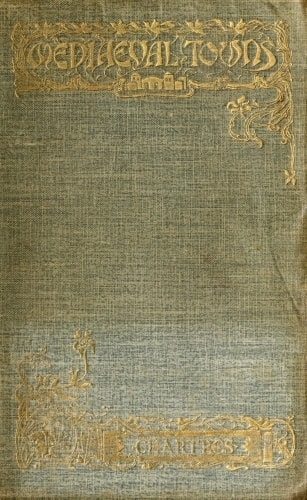
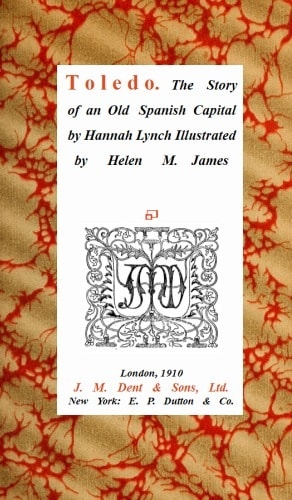
Toledo, the Story of an Old Spanish Capital
1898
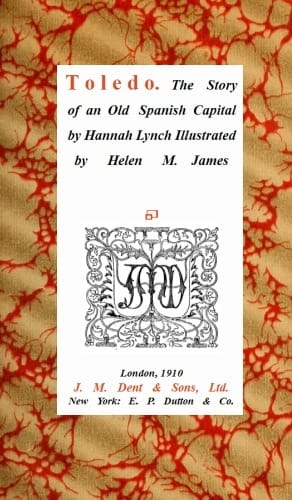
Toledo, the Story of an Old Spanish Capital
1898
Toledo exists in a state of permanent twilight. Perched above the Tagus River, this ancient Spanish capital has witnessed the passing of empires, Roman legions, Visigothic kings, Moorish caliphs, each leaving their imprint on its stone. Hannah Lynch's 1898 portrait captures a city caught between the modern world rushing forward in Madrid just sixty miles distant and the weight of three thousand years of legend. The book traces Toledo's journey through epochs, from its mythical founding tied to biblical figures through its zenith as a center of learning where Christian, Jewish, and Islamic scholars once shared the city's narrow streets. Lynch renders the architecture, the cathedral's Gothic spires, the Alcázar's fortress walls, the synagogues and mosques repurposed into churches, as palimpsests of civilization's layered ambition. Legends surface naturally: tales of enchanted swords, hidden treasures, saints and sorcerers woven through the factual chronology like golden thread through grey wool. For readers who believe cities speak in whispers rather than shouts, who find beauty in melancholy and permanence in stone. This is travel writing before tourism, a love letter to a world that was already vanishing when Lynch wrote it.
Editions
Link to this book
Add a free, dofollow link to Lex on your blog, forum, syllabus, or reading list.

<a href="https://lex-books.com/book/toledo-the-story-of-an-old-spanish-capital-86178bb3-13d8-4499-a88b-807a9cb08605"><img src="https://lex-books.com/badges/read-on-lex.svg" alt="Read Toledo, the Story of an Old Spanish Capital by Hannah Lynch free on Lex" width="160" height="40"></a>[](https://lex-books.com/book/toledo-the-story-of-an-old-spanish-capital-86178bb3-13d8-4499-a88b-807a9cb08605)[url=https://lex-books.com/book/toledo-the-story-of-an-old-spanish-capital-86178bb3-13d8-4499-a88b-807a9cb08605][img]https://lex-books.com/badges/read-on-lex.svg[/img][/url]Read Toledo, the Story of an Old Spanish Capital by Hannah Lynch free on Lex: https://lex-books.com/book/toledo-the-story-of-an-old-spanish-capital-86178bb3-13d8-4499-a88b-807a9cb08605Cite this book
Reading this edition for a paper or guide? Copy a citation.
Lynch, Hannah. Toledo, the Story of an Old Spanish Capital. Lex, lex-books.com/book/toledo-the-story-of-an-old-spanish-capital-86178bb3-13d8-4499-a88b-807a9cb08605.Lynch, H. (1898). Toledo, the Story of an Old Spanish Capital. Lex. https://lex-books.com/book/toledo-the-story-of-an-old-spanish-capital-86178bb3-13d8-4499-a88b-807a9cb08605Lynch, Hannah. Toledo, the Story of an Old Spanish Capital. Lex. https://lex-books.com/book/toledo-the-story-of-an-old-spanish-capital-86178bb3-13d8-4499-a88b-807a9cb08605.