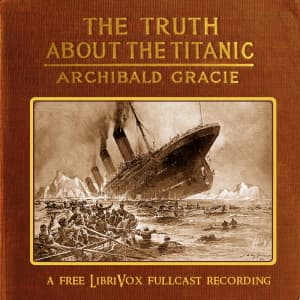
The Truth About the Titanic
1913
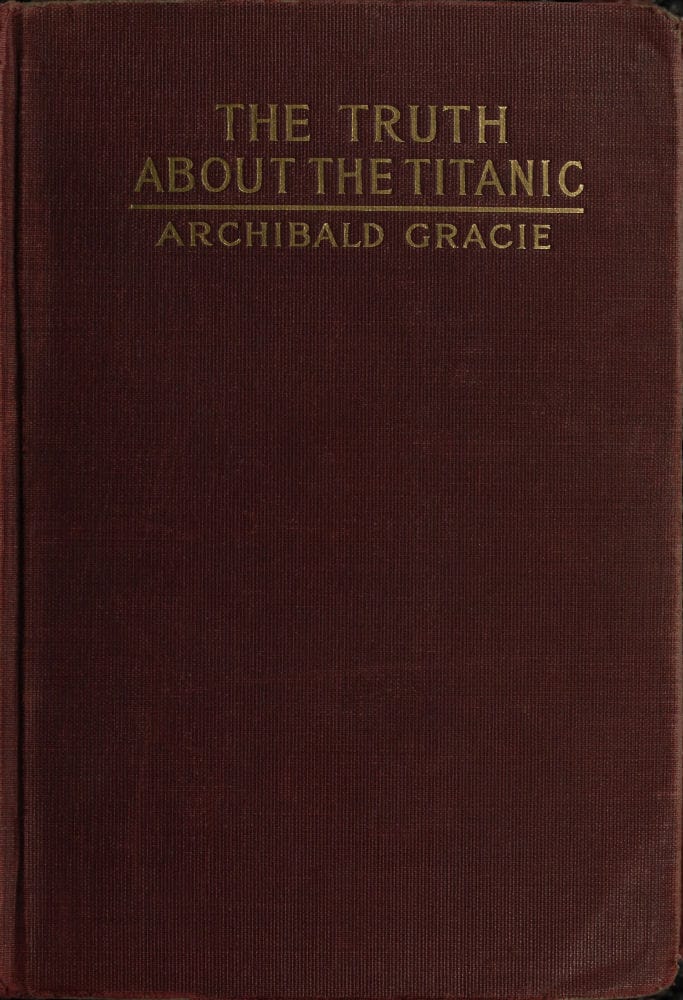
The Truth About the Titanic
1913
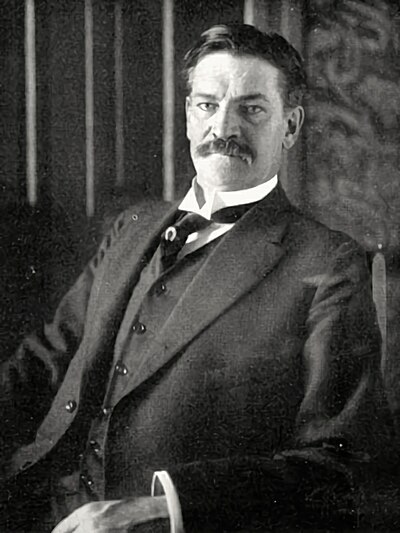
The Truth About the Titanic is not merely a memoir. It is an act of forensic witness, one of the last attempts by a dying man to set the record straight before the myths consumed the truth. Archibald Gracie climbed aboard the Titanic as a first-class passenger seeking adventure. He survived the sinking, but the exposure he suffered that April night would kill him less than a year later. In the months remaining, he undertook an extraordinary project: tracking down survivors, cross-referencing testimonies, and documenting, with almost obsessive precision, exactly what happened in those final hours. He names the dead pulled from the black water. He names the cowards who leapt into lifeboats as women and children watched. He records the final moments of the Strauses and countless others whose stories would otherwise vanish into legend. What emerges is neither hagiography nor sensation. It is the meticulous account of a man who could not rest until the truth was preserved. Walter Lord called this book invaluable for chasing down who went in what boat, but its value extends beyond fact-checking. This is history written in the shadow of death, by someone who knew exactly how little time remained.
Editions
X-Ray
“He first made inquiry as to the religion of each of us and found Episcopalians, Roman Catholics and Presbyterians. The suggestion that we should say the Lord's Prayer together met with instant approval, and our voices with one accord burst forth in repeating that great appeal to the Creator and Preserver of all mankind, and the only prayer that everyone of us knew and could unite in, thereby manifesting that we were all sons of God and brothers to each other whatever our sphere in life or creed might be.””
— Archibald Gracie
“Not for fifty years, the old sailors tell us, had so great a mass of ice and icebergs at this time of the year been seen so far south. The pleasure and comfort which all of us enjoyed upon this floating palace, with its extraordinary provisions for such purposes, seemed an ominous feature to many of us, including myself, who felt it almost too good to last without some terrible retribution inflicted by the hand of an angry omnipotence.””
— Archibald Gracie
Link to this book
Add a free, dofollow link to Lex on your blog, forum, syllabus, or reading list.

<a href="https://lex-books.com/book/the-truth-about-the-titanic-7620f6c4-9e06-4c13-abe2-27a46b51ca35"><img src="https://lex-books.com/badges/read-on-lex.svg" alt="Read The Truth About the Titanic by Archibald Gracie free on Lex" width="160" height="40"></a>[](https://lex-books.com/book/the-truth-about-the-titanic-7620f6c4-9e06-4c13-abe2-27a46b51ca35)[url=https://lex-books.com/book/the-truth-about-the-titanic-7620f6c4-9e06-4c13-abe2-27a46b51ca35][img]https://lex-books.com/badges/read-on-lex.svg[/img][/url]Read The Truth About the Titanic by Archibald Gracie free on Lex: https://lex-books.com/book/the-truth-about-the-titanic-7620f6c4-9e06-4c13-abe2-27a46b51ca35Cite this book
Reading this edition for a paper or guide? Copy a citation.
Gracie, Archibald. The Truth About the Titanic. Lex, lex-books.com/book/the-truth-about-the-titanic-7620f6c4-9e06-4c13-abe2-27a46b51ca35.Gracie, A. (1913). The Truth About the Titanic. Lex. https://lex-books.com/book/the-truth-about-the-titanic-7620f6c4-9e06-4c13-abe2-27a46b51ca35Gracie, Archibald. The Truth About the Titanic. Lex. https://lex-books.com/book/the-truth-about-the-titanic-7620f6c4-9e06-4c13-abe2-27a46b51ca35.