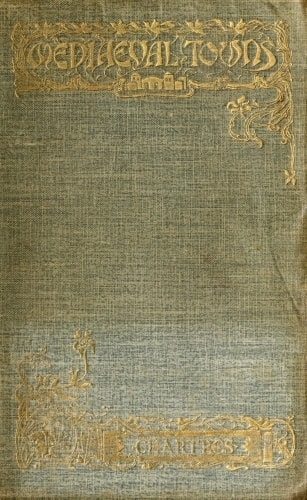
The Story of Chartres
1902
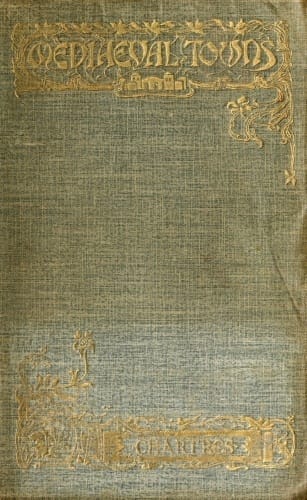
The Story of Chartres
1902
Chartres rises from the wheat fields of the Beauce, a city where the sacred never went quiet. For two thousand years, pilgrims have climbed its hills seeking something they could not name: first to the Druids' spring, then to the martyrs' crypt, finally to the cathedral's soaring spires. This is the story of how one small French city became Europe's great spiritual crossroads. Headlam traces the lineage of worship at Chartres with a scholar's precision and a pilgrim's wonder. He shows how the Black Virgin once stood where the Gothic cathedral now rises, how Roman temples gave way to Christian churches without the ground ever ceasing to be holy. The cathedral's construction took two centuries, drawing together knights and masons, kings and peasants in a collective act of faith that still resonates. Headlam writes not merely of stone and stained glass, but of a living spiritual organism: the Veil of the Virgin that draws pilgrims still, the labyrinth that medieval Christians walked as a form of prayer. For anyone who has stood in Chartres and felt its strange pull, or who wonders how a place can hold the memory of every civilization that touched it, this book reveals the layers of meaning woven into one of humanity's most profound attempts to build toward heaven.
Editions
X-Ray
Bishop of Chartres (1007-1028), scholar and architect who rebuilt the Cathedral after the fire of 1020. Known as the 'French Socrates' and founder of the famous School of Chartres.
Bishop of Chartres (1090-1115), canonist and reformer who built the western towers and porch. Opposed King Philippe's adulterous marriage and was imprisoned for his principles.
First hereditary Count of Chartres, known as 'the Trickster' for his cunning warfare. A turbulent feudal lord who built the castle and fought against Norman dukes.
King of France who supported the Cathedral's construction and whose reign saw the completion of the main structure. Patron of the north porch.
About The Story of Chartres
Chapter Summaries
- 1
- Explores the pre-Christian origins of Chartres, from the Druids who worshipped 'the Virgin who shall bear a son' to Roman conquest and early Christian martyrs. Describes the ancient crypt and the well of the martyrs.
- 2
- Chronicles the Frankish conquest under Clovis and the establishment of Christianity. Details the lives of early bishops like S. Lubin and S. Calétric, and the Viking raids including Hastings' destruction of the Cathedral.
- 3
- Introduces the feudal period with Count Thibault-le-Tricheur and the great Bishop Fulbert who rebuilt the Cathedral after the fire of 1020. Shows the tension between temporal and spiritual authority.
Key Themes
- Faith and Architecture
- The Cathedral represents the physical manifestation of medieval faith, built through popular devotion and pilgrimage. Each rebuilding after destruction demonstrates the triumph of spiritual aspiration over material disaster.
- Sacred vs. Secular Power
- The ongoing tension between bishops and counts reflects the broader medieval struggle between Church and State. The Cathedral and castle facing each other symbolize this eternal conflict.
- Pilgrimage and Devotion
- Chartres as a pilgrimage destination centered on the Virgin Mary's veil creates a unique spiritual geography. The Cathedral serves as both destination and symbol of medieval Marian devotion.
Characters
- Fulbert(major)
- Bishop of Chartres (1007-1028), scholar and architect who rebuilt the Cathedral after the fire of 1020. Known as the 'French Socrates' and founder of the famous School of Chartres.
- S. Ives(major)
- Bishop of Chartres (1090-1115), canonist and reformer who built the western towers and porch. Opposed King Philippe's adulterous marriage and was imprisoned for his principles.
- Thibault-le-Tricheur(major)
- First hereditary Count of Chartres, known as 'the Trickster' for his cunning warfare. A turbulent feudal lord who built the castle and fought against Norman dukes.
- Philippe-Auguste(major)
- King of France who supported the Cathedral's construction and whose reign saw the completion of the main structure. Patron of the north porch.
- S. Louis(major)
- King Louis IX, devoted patron of Chartres who funded the Rose of France and north porch. Made barefoot pilgrimages to the Cathedral.
- Pierre Mauclerc(major)
- Count of Dreux who funded the south porch and rose window, spending enormous sums on the Cathedral's decoration.
Link to this book
Add a free, dofollow link to Lex on your blog, forum, syllabus, or reading list.

<a href="https://lex-books.com/book/the-story-of-chartres-e7024674-2b01-4e0b-bb9b-aa3ea5c2eada"><img src="https://lex-books.com/badges/read-on-lex.svg" alt="Read The Story of Chartres by Cecil Headlam free on Lex" width="160" height="40"></a>[](https://lex-books.com/book/the-story-of-chartres-e7024674-2b01-4e0b-bb9b-aa3ea5c2eada)[url=https://lex-books.com/book/the-story-of-chartres-e7024674-2b01-4e0b-bb9b-aa3ea5c2eada][img]https://lex-books.com/badges/read-on-lex.svg[/img][/url]Read The Story of Chartres by Cecil Headlam free on Lex: https://lex-books.com/book/the-story-of-chartres-e7024674-2b01-4e0b-bb9b-aa3ea5c2eadaCite this book
Reading this edition for a paper or guide? Copy a citation.
Headlam, Cecil. The Story of Chartres. Lex, lex-books.com/book/the-story-of-chartres-e7024674-2b01-4e0b-bb9b-aa3ea5c2eada.Headlam, C. (1902). The Story of Chartres. Lex. https://lex-books.com/book/the-story-of-chartres-e7024674-2b01-4e0b-bb9b-aa3ea5c2eadaHeadlam, Cecil. The Story of Chartres. Lex. https://lex-books.com/book/the-story-of-chartres-e7024674-2b01-4e0b-bb9b-aa3ea5c2eada.