The Social Life of the Blackfoot Indians
1911
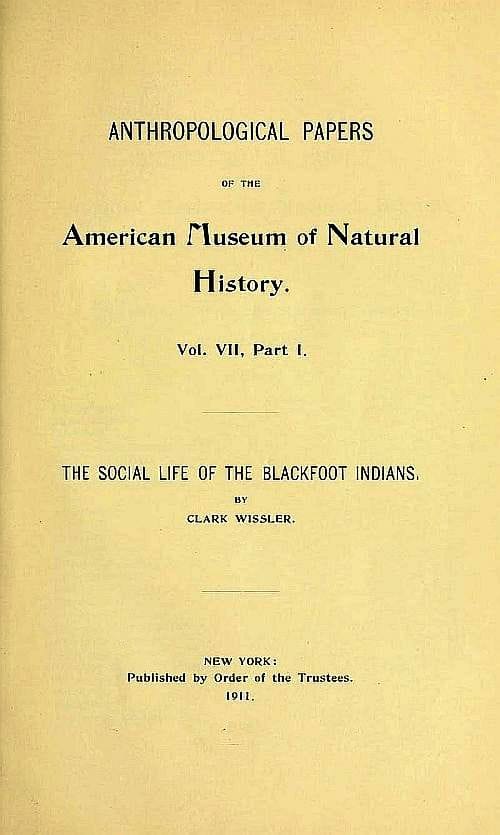
In 1911, anthropologist Clark Wissler undertook something rare for his era: genuine collaboration with the Blackfoot people themselves, working closely with community member D.C. Duvall to document a society in transformation. The result is this meticulous study of Blackfoot social organization, tribal divisions like the Piegan, Blood, and Northern Blackfoot; the intricacies of marriage customs and kinship obligations; the economics of property and resource distribution among bands that could flex and reform as conditions demanded. Wissler captures a civilization operating under its own sophisticated logic, neither romanticized nor diminished. The book matters now as it did then: it preserves irreplaceable knowledge about a culture that was already disappearing by the time Wissler wrote, and it demonstrates that Indigenous societies possessed complex, adaptive social systems worthy of rigorous study. For readers interested in American anthropology, Native history, or the foundations of ethnographic methodology, this remains essential reading, a snapshot of the Blackfoot world at a pivotal moment, recorded with unusual care and respect.
Editions
Link to this book
Add a free, dofollow link to Lex on your blog, forum, syllabus, or reading list.

<a href="https://lex-books.com/book/the-social-life-of-the-blackfoot-indians-1cec000f-166a-45f9-ab77-9256f0cd81f3"><img src="https://lex-books.com/badges/read-on-lex.svg" alt="Read The Social Life of the Blackfoot Indians by Clark Wissler free on Lex" width="160" height="40"></a>[](https://lex-books.com/book/the-social-life-of-the-blackfoot-indians-1cec000f-166a-45f9-ab77-9256f0cd81f3)[url=https://lex-books.com/book/the-social-life-of-the-blackfoot-indians-1cec000f-166a-45f9-ab77-9256f0cd81f3][img]https://lex-books.com/badges/read-on-lex.svg[/img][/url]Read The Social Life of the Blackfoot Indians by Clark Wissler free on Lex: https://lex-books.com/book/the-social-life-of-the-blackfoot-indians-1cec000f-166a-45f9-ab77-9256f0cd81f3Cite this book
Reading this edition for a paper or guide? Copy a citation.
Wissler, Clark. The Social Life of the Blackfoot Indians. Lex, lex-books.com/book/the-social-life-of-the-blackfoot-indians-1cec000f-166a-45f9-ab77-9256f0cd81f3.Wissler, C. (1911). The Social Life of the Blackfoot Indians. Lex. https://lex-books.com/book/the-social-life-of-the-blackfoot-indians-1cec000f-166a-45f9-ab77-9256f0cd81f3Wissler, Clark. The Social Life of the Blackfoot Indians. Lex. https://lex-books.com/book/the-social-life-of-the-blackfoot-indians-1cec000f-166a-45f9-ab77-9256f0cd81f3.