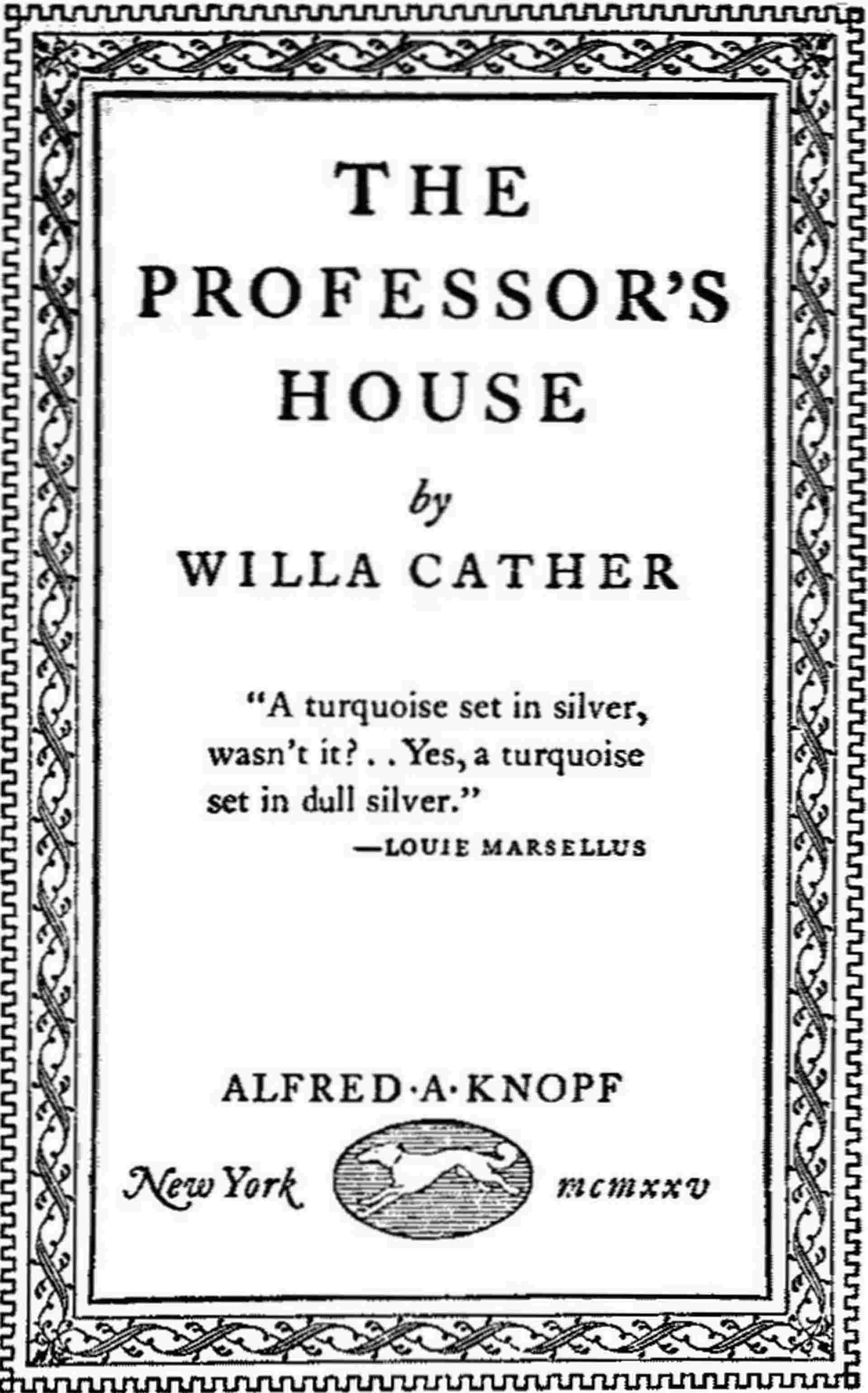
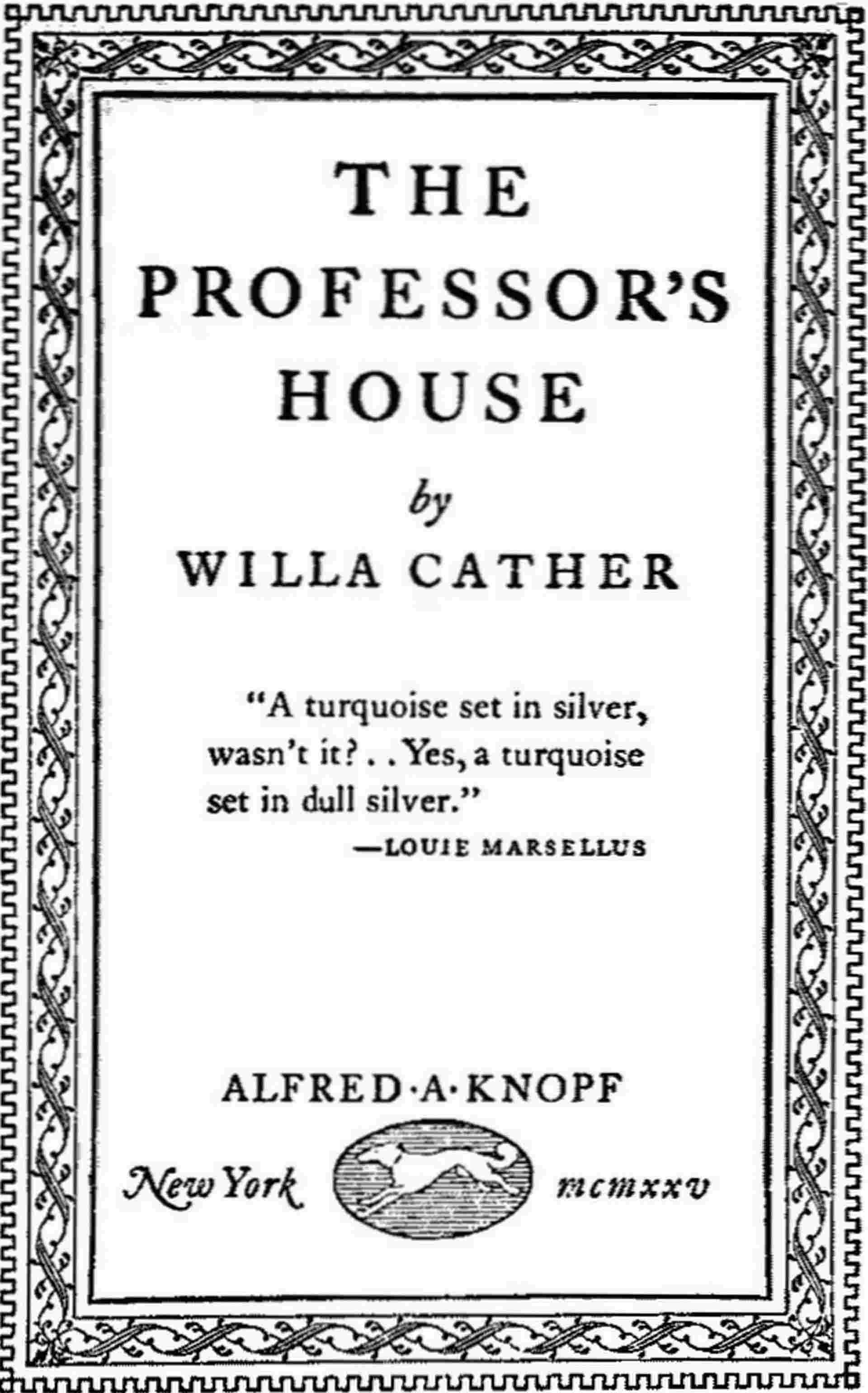
The Professor's House
Professor Godfrey St. Peter should be content. He has tenure, a distinguished career, a family advancing in the world. Instead he sits alone in his dusty attic study while his wife and daughters move into a grand new house, their lives transformed by wealth from an invention by Tom Outland, the brilliant student who died in the Great War. The professor cannot let go of the past, of his student, of the life he imagined before everything changed. At the novel's heart lies Tom Outland's own story, a thrilling account of discovering a lost civilization on the Blue Mesa, and the novel builds toward a quiet, devastating question: how does one decide to keep living when the things that mattered have slipped away? Cather's prose is spare and shattering, full of the plains' wide emptiness and the particular loneliness of a man who has outlived his own meaning. It is a fierce, understated novel about grief, legacy, and the terrible gap between the life we imagined and the one we get.
Editions
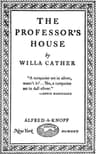
X-Ray
“In great misfortunes, people want to be alone. They have a right to be. And the misfortunes that occur within one are the greatest. Surely the saddest thing in the world is falling out of love--if once one has ever fallen in.””
— Willa Cather
“And that's what makes men happy, believing in the mystery and importance of their own individual lives.””
— Willa Cather
“A man long accustomed to admire his wife in general, seldom pauses to admire her in a particular gown or attitude, unless his attention is directed to her by the appreciative gaze of another man.””
— Willa Cather
“I was thinking", he answered absently, "about Euripides; how, when he was an old man, he went and lived in a cave by the sea, and it was thought queer at the time. It seems that houses had become insupportable to him. I wonder whether it was because he had observed women so closely all his life.””
— Willa Cather
“Theoretically he knew that life is possible, may even be pleasant, without joy, without passionate griefs. But it had never occurred to him that he might have to live like that.””
— Willa Cather
“Yes, it was possible that the little world, on its voyage among all the stars, might become like that; a boat on which one could travel no longer, from which one could no longer look up and confront those bright rings of revolution.””
— Willa Cather
“The man he was now, the personality his friends knew, had begun to grow strong during adolescence, during the years when he was always consciously or unconsciously conjugating the verb "to love"-- in society and solitude, with people, with books, with the sky and open country, in the lonesomeness of crowded city streets.””
— Willa Cather
“My dear," he sighed when the lights were turned on and they both looked older, "it's been a mistake, our having a family and writing histories and getting middle-aged. We should have been picturesquely shipwrecked together when we were young.””
— Willa Cather
“It struck him that the seasons sometimes gain by being brought into the house, just as they gain by being brought into painting, and into poetry. The hand, fastidious and bold which selected and placed - it was that which made the difference. In Nature there is no selection.””
— Willa Cather
Link to this book
Add a free, dofollow link to Lex on your blog, forum, syllabus, or reading list.

<a href="https://lex-books.com/book/the-professor-s-house-48e1d995-a7d8-4de7-8b4d-ef1976508c9b"><img src="https://lex-books.com/badges/read-on-lex.svg" alt="Read The Professor's House by Willa Cather free on Lex" width="160" height="40"></a>[](https://lex-books.com/book/the-professor-s-house-48e1d995-a7d8-4de7-8b4d-ef1976508c9b)[url=https://lex-books.com/book/the-professor-s-house-48e1d995-a7d8-4de7-8b4d-ef1976508c9b][img]https://lex-books.com/badges/read-on-lex.svg[/img][/url]Read The Professor's House by Willa Cather free on Lex: https://lex-books.com/book/the-professor-s-house-48e1d995-a7d8-4de7-8b4d-ef1976508c9bCite this book
Reading this edition for a paper or guide? Copy a citation.
Cather, Willa. The Professor's House. Lex, lex-books.com/book/the-professor-s-house-48e1d995-a7d8-4de7-8b4d-ef1976508c9b.Cather, W. (n.d.). The Professor's House. Lex. https://lex-books.com/book/the-professor-s-house-48e1d995-a7d8-4de7-8b4d-ef1976508c9bCather, Willa. The Professor's House. Lex. https://lex-books.com/book/the-professor-s-house-48e1d995-a7d8-4de7-8b4d-ef1976508c9b.