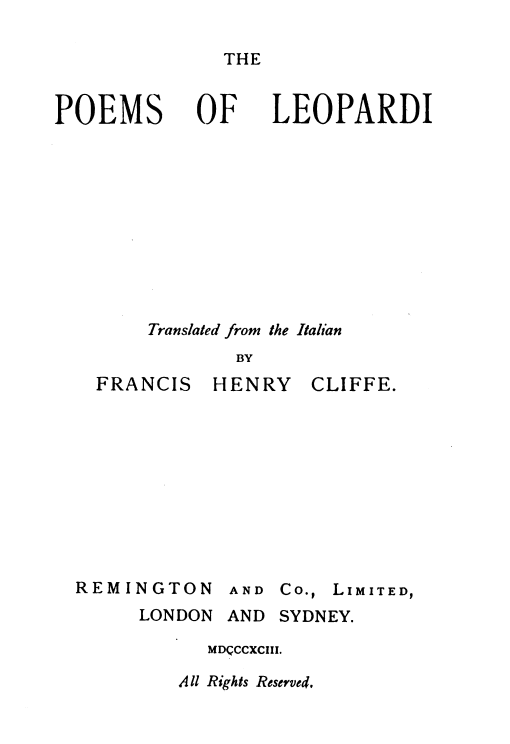
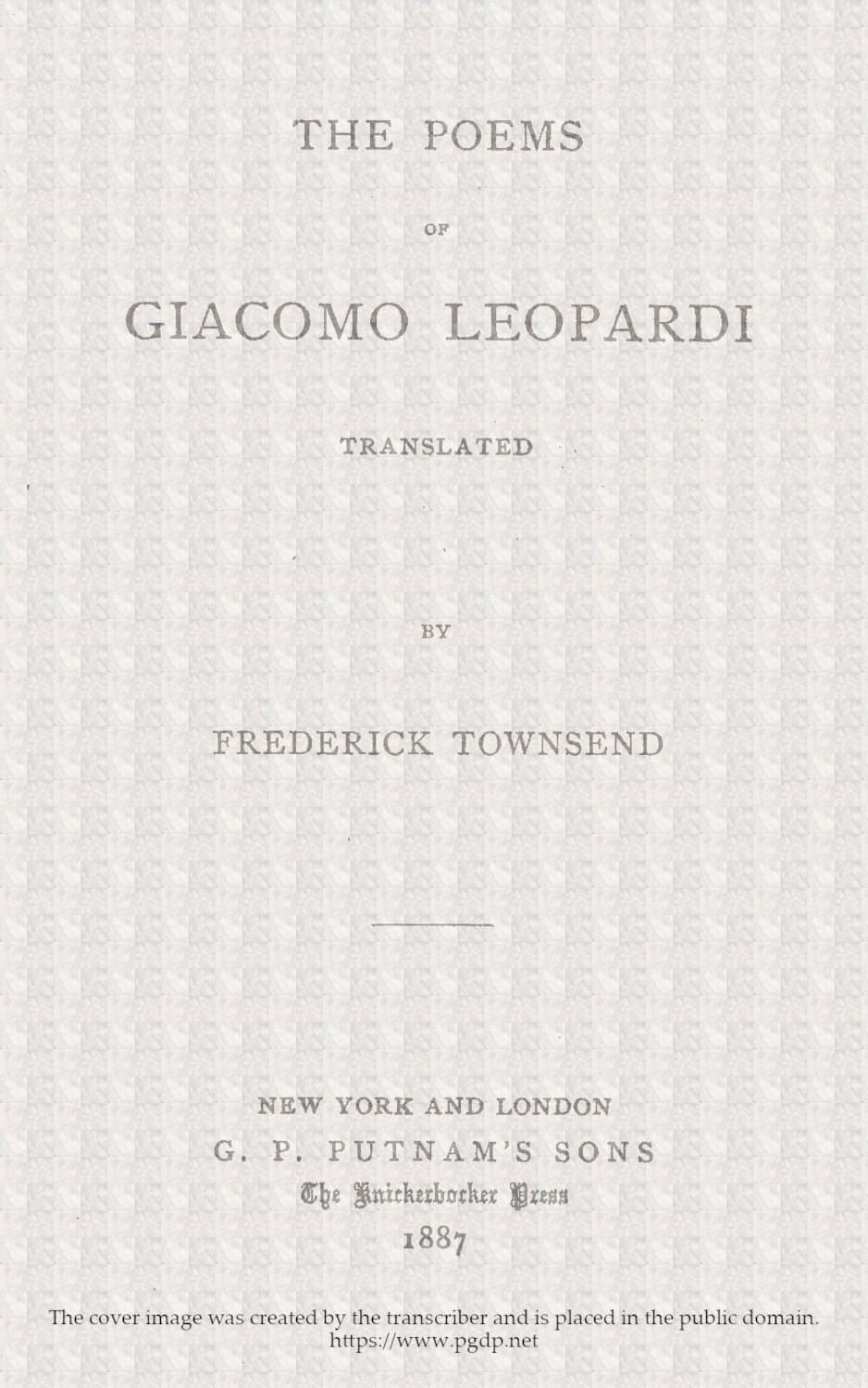
The Poems of Leopardi
1831
Giacomo Leopardi wrote from the abyss, and made it sing. Born in 1798 in the provincial Italian town of Recanati, he spent his short life in relentless physical pain and intellectual isolation, yet produced poetry of startling beauty and terrifying honesty. He was the first European writer to articulate the specific anguish of modern consciousness: the hollow spaces between desire and fulfillment, the cruel indifference of nature, the unbearable weight of knowing oneself. His verses ache with longing for a world that never existed while simultaneously exposing the lie at the heart of that longing. Galassi's translation finally captures the fierce, clear music of Leopardi's Italian, preserving both his philosophical rigor and his devastating emotional directness. This is not comfortable poetry. It is poetry for those who have lain awake at 3 a.m., staring at the ceiling, understanding exactly what Leopardi meant when he wrote that happiness is impossible, and that the very act of wanting destroys peace.
Editions
X-Ray
“Freedom is the dream you dreamWhile putting thought in chains again --””
— Giacomo Leopardi
“For if life, once empty of attachmentsand sweet illusions, is a starless winter night,still it’s enough for me of mortal fateand comfort and revenge that I can lie herelazy, lifeless on the grass,watching the sea and earth and sky, and smile.””
— Giacomo Leopardi
“All is mystery except our pain.””
— Giacomo Leopardi
“Fate gave birth at one and the same time to two siblings, Love and Death.””
— Giacomo Leopardi
“So, ignorant of man and of the agethat he calls ancient, and of the descendantsfollowing their ancestors,nature stays evergreen; indeed she travelssuch a long road she might as wellbe standing still. Meanwhile kingdoms fall,languages and peoples die; she doesn’t see.Yet man takes it upon himself to praise eternity.””
— Giacomo Leopardi
“But he’s a fool who doesn’t see how swift the wings of youth are, and how near the cradle lies to the grave.””
— Giacomo Leopardi
“The certain, lonely knowledge [120] that everything is vain but grief.””
— Giacomo Leopardi
“E tu, cui già dal cominciar degli anni sempre onorata invoco, bella Morte, pietosa tu sola al mondo dei terreni affanni[…] chiudi alla luce omai questi occhi tristi […] nel mio sangue innocente non ricolmar di lode, non benedir, com’usa per antica viltà l’umana gente””
— Giacomo Leopardi
“Man is born by labor, [40] and birth itself means risking death.””
— Giacomo Leopardi
Link to this book
Add a free, dofollow link to Lex on your blog, forum, syllabus, or reading list.

<a href="https://lex-books.com/book/the-poems-of-leopardi-3ec874e1-fb57-4f69-ae20-69aa45dd8b60"><img src="https://lex-books.com/badges/read-on-lex.svg" alt="Read The Poems of Leopardi by Giacomo Leopardi free on Lex" width="160" height="40"></a>[](https://lex-books.com/book/the-poems-of-leopardi-3ec874e1-fb57-4f69-ae20-69aa45dd8b60)[url=https://lex-books.com/book/the-poems-of-leopardi-3ec874e1-fb57-4f69-ae20-69aa45dd8b60][img]https://lex-books.com/badges/read-on-lex.svg[/img][/url]Read The Poems of Leopardi by Giacomo Leopardi free on Lex: https://lex-books.com/book/the-poems-of-leopardi-3ec874e1-fb57-4f69-ae20-69aa45dd8b60Cite this book
Reading this edition for a paper or guide? Copy a citation.
Leopardi, Giacomo. The Poems of Leopardi. Lex, lex-books.com/book/the-poems-of-leopardi-3ec874e1-fb57-4f69-ae20-69aa45dd8b60.Leopardi, G. (1831). The Poems of Leopardi. Lex. https://lex-books.com/book/the-poems-of-leopardi-3ec874e1-fb57-4f69-ae20-69aa45dd8b60Leopardi, Giacomo. The Poems of Leopardi. Lex. https://lex-books.com/book/the-poems-of-leopardi-3ec874e1-fb57-4f69-ae20-69aa45dd8b60.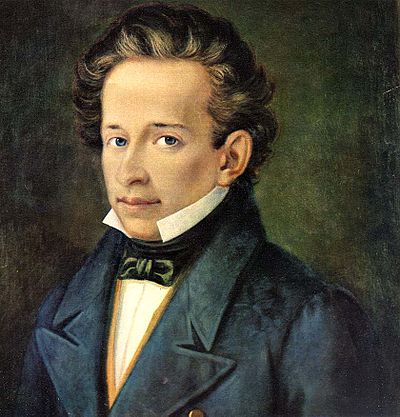




![Birds and Nature, Vol. 12 No. 1 [June 1902]illustrated by Color Photography](/_next/image?url=https%3A%2F%2Fd3b2n8gj62qnwr.cloudfront.net%2FCOVERS%2Fgutenberg_covers75k%2Febook-47881.png&w=3840&q=75)