The Parables of Our Lord
1856
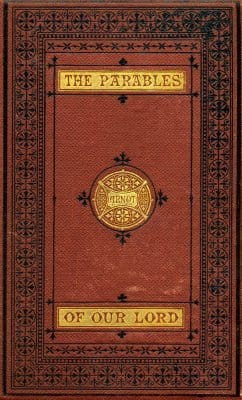
Few texts have shaped Christian imagination like the parables of Jesus, and William Arnot's 1856 exposition reveals why these deceptively simple stories have sustained centuries of contemplation. Arnot approaches the parables not as mere illustrations but as radical teaching instruments where divine truth dresses itself in the language of seeds, soils, and wandering shepherds. This Victorian-era interpretation, rooted in Scottish evangelical tradition, invites readers into careful self-examination: which soil receives the word, and what does that reveal about the human heart? The book opens with Arnot's careful attention to literary form, arguing that the parable's power lies in its accessibility. By clothing spiritual realities in everyday scenarios, Jesus makes profound truths available to all audiences while simultaneously concealing them from the casual observer. Arnot guides readers through this tension between simplicity and depth, showing how the sower's agricultural labor mirrors the scattering of divine truth across the varied terrain of human hearts. The text remains valuable for anyone seeking to move beyond surface reading into the layered meanings that have sustained two millennia of spiritual reflection.
Editions
Link to this book
Add a free, dofollow link to Lex on your blog, forum, syllabus, or reading list.

<a href="https://lex-books.com/book/the-parables-of-our-lord-fbec9033-e613-4141-a848-6aea2f1f189a"><img src="https://lex-books.com/badges/read-on-lex.svg" alt="Read The Parables of Our Lord by William Arnot free on Lex" width="160" height="40"></a>[](https://lex-books.com/book/the-parables-of-our-lord-fbec9033-e613-4141-a848-6aea2f1f189a)[url=https://lex-books.com/book/the-parables-of-our-lord-fbec9033-e613-4141-a848-6aea2f1f189a][img]https://lex-books.com/badges/read-on-lex.svg[/img][/url]Read The Parables of Our Lord by William Arnot free on Lex: https://lex-books.com/book/the-parables-of-our-lord-fbec9033-e613-4141-a848-6aea2f1f189aCite this book
Reading this edition for a paper or guide? Copy a citation.
Arnot, William. The Parables of Our Lord. Lex, lex-books.com/book/the-parables-of-our-lord-fbec9033-e613-4141-a848-6aea2f1f189a.Arnot, W. (1856). The Parables of Our Lord. Lex. https://lex-books.com/book/the-parables-of-our-lord-fbec9033-e613-4141-a848-6aea2f1f189aArnot, William. The Parables of Our Lord. Lex. https://lex-books.com/book/the-parables-of-our-lord-fbec9033-e613-4141-a848-6aea2f1f189a.