The Orchestra and Orchestral Music
1899
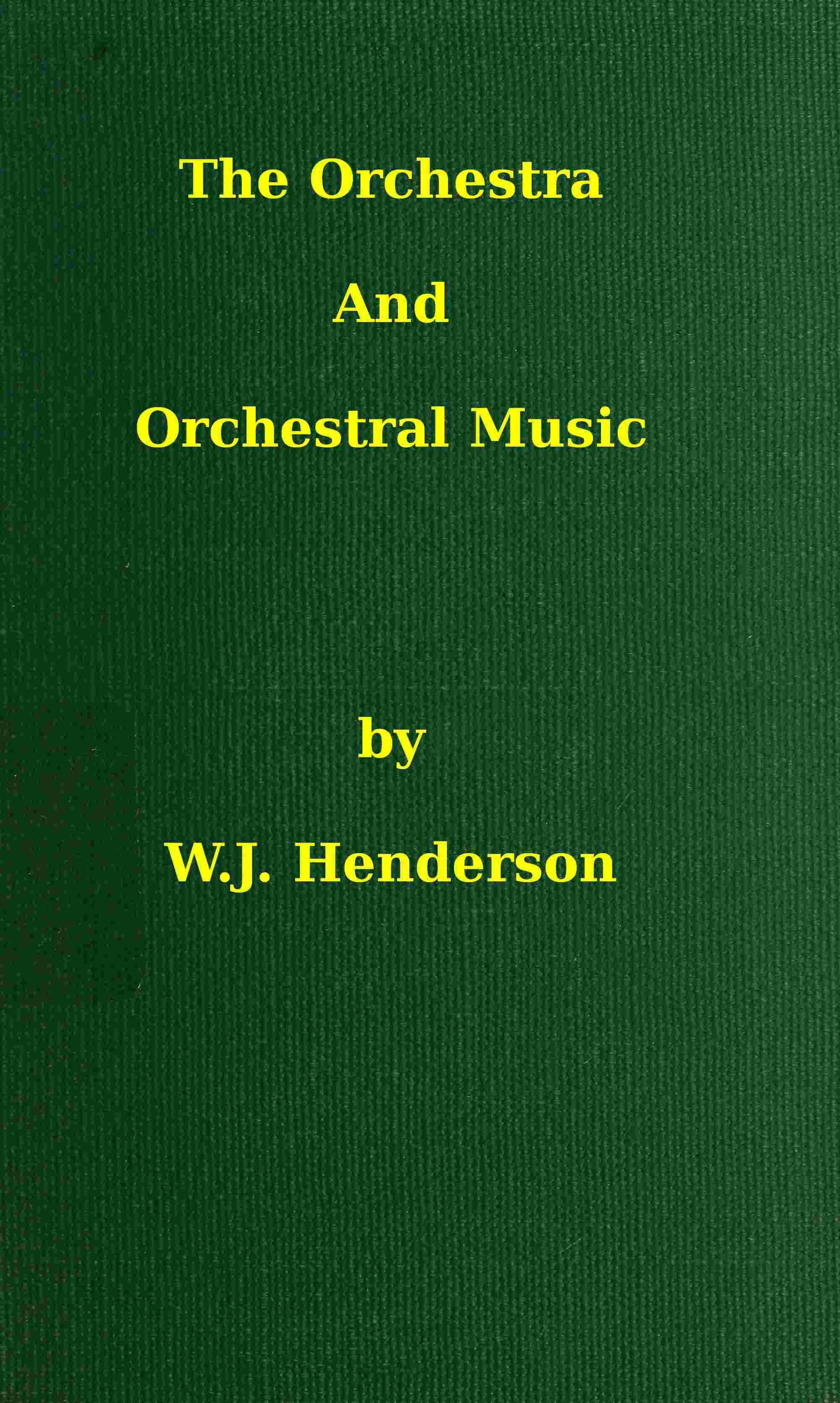
At the turn of the twentieth century, as the modern orchestra reached its then-contemporary form, W.J. Henderson wrote this guide for listeners who wanted to understand what they were hearing. Not a technical manual for performers, but a cultivated companion for the amateur music lover seeking deeper appreciation. Henderson walks through the instrument families, strings, woodwinds, brass, exploring their tonal qualities and how they fit into the larger orchestral sound. He discusses the conductor's role, traces the evolution from early composers to contemporary orchestrators, and clarifies how each section contributes to the whole. For anyone curious about the history of classical music or how our understanding of orchestras took shape, this 1899 volume offers a window into late-Victorian musical culture. It captures a moment before recording technology, when the only way to know an orchestra was to sit in the concert hall and listen with educated ears.
Editions
Link to this book
Add a free, dofollow link to Lex on your blog, forum, syllabus, or reading list.

<a href="https://lex-books.com/book/the-orchestra-and-orchestral-music-57ca2615-c472-428b-a819-a5c8ffa4ff21"><img src="https://lex-books.com/badges/read-on-lex.svg" alt="Read The Orchestra and Orchestral Music by W. J. Henderson free on Lex" width="160" height="40"></a>[](https://lex-books.com/book/the-orchestra-and-orchestral-music-57ca2615-c472-428b-a819-a5c8ffa4ff21)[url=https://lex-books.com/book/the-orchestra-and-orchestral-music-57ca2615-c472-428b-a819-a5c8ffa4ff21][img]https://lex-books.com/badges/read-on-lex.svg[/img][/url]Read The Orchestra and Orchestral Music by W. J. Henderson free on Lex: https://lex-books.com/book/the-orchestra-and-orchestral-music-57ca2615-c472-428b-a819-a5c8ffa4ff21Cite this book
Reading this edition for a paper or guide? Copy a citation.
Henderson, W. J.. The Orchestra and Orchestral Music. Lex, lex-books.com/book/the-orchestra-and-orchestral-music-57ca2615-c472-428b-a819-a5c8ffa4ff21.Henderson, W. J. (1899). The Orchestra and Orchestral Music. Lex. https://lex-books.com/book/the-orchestra-and-orchestral-music-57ca2615-c472-428b-a819-a5c8ffa4ff21Henderson, W. J.. The Orchestra and Orchestral Music. Lex. https://lex-books.com/book/the-orchestra-and-orchestral-music-57ca2615-c472-428b-a819-a5c8ffa4ff21.