The National Geographic Magazine, Vol. I., No. 1, October, 1888
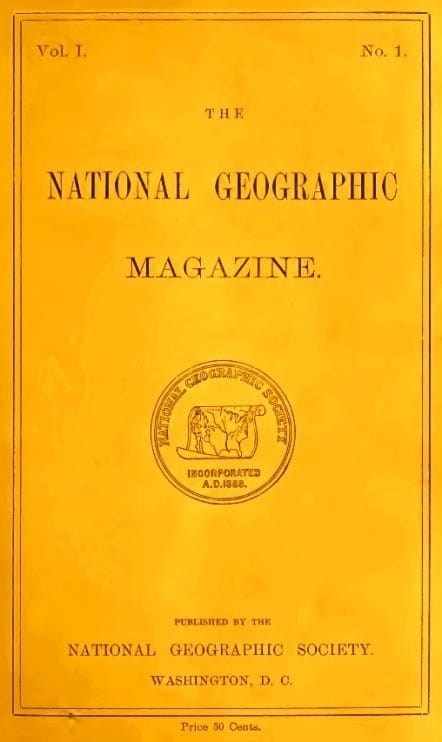
The National Geographic Magazine, Vol. I., No. 1, October, 1888
The inaugural issue of National Geographic Magazine, published in October 1888, marks the birth of an institution that would shape how the world sees itself. This slim volume emerged from a small group of thirty-three men gathered in a Washington, D.C. room, united by a passion for geographic knowledge and the conviction that the Earth still held secrets worth discovering. The magazine they created reads like a dispatch from another planet, not because the subjects are alien, but because the eyes viewing them belong to an age that had not yet seen flight, that mapped Africa in penciled approximations, and that believed the Arctic might conceal open polar seas. Within these pages, readers encounter the founders' earnest manifesto: geography as a democratic science, accessible to bankers and professors alike. The prose carries the careful diction of an era that still believed in the civilizing power of exploration. Here are accounts of ongoing expeditions, discussions of mapping methodologies, and the conviction that systematic geographic knowledge might advance human progress. The writing is patient, the optimism unqualified, the world still large and mysterious. For modern readers, this first issue functions less as a scientific text than as a time capsule. To read it is to see late 19th-century Americans contemplating lands they had only read about, with assumptions about race, civilization, and progress that will make a contemporary reader flinch. Media historians, magazine collectors, and anyone curious about how an institution begins will find something essential here.
Editions
Link to this book
Add a free, dofollow link to Lex on your blog, forum, syllabus, or reading list.

<a href="https://lex-books.com/book/the-national-geographic-magazine-vol-i-no-1-october-1888-20d6c5ed-382d-4ead-846e-fadaf88775c2"><img src="https://lex-books.com/badges/read-on-lex.svg" alt="Read The National Geographic Magazine, Vol. I., No. 1, October, 1888 by Various free on Lex" width="160" height="40"></a>[](https://lex-books.com/book/the-national-geographic-magazine-vol-i-no-1-october-1888-20d6c5ed-382d-4ead-846e-fadaf88775c2)[url=https://lex-books.com/book/the-national-geographic-magazine-vol-i-no-1-october-1888-20d6c5ed-382d-4ead-846e-fadaf88775c2][img]https://lex-books.com/badges/read-on-lex.svg[/img][/url]Read The National Geographic Magazine, Vol. I., No. 1, October, 1888 by Various free on Lex: https://lex-books.com/book/the-national-geographic-magazine-vol-i-no-1-october-1888-20d6c5ed-382d-4ead-846e-fadaf88775c2Cite this book
Reading this edition for a paper or guide? Copy a citation.
Various. The National Geographic Magazine, Vol. I., No. 1, October, 1888. Lex, lex-books.com/book/the-national-geographic-magazine-vol-i-no-1-october-1888-20d6c5ed-382d-4ead-846e-fadaf88775c2.Various (n.d.). The National Geographic Magazine, Vol. I., No. 1, October, 1888. Lex. https://lex-books.com/book/the-national-geographic-magazine-vol-i-no-1-october-1888-20d6c5ed-382d-4ead-846e-fadaf88775c2Various. The National Geographic Magazine, Vol. I., No. 1, October, 1888. Lex. https://lex-books.com/book/the-national-geographic-magazine-vol-i-no-1-october-1888-20d6c5ed-382d-4ead-846e-fadaf88775c2.

















![Proceedings of the New York Historical Association [1906]](/_next/image?url=https%3A%2F%2Fd3b2n8gj62qnwr.cloudfront.net%2FCOVERS%2Fgutenberg_covers75k%2Febook-51218.png&w=3840&q=75)