The Narrative of Sojourner Truth
1850
The Narrative of Sojourner Truth
1850
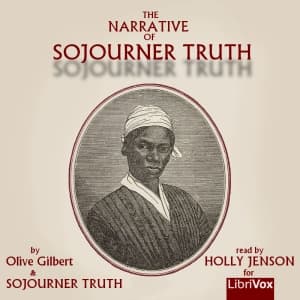
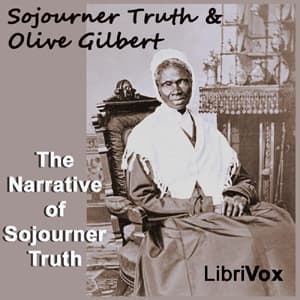
One of the earliest autobiographies by a Black woman in American history, this 1850 narrative preserves the voice of a woman who refused to be silent. Sojourner Truth escaped slavery in New York and transformed herself into one of the most electrifying orators of the 19th century, a former bondswoman who debated Frederick Douglass at antislavery conventions and commanded stages across the country with her blend of religious fervor, sharp wit, and unflinching honesty. The narrative takes readers through Truth's childhood in Ulster County, her backbreaking labor under the Dumont family, and the moment she walked away to freedom. It documents her religious conversion, her life as an itinerant preacher traveling with only a small bag and a few clothes, and her emergence as a powerful voice in the abolition and women's rights movements. Truth describes her work counseling formerly enslaved people and her controversial support of Black migration westward, offering a window into 19th-century activism rarely preserved from a Black woman's perspective. This is essential reading for anyone who wants to hear history from those who lived it. Truth's voice remains startling: direct, funny, furious, and luminous. She spoke to audiences who had never seen a woman like her, and she made them listen.
Editions
X-Ray
“Let others say what they will of the efficacy of prayer, I believe in it, and I shall pray. Thank God! Yes, I shall always pray,””
— Olive Gilbert
“Where there is so much racket, there must be something out of kilter””
— Olive Gilbert
“After turning it in her mind for some time, she came to the conclusion, that she had been taking part in a great drama, which was, in itself, but one great system of robbery and wrong. 'Yes,' she said, 'the rich rob the poor, and the poor rob one another.' True, she had not received labor from others, and stinted their pay, as she felt had been practised against her; but she had taken their work from them, which was their only means to get money, and was the same to them in the end. For instance–a gentleman where she lived would give her a dollar to hire a poor man to clear the new-fallen snow from the steps and side-walks. She would arise early, and perform the labor herself, putting the money into her own pocket. A poor man would come along, saying she ought to have let him have the job; he was poor, and needed the pay for his family. She would harden her heart against him, and answer–'I am poor too, and I need it for mine.' But, in her retrospection, she thought of all the misery she might have been adding to, in her selfish grasping, and it troubled her conscience sorely; and this insensibility to the claims of human brotherhood, and the wants of the destitute and wretched poor, she now saw, as she never had done before, to be unfeeling, selfish and wicked.””
— Olive Gilbert
“Many slaveholders boast of the love of their slaves. How would it freeze the blood of some of them to know what kind of love rankles in the bosoms of slaves for them! Witness the attempt to poison Mrs. Calhoun, and hundreds of similar cases. Most 'surprising ' to every body, because committed by slaves supposed to be so grateful for their chains.””
— Olive Gilbert
“Through all the scenes of her eventful life may be traced the energy of a naturally powerful mind”
— Olive Gilbert
“Oh Lord,' inquired Isabella, 'what is this slavery, that it can do such dreadful things? what evil can it not do?' Well may she ask, for surely the evils it can and does do, daily and hourly, can never be summed up, till we can see them as they are recorded by him who writes no errors, and reckons without mistake.””
— Olive Gilbert
“Yes,' she said, 'the rich rob the poor, and the poor rob one another.””
— Olive Gilbert
“he was soon drawn into a circle of associates who did not improve either his habits or his morals.””
— Olive Gilbert
“As we were walking the other day, she said she had often thought what a beautiful world this would be, when we should see every thing right side up. Now, we see every thing topsy-turvy, and all is confusion.””
— Olive Gilbert
Link to this book
Add a free, dofollow link to Lex on your blog, forum, syllabus, or reading list.

<a href="https://lex-books.com/book/the-narrative-of-sojourner-truth-8f9a345f-e0f4-4299-9b91-e9cbc4f5feb9"><img src="https://lex-books.com/badges/read-on-lex.svg" alt="Read The Narrative of Sojourner Truth by Olive Gilbert free on Lex" width="160" height="40"></a>[](https://lex-books.com/book/the-narrative-of-sojourner-truth-8f9a345f-e0f4-4299-9b91-e9cbc4f5feb9)[url=https://lex-books.com/book/the-narrative-of-sojourner-truth-8f9a345f-e0f4-4299-9b91-e9cbc4f5feb9][img]https://lex-books.com/badges/read-on-lex.svg[/img][/url]Read The Narrative of Sojourner Truth by Olive Gilbert free on Lex: https://lex-books.com/book/the-narrative-of-sojourner-truth-8f9a345f-e0f4-4299-9b91-e9cbc4f5feb9Cite this book
Reading this edition for a paper or guide? Copy a citation.
Gilbert, Olive. The Narrative of Sojourner Truth. Lex, lex-books.com/book/the-narrative-of-sojourner-truth-8f9a345f-e0f4-4299-9b91-e9cbc4f5feb9.Gilbert, O. (1850). The Narrative of Sojourner Truth. Lex. https://lex-books.com/book/the-narrative-of-sojourner-truth-8f9a345f-e0f4-4299-9b91-e9cbc4f5feb9Gilbert, Olive. The Narrative of Sojourner Truth. Lex. https://lex-books.com/book/the-narrative-of-sojourner-truth-8f9a345f-e0f4-4299-9b91-e9cbc4f5feb9.