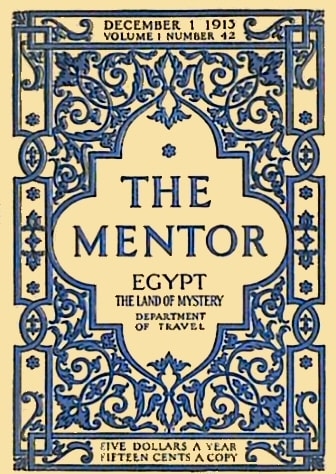
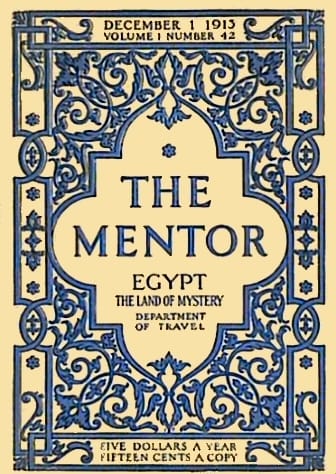
The Mentor: Egypt, the Land of Mystery, Serial No. 42
1913
The Mentor: Egypt, the Land of Mystery, Serial No. 42
1913
To read this book is to step aboard a steamer bound for Egypt in an age when the Sphinx had not yet been fully excavated and the tombs of the Valley of the Kings still whispered secrets. Elmendorf, writing in 1913, conducts his reader through the sensory thunder of Cairo's streets into the sacred silence of the Great Pyramid, where the limestone blocks seem to hum with four thousand years of witness. He walks the colonnades of Karnak where afternoon light falls through columns taller than cathedrals, and he stands at the newly completed Aswan Dam, marveling at how modernity attempts to tame the Nile that built an empire. This is travel writing before tourism existed, when a journey to Egypt still required weeks of sea and river, when the romance of archaeology was at its height and the Western imagination burned bright with pharaohs, curses, and golden cities lost beneath the desert sand. For readers who long for a time when the world still held mysteries waiting to be discovered, this book is a portal.
Editions
X-Ray
The author and narrator who serves as a travel guide through Egypt. He presents himself as an experienced traveler sharing observations and stories from his journeys through the ancient land.
Elmendorf's Egyptian guide who tells him the legend of the holy pillar in the Mosque of Omri. He represents the local perspective and folklore.
The ancient Greek historian referenced for calling Egypt 'the gift of the Nile.' He provides historical context for understanding Egypt's relationship with the river.
The ancient Egyptian pharaoh who built the Great Pyramid. Though long dead, his monument serves as a central focus of the narrative.
About The Mentor: Egypt, the Land of Mystery, Serial No. 42
Chapter Summaries
- 1
- Elmendorf introduces Egypt as the gift of the Nile and begins the journey in Cairo, describing the city's blend of ancient and modern elements. He explores the Citadel, mosques, and street life.
- 2
- The narrative moves to the pyramids of Giza, focusing on the Great Pyramid of Cheops. Elmendorf describes their construction, dimensions, and the mystery of how they were built.
- 3
- Elmendorf describes the Sphinx as a symbol of inscrutable wisdom and discusses the lost city of Memphis, once Egypt's great capital.
Key Themes
- The Power of the Nile
- The river is presented as the lifeblood of Egypt, controlling and nourishing the land. Elmendorf emphasizes how Egypt is essentially just the narrow strip along the Nile's banks.
- Ancient vs. Modern
- The narrative constantly contrasts Egypt's ancient monuments with modern developments like the Assouan Dam and British colonial presence, showing how past and present coexist.
- Mystery and Wonder
- Egypt is portrayed as a land of inscrutable mysteries, from the Sphinx's enigmatic smile to the engineering secrets of the pyramids that modern minds struggle to comprehend.
Characters
- Dwight L. Elmendorf(protagonist)
- The author and narrator who serves as a travel guide through Egypt. He presents himself as an experienced traveler sharing observations and stories from his journeys through the ancient land.
- Mohammed Mousa(minor)
- Elmendorf's Egyptian guide who tells him the legend of the holy pillar in the Mosque of Omri. He represents the local perspective and folklore.
- Herodotus(minor)
- The ancient Greek historian referenced for calling Egypt 'the gift of the Nile.' He provides historical context for understanding Egypt's relationship with the river.
- Khufu (Cheops)(minor)
- The ancient Egyptian pharaoh who built the Great Pyramid. Though long dead, his monument serves as a central focus of the narrative.
- Rameses II(minor)
- Ancient Egyptian pharaoh whose statues and monuments appear throughout the journey, representing Egypt's imperial grandeur.
- Mehemet Ali(minor)
- Turkish viceroy who modernized Cairo and built the Alabaster Mosque. His story illustrates Egypt's more recent political history.
Link to this book
Add a free, dofollow link to Lex on your blog, forum, syllabus, or reading list.

<a href="https://lex-books.com/book/the-mentor-egypt-the-land-of-mystery-serial-no-42-3919748b-60a7-4785-ae11-1b178387652e"><img src="https://lex-books.com/badges/read-on-lex.svg" alt="Read The Mentor: Egypt, the Land of Mystery, Serial No. 42 by Dwight L. Elmendorf free on Lex" width="160" height="40"></a>[](https://lex-books.com/book/the-mentor-egypt-the-land-of-mystery-serial-no-42-3919748b-60a7-4785-ae11-1b178387652e)[url=https://lex-books.com/book/the-mentor-egypt-the-land-of-mystery-serial-no-42-3919748b-60a7-4785-ae11-1b178387652e][img]https://lex-books.com/badges/read-on-lex.svg[/img][/url]Read The Mentor: Egypt, the Land of Mystery, Serial No. 42 by Dwight L. Elmendorf free on Lex: https://lex-books.com/book/the-mentor-egypt-the-land-of-mystery-serial-no-42-3919748b-60a7-4785-ae11-1b178387652eCite this book
Reading this edition for a paper or guide? Copy a citation.
Elmendorf, Dwight L.. The Mentor: Egypt, the Land of Mystery, Serial No. 42. Lex, lex-books.com/book/the-mentor-egypt-the-land-of-mystery-serial-no-42-3919748b-60a7-4785-ae11-1b178387652e.Elmendorf, D. L. (1913). The Mentor: Egypt, the Land of Mystery, Serial No. 42. Lex. https://lex-books.com/book/the-mentor-egypt-the-land-of-mystery-serial-no-42-3919748b-60a7-4785-ae11-1b178387652eElmendorf, Dwight L.. The Mentor: Egypt, the Land of Mystery, Serial No. 42. Lex. https://lex-books.com/book/the-mentor-egypt-the-land-of-mystery-serial-no-42-3919748b-60a7-4785-ae11-1b178387652e.