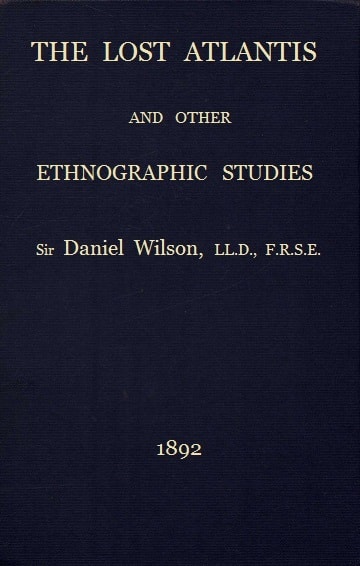
The Lost Atlantis, and Other Ethnographic Studies
1886
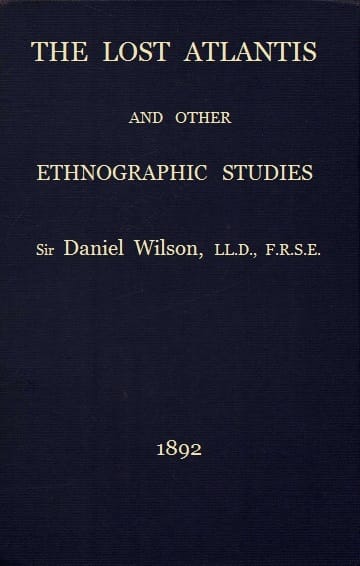
The Lost Atlantis, and Other Ethnographic Studies
1886
Sir Daniel Wilson's 1886 collection occupies a peculiar and fascinating corner of Victorian scholarship: a serious, scientifically-minded academic attempting to decode the legend of Atlantis through ethnology, ancient history, and the emerging discipline of archaeology. The book opens with a poignant preface by Wilson's daughter Sybil, who writes of her father's failing health and his unwavering dedication to uncovering the truth behind Plato's lost continent. Wilson treats Atlantis not as mere fantasy but as a potentially genuine ancient tradition, examining the evidence while honestly acknowledging where science could not yet confirm. Beyond Atlantis, Wilson explores broader questions of prehistoric human migration, cultural connections between civilizations, and the anthropological roots of ancient traditions. The work captures a pivotal intellectual moment when rational inquiry met romantic fascination with vanished worlds, bridging emerging scientific methodology and the enduring human desire to believe in lost civilizations. For readers interested in the history of ideas, Victorian intellectual culture, and the deep genealogy of the Atlantis myth, this book offers a window into how late nineteenth-century scholars wrestled with the boundaries between myth and history.
Editions
X-Ray
The author and narrator, a scholarly antiquarian and ethnographer examining theories about pre-Columbian contact between the Old and New Worlds. He approaches various legends and theories with scientific skepticism while acknowledging their cultural significance.
Ancient Greek philosopher who recorded the legend of Atlantis in his dialogues Timaeus and Critias. Wilson treats him as the primary source for the Atlantis story while noting his skill at inventing 'noble lies.'
Ancient Greek lawmaker and poet who allegedly learned the story of Atlantis from Egyptian priests at Sais. Wilson presents him as a key link in the transmission of the legend.
Norse explorer credited with discovering Vinland (North America) around 1000 AD. Wilson examines the historical evidence for his voyages while remaining cautious about specific geographical claims.
About The Lost Atlantis, and Other Ethnographic Studies
Chapter Summaries
- I
- Wilson examines Plato's account of Atlantis and various theories connecting it to pre-Columbian America. He critiques enthusiastic interpretations while acknowledging the legend's enduring appeal and possible basis in ancient maritime contact.
- II
- Wilson analyzes the Norse sagas describing Leif Ericson's discovery of Vinland and subsequent attempts to locate it geographically. He critiques overly confident identifications while accepting the basic historical reality of Norse exploration.
- III
- Wilson demonstrates that even prehistoric peoples maintained extensive trade networks, exchanging materials like flint, obsidian, and copper across vast distances. He uses archaeological evidence to show sophisticated economic systems in the Stone Age.
Key Themes
- Scientific Skepticism vs. Romantic Speculation
- Wilson consistently advocates for careful evaluation of evidence over enthusiastic acceptance of appealing theories. He critiques scholars who let imagination override scientific rigor in interpreting archaeological and historical data.
- The Nature of Historical Evidence
- The work explores how legends, archaeological artifacts, and written records must be carefully weighed and interpreted. Wilson demonstrates how the same evidence can support multiple theories depending on the interpreter's biases.
- Cultural Diffusion and Isolation
- Wilson examines whether ancient civilizations could have maintained contact across vast distances, particularly between the Old and New Worlds. He argues for the essential isolation of pre-Columbian America despite tantalizing possibilities.
Characters
- Daniel Wilson(protagonist)
- The author and narrator, a scholarly antiquarian and ethnographer examining theories about pre-Columbian contact between the Old and New Worlds. He approaches various legends and theories with scientific skepticism while acknowledging their cultural significance.
- Plato(major)
- Ancient Greek philosopher who recorded the legend of Atlantis in his dialogues Timaeus and Critias. Wilson treats him as the primary source for the Atlantis story while noting his skill at inventing 'noble lies.'
- Solon(major)
- Ancient Greek lawmaker and poet who allegedly learned the story of Atlantis from Egyptian priests at Sais. Wilson presents him as a key link in the transmission of the legend.
- Leif Ericson(major)
- Norse explorer credited with discovering Vinland (North America) around 1000 AD. Wilson examines the historical evidence for his voyages while remaining cautious about specific geographical claims.
- Eric the Red(major)
- Norse explorer who established the first European settlement in Greenland around 985 AD. Wilson presents him as a historical figure whose colonization efforts are well-documented.
- Columbus(major)
- The famous explorer whose 1492 voyage Wilson uses as a benchmark for discussing pre-Columbian contact theories. Presented as the definitive discoverer despite earlier Norse expeditions.
Link to this book
Add a free, dofollow link to Lex on your blog, forum, syllabus, or reading list.

<a href="https://lex-books.com/book/the-lost-atlantis-and-other-ethnographic-studies-c9fd7915-4ce8-44b7-b16c-31be964657a1"><img src="https://lex-books.com/badges/read-on-lex.svg" alt="Read The Lost Atlantis, and Other Ethnographic Studies by Daniel, Sir Wilson free on Lex" width="160" height="40"></a>[](https://lex-books.com/book/the-lost-atlantis-and-other-ethnographic-studies-c9fd7915-4ce8-44b7-b16c-31be964657a1)[url=https://lex-books.com/book/the-lost-atlantis-and-other-ethnographic-studies-c9fd7915-4ce8-44b7-b16c-31be964657a1][img]https://lex-books.com/badges/read-on-lex.svg[/img][/url]Read The Lost Atlantis, and Other Ethnographic Studies by Daniel, Sir Wilson free on Lex: https://lex-books.com/book/the-lost-atlantis-and-other-ethnographic-studies-c9fd7915-4ce8-44b7-b16c-31be964657a1Cite this book
Reading this edition for a paper or guide? Copy a citation.
Daniel, Sir Wilson. The Lost Atlantis, and Other Ethnographic Studies. Lex, lex-books.com/book/the-lost-atlantis-and-other-ethnographic-studies-c9fd7915-4ce8-44b7-b16c-31be964657a1.Daniel, S. W. (1886). The Lost Atlantis, and Other Ethnographic Studies. Lex. https://lex-books.com/book/the-lost-atlantis-and-other-ethnographic-studies-c9fd7915-4ce8-44b7-b16c-31be964657a1Daniel, Sir Wilson. The Lost Atlantis, and Other Ethnographic Studies. Lex. https://lex-books.com/book/the-lost-atlantis-and-other-ethnographic-studies-c9fd7915-4ce8-44b7-b16c-31be964657a1.