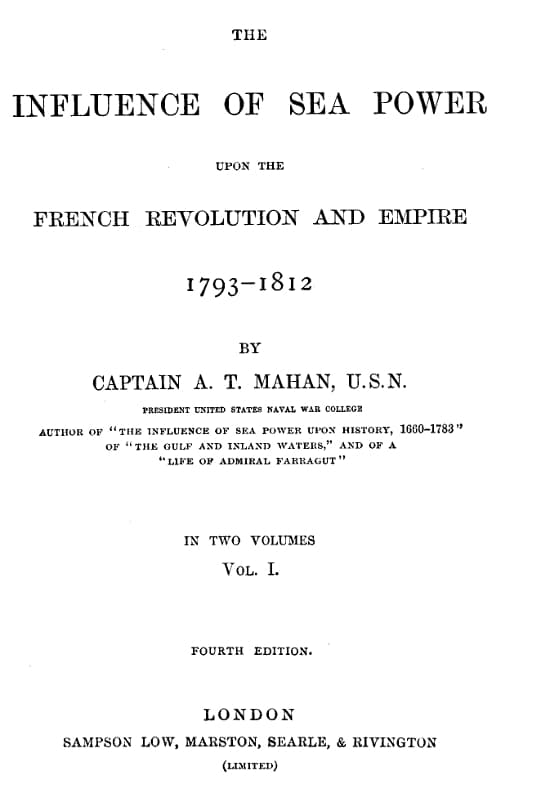
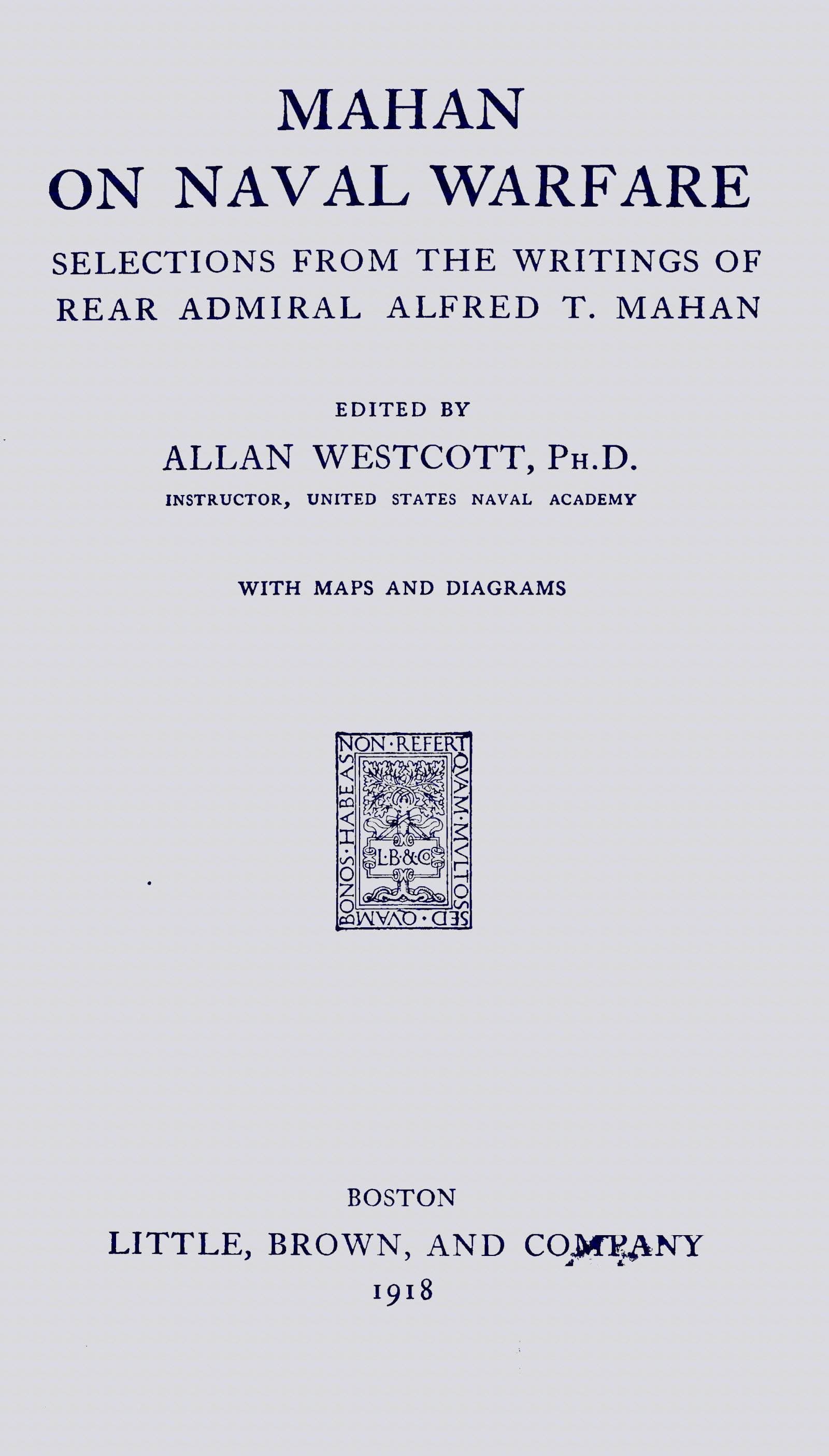
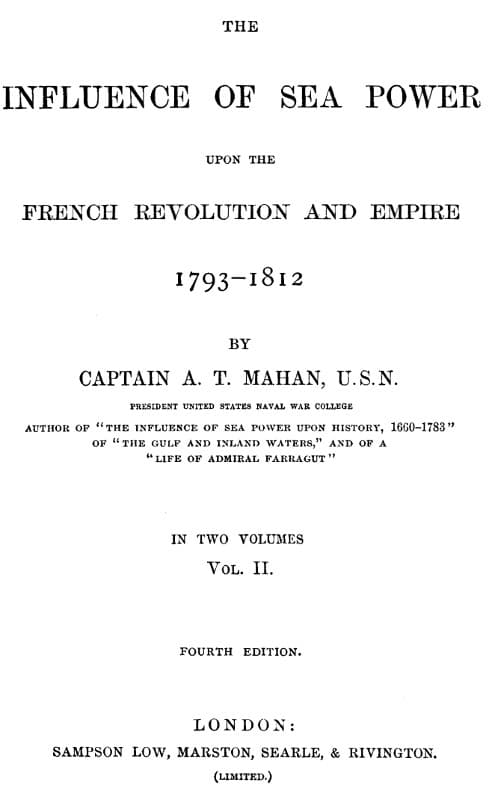
The Influence of Sea Power upon History, 1660-1783
The Influence of Sea Power upon History, 1660-1783
Published in 1890, this revolutionary work arguing that control of the seas determines national greatness became the most influential book on geopolitics of the twentieth century. Mahan systematically examines how Britain, France, the Netherlands, and Spain rose and fell based on their maritime strength, tracing the critical period from 1660 through the American Revolution. He demonstrates how naval commerce, colony possession, and fleet superiority intertwined to create imperial power, drawing lessons from conflicts like the Anglo-Dutch Wars and the War of Spanish Succession. Theodore Roosevelt credited it with shaping his naval ambitions. Kaiser Wilhelm II summoned Mahan to Berlin. Winston Churchill studied it obsessively. This is the intellectual foundation upon which world powers built their naval doctrines, a treatise that transformed how nations understood the relationship between sea lanes and sovereignty.
Editions
X-Ray
“The study of history lies at the foundation of all sound military conclusions and practice.””
— A. T. Mahan
“The surer of himself an admiral is, the finer the tactical development of his fleet, the better his captains, the more reluctant must he necessarily be to enter into a melee with equal forces, in which all these advantages will be thrown away, chance reign supreme, and his fleet be place on terms of equality with an assemblage of ships which have never before acted together.””
— A. T. Mahan
“The history of sea power is largely, though by no means solely, a narrative of contests between nations, of mutual rivalries, of violence frequently culminating in war. The profound influence of sea commerce upon the wealth and strength of countries was clearly seen long before the true principles which governed its growth and prosperity were detected. To secure to one's own people a disproportionate share of such benefits, every effort was made to exclude others, either by the peaceful legislative methods of monopoly or prohibitory regulations, or, when these failed, by direct violence. The clash of interests, the angry feelings roused by conflicting attempts thus to appropriate the larger share, if not the whole, of the advantages of commerce, and of distant unsettled commercial regions, led to wars. On the other hand, wars arising from other causes have been greatly modified in their conduct and issue by the control of the sea. Therefore the history of sea power, while embracing in its broad sweep all that tends to make a people great upon the sea or by the sea, is largely a military history...””
— A. T. Mahan
“The French navy has known periods of great glory, and in its lowest estate has never dishonored the military reputation so dear to the nation, Yet as a maritime State, securely resting upon a broad basis of sea commerce, France, as compared with other historical sea-peoples, has never held more than a respectable position. The chief reason for this, so far as national character goes, is the way in which wealth is sought. As Spain and Portugal sought it by digging gold out of the ground, the temper of the French people leads them to seek it by thrift, economy, hoarding. It is said to be harder to keep than to make a fortune. Possibly; but the adventurous temper, which risks what it has to gain more, has much in common with the adventurous spirit that conquers worlds for commerce. The tendency to save and put aside, to venture timidly and on a small scale, may lead to a general diffusion of wealth on a like small scale, but not to the risks and development of external trade and shipping interests.””
— A. T. Mahan
“Finally, it must be remembered that, among all changes, the nature of man remains much the same; the personal equation, though uncertain in quantity and quality in the particular instance, is sure always to be found.””
— A. T. Mahan
“It has already been seen that the Dutch Republic, even more than the English nation, drew its prosperity and its very life from the sea. The character and policy of its government were far less favorable to a consistent support of sea power. Composed of seven provinces, with the political name of the United Provinces, the national distribution of power may be roughly described to Americans as an exaggerated example of States Rights. Each of the maritime provinces had its own fleet and its own admiralty, with consequent jealousies.””
— A. T. Mahan
“The miseries resulting from the overweening power of Spain in days long gone by seemed to be forgotten; forgotten also the more recent lesson of the bloody and costly wars provoked by the ambition and exaggerated power of Louis XIV. Under the eyes of the statesmen of Europe there was steadily and visibly being built up a third overwhelming power, destined to be used as selfishly, as aggressively, though not as cruelly, and much more successfully than any that had preceded it. Thus was the power of the sea, whose workings, because more silent than the clash of arms, are less often noted, though lying clearly enough on the surface.””
— A. T. Mahan
“The noble classes of Europe inherited from the Middle Ages a supercilious contempt for peaceful trade, which has exercised a modifying influence upon its growth, according to the national character of different countries.””
— A. T. Mahan
“Yet as a maritime State, securely resting upon a broad basis of sea commerce, France, as compared with other historical sea-peoples, has never held more than a respectable position. The chief reason for this, so far as national character goes, is the way in which wealth is sought. As Spain and Portugal sought it by digging gold out of the ground, the temper of the French people leads them to seek it by thrift, economy, hoarding. It is said to be harder to keep than to make a fortune. Possibly; but the adventurous temper, which risks what it has to gain more, has much in common with the adventurous spirit that conquers worlds for commerce.””
— A. T. Mahan
Link to this book
Add a free, dofollow link to Lex on your blog, forum, syllabus, or reading list.

<a href="https://lex-books.com/book/the-influence-of-sea-power-upon-history-1660-1783-5ce3944d-6d37-4713-aa02-1a28864a25bd"><img src="https://lex-books.com/badges/read-on-lex.svg" alt="Read The Influence of Sea Power upon History, 1660-1783 by A. T. Mahan free on Lex" width="160" height="40"></a>[](https://lex-books.com/book/the-influence-of-sea-power-upon-history-1660-1783-5ce3944d-6d37-4713-aa02-1a28864a25bd)[url=https://lex-books.com/book/the-influence-of-sea-power-upon-history-1660-1783-5ce3944d-6d37-4713-aa02-1a28864a25bd][img]https://lex-books.com/badges/read-on-lex.svg[/img][/url]Read The Influence of Sea Power upon History, 1660-1783 by A. T. Mahan free on Lex: https://lex-books.com/book/the-influence-of-sea-power-upon-history-1660-1783-5ce3944d-6d37-4713-aa02-1a28864a25bdCite this book
Reading this edition for a paper or guide? Copy a citation.
Mahan, A. T.. The Influence of Sea Power upon History, 1660-1783. Lex, lex-books.com/book/the-influence-of-sea-power-upon-history-1660-1783-5ce3944d-6d37-4713-aa02-1a28864a25bd.Mahan, A. T. (n.d.). The Influence of Sea Power upon History, 1660-1783. Lex. https://lex-books.com/book/the-influence-of-sea-power-upon-history-1660-1783-5ce3944d-6d37-4713-aa02-1a28864a25bdMahan, A. T.. The Influence of Sea Power upon History, 1660-1783. Lex. https://lex-books.com/book/the-influence-of-sea-power-upon-history-1660-1783-5ce3944d-6d37-4713-aa02-1a28864a25bd.