The Herschels and Modern Astronomy
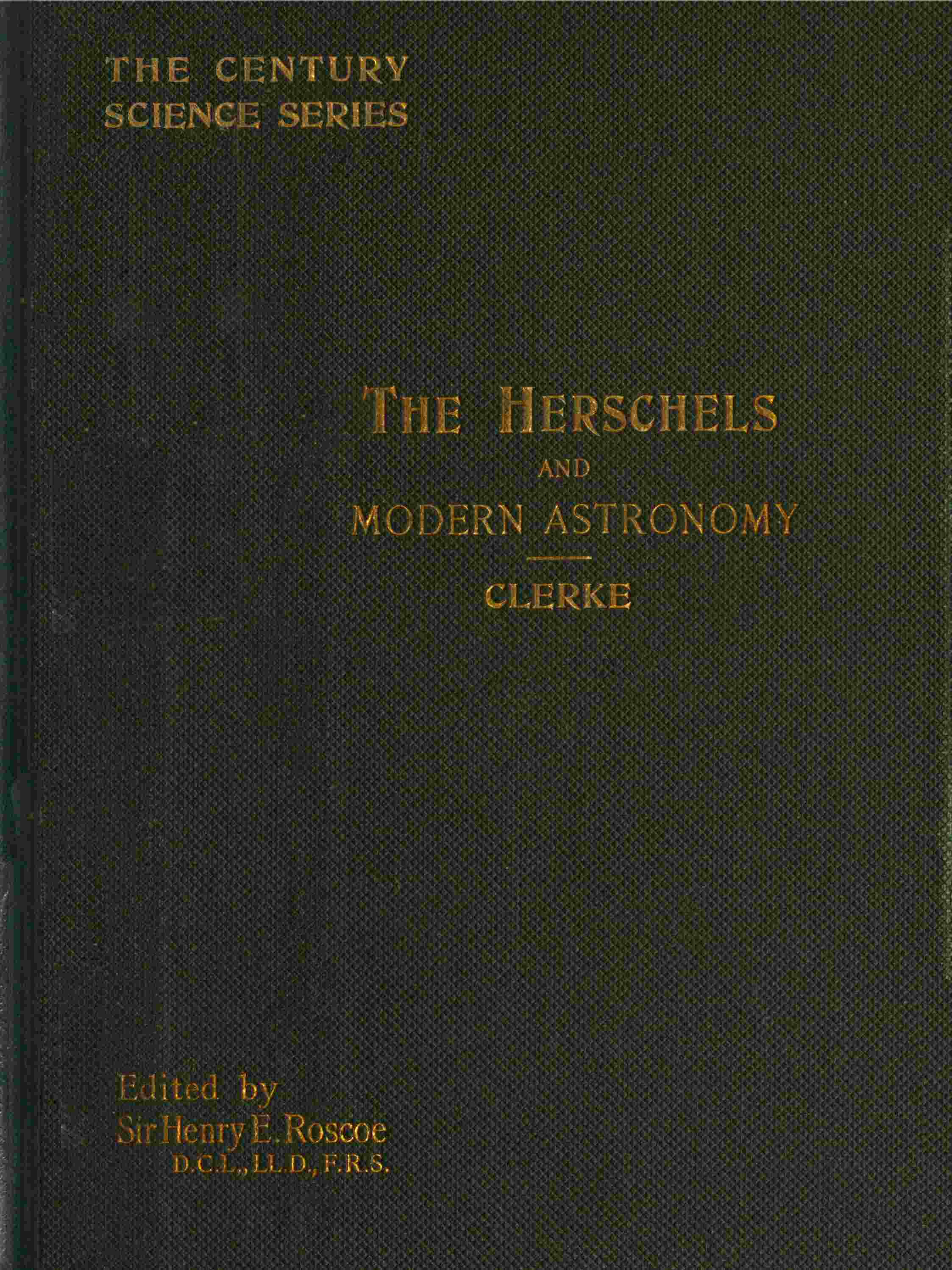
Before the Herschels, the cosmos was a static, known quantity. After them, it was infinite, discoverable, and endlessly mysterious. Agnes M. Clerke's late-nineteenth-century portrait captures William Herschel, the musician-turned-astronomer who stumbled upon a new planet (Uranus) with a homemade telescope in his garden, and his extraordinary sister Caroline, who became the first woman to be recognized as a scientific equal by England's Royal Society. Together, they pioneered the use of spectroscopy, cataloged thousands of nebulae and star clusters, and fundamentally altered humanity's understanding of the heavens. Clerke writes with the intimate authority of someone who knew these figures personally, drawing on correspondence, observation logs, and the forgotten papers of the Herschel household. This isn't merely biography; it's a meditation on how scientific revolutions actually unfold through patience, obsession, and sibling collaboration. The Herschels transformed astronomy from a passive observation of God's creation into an active investigation of cosmic forces.
Editions
Link to this book
Add a free, dofollow link to Lex on your blog, forum, syllabus, or reading list.

<a href="https://lex-books.com/book/the-herschels-and-modern-astronomy-cb12441c-b675-4b01-82b0-37e9161c442e"><img src="https://lex-books.com/badges/read-on-lex.svg" alt="Read The Herschels and Modern Astronomy by Agnes M. Clerke free on Lex" width="160" height="40"></a>[](https://lex-books.com/book/the-herschels-and-modern-astronomy-cb12441c-b675-4b01-82b0-37e9161c442e)[url=https://lex-books.com/book/the-herschels-and-modern-astronomy-cb12441c-b675-4b01-82b0-37e9161c442e][img]https://lex-books.com/badges/read-on-lex.svg[/img][/url]Read The Herschels and Modern Astronomy by Agnes M. Clerke free on Lex: https://lex-books.com/book/the-herschels-and-modern-astronomy-cb12441c-b675-4b01-82b0-37e9161c442eCite this book
Reading this edition for a paper or guide? Copy a citation.
Clerke, Agnes M.. The Herschels and Modern Astronomy. Lex, lex-books.com/book/the-herschels-and-modern-astronomy-cb12441c-b675-4b01-82b0-37e9161c442e.Clerke, A. M. (n.d.). The Herschels and Modern Astronomy. Lex. https://lex-books.com/book/the-herschels-and-modern-astronomy-cb12441c-b675-4b01-82b0-37e9161c442eClerke, Agnes M.. The Herschels and Modern Astronomy. Lex. https://lex-books.com/book/the-herschels-and-modern-astronomy-cb12441c-b675-4b01-82b0-37e9161c442e.