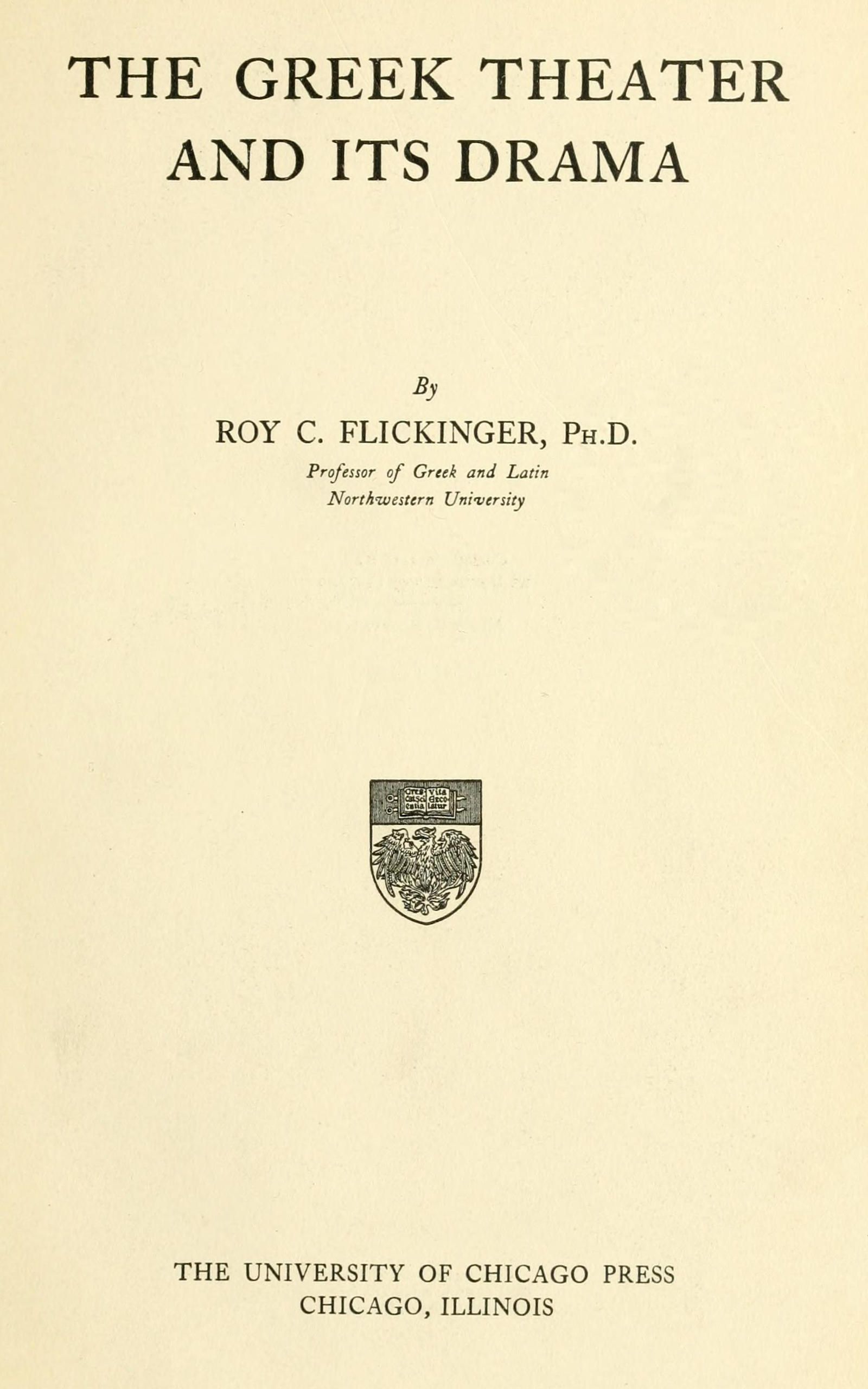
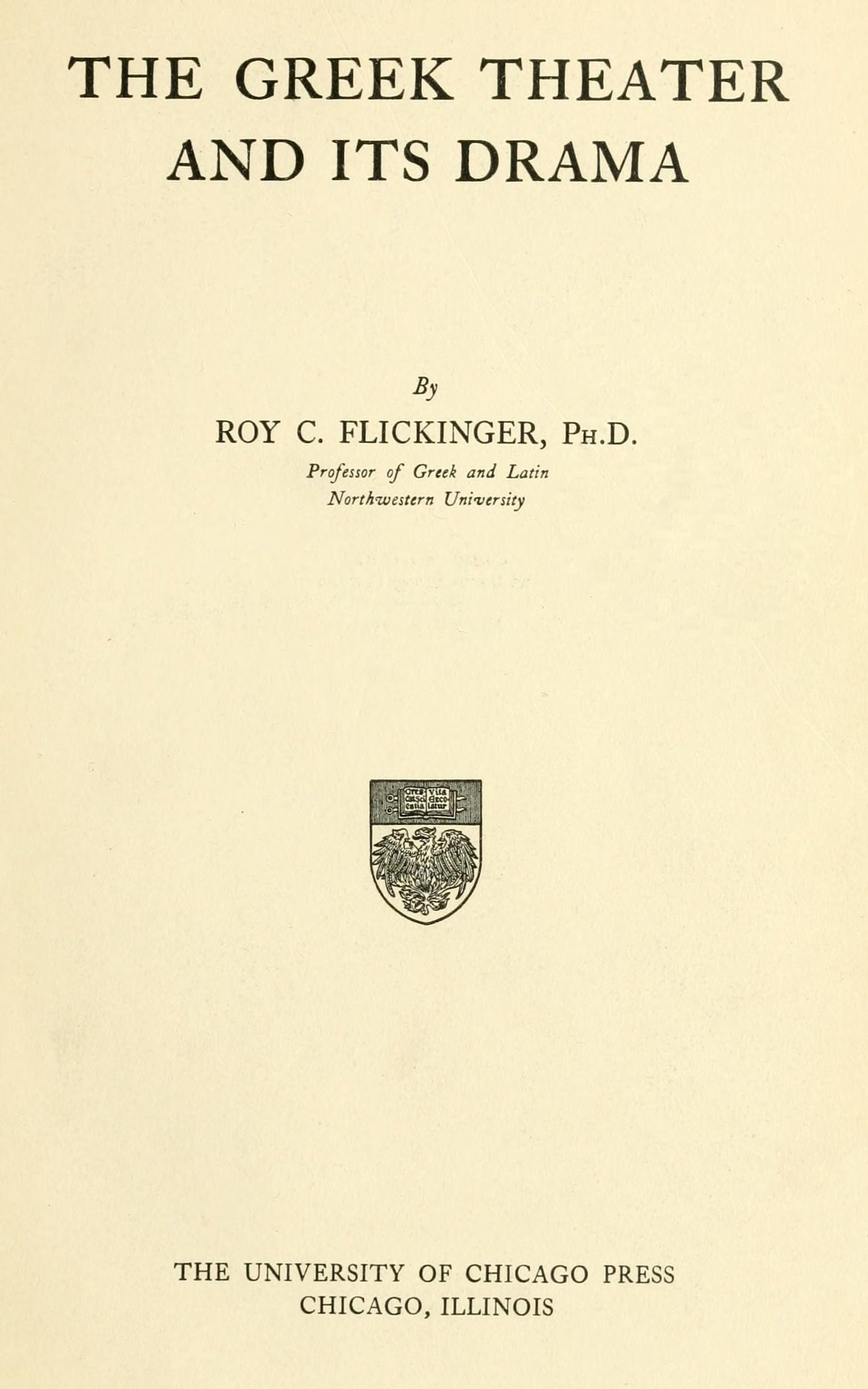
The Greek Theater and Its Drama
1918
The Greeks didn't just create drama; they invented the entire architecture of Western theater, and this 1918 study remains a lucid gateway to that founding achievement. Roy C. Flickinger traces how the physical constraints of the Greek amphitheater, the semicircular orchestra, the actors' masks, the minimalist set, shaped dramatic possibilities in ways we're still living with today. He maps the origins of both tragedy and comedy, showing how each form emerged from specific religious and civic contexts, then traces their evolution across the classical period. Throughout, Flickinger draws parallels to modern theater, making the ancient world feel like a living conversation rather than a sealed monument. Written for readers without classical training but who want genuine understanding, it balances scholarly rigor with genuine passion for its subject. A century later, it still serves as an ideal introduction for anyone curious about where drama comes from, and why those origins still matter.
Editions
X-Ray
Professor of Greek and Latin at Northwestern University and author of this scholarly work. He presents comprehensive analysis of Greek theater and drama through examination of archaeological evidence, literary sources, and dramatic texts.
Ancient Greek philosopher whose Poetics provides crucial testimony about drama's origins and development. Flickinger treats him as a reliable source despite modern skepticism.
German archaeologist whose excavations and theories about the Greek theater revolutionized understanding of ancient theatrical conditions. His work forms the foundation for much of Flickinger's analysis.
First great Athenian tragedian who elevated drama to literary importance and introduced the second actor. His plays provide crucial evidence for early dramatic practice.
About The Greek Theater and Its Drama
Chapter Summaries
- Introduction - The Origin of Tragedy
- Flickinger challenges the traditional view that tragedy developed from satyric drama, arguing instead that both evolved independently from the Peloponnesian dithyramb. He traces tragedy's development from Arion's innovations in Corinth through Thespis's invention of the actor in Attica.
- Introduction - The Origin of Comedy
- Comedy evolved from the comus, a phallic ritual procession that combined religious invocation with satirical abuse. Flickinger traces its development from primitive fertility rites through the addition of actors and the influence of Sicilian mime to create Old Comedy.
- Introduction - The Greek Theater
- Flickinger provides detailed analysis of theater architecture, strongly supporting Dörpfeld's theory that actors and chorus performed together in the orchestra without a raised stage during the classical period. He traces the evolution of the Athenian theater through multiple building phases.
Key Themes
- Religious Origins and Influence
- Greek drama emerged from religious worship of Dionysus and retained sacred character throughout its development. This religious foundation shaped dramatic conventions, subject matter, and performance conditions in fundamental ways.
- Evolution and Adaptation
- Drama evolved from simple choral performances to complex literary art through gradual innovations. Each development—from dithyramb to tragedy, from one actor to three—represents adaptation to new artistic and practical needs.
- Environmental Determinism
- Physical and social conditions profoundly shaped dramatic form and content. Theater architecture, festival arrangements, religious customs, and technical limitations all influenced how plays were written and performed.
Characters
- Roy C. Flickinger(protagonist)
- Professor of Greek and Latin at Northwestern University and author of this scholarly work. He presents comprehensive analysis of Greek theater and drama through examination of archaeological evidence, literary sources, and dramatic texts.
- Aristotle(major)
- Ancient Greek philosopher whose Poetics provides crucial testimony about drama's origins and development. Flickinger treats him as a reliable source despite modern skepticism.
- Wilhelm Dörpfeld(major)
- German archaeologist whose excavations and theories about the Greek theater revolutionized understanding of ancient theatrical conditions. His work forms the foundation for much of Flickinger's analysis.
- Aeschylus(major)
- First great Athenian tragedian who elevated drama to literary importance and introduced the second actor. His plays provide crucial evidence for early dramatic practice.
- Sophocles(major)
- Athenian tragedian who introduced the third actor and scene-painting, representing the height of Greek dramatic art. His technical innovations shaped theatrical practice.
- Euripides(major)
- Most innovative of the three great tragedians, known for psychological realism and controversial themes. His techniques influenced later drama significantly.
Link to this book
Add a free, dofollow link to Lex on your blog, forum, syllabus, or reading list.

<a href="https://lex-books.com/book/the-greek-theater-and-its-drama-d3dde91f-e21b-473f-9e6f-84233bc7b092"><img src="https://lex-books.com/badges/read-on-lex.svg" alt="Read The Greek Theater and Its Drama by Roy C. Flickinger free on Lex" width="160" height="40"></a>[](https://lex-books.com/book/the-greek-theater-and-its-drama-d3dde91f-e21b-473f-9e6f-84233bc7b092)[url=https://lex-books.com/book/the-greek-theater-and-its-drama-d3dde91f-e21b-473f-9e6f-84233bc7b092][img]https://lex-books.com/badges/read-on-lex.svg[/img][/url]Read The Greek Theater and Its Drama by Roy C. Flickinger free on Lex: https://lex-books.com/book/the-greek-theater-and-its-drama-d3dde91f-e21b-473f-9e6f-84233bc7b092Cite this book
Reading this edition for a paper or guide? Copy a citation.
Flickinger, Roy C.. The Greek Theater and Its Drama. Lex, lex-books.com/book/the-greek-theater-and-its-drama-d3dde91f-e21b-473f-9e6f-84233bc7b092.Flickinger, R. C. (1918). The Greek Theater and Its Drama. Lex. https://lex-books.com/book/the-greek-theater-and-its-drama-d3dde91f-e21b-473f-9e6f-84233bc7b092Flickinger, Roy C.. The Greek Theater and Its Drama. Lex. https://lex-books.com/book/the-greek-theater-and-its-drama-d3dde91f-e21b-473f-9e6f-84233bc7b092.