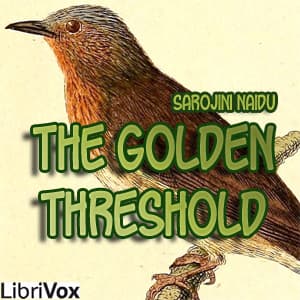
The Golden Threshold
1905
At twenty-six, Sarojini Naidu published a collection that would reshape the landscape of Indian English poetry. The Golden Threshold captures a young poet standing at the cusp of worlds: between the ancient rhythms of Indian folk tradition and the English language, between the domestic sphere of a traditional household and the possibility of a public voice. These are poems written in moonlight and mango blossoms, in longing and luminous passion. Naidu's verses pulse with sensory richness, night jasmine, monsoon thunder, the urgent flute-call of desire, yet beneath the lush imagery lies a fierce intelligence questioning the boundaries imposed on women and the silence imposed on voices like hers. This was the young Naidu before she became the first woman President of the Indian National Congress, before her friendship with Gandhi reshaped Indian politics. The revolutionary fire already burns in these early poems, banked but unmistakable. The Golden Threshold endures because it captures a specific, irreplaceable moment: a brilliant young woman finding her voice between cultures, between duty and desire, between the threshold she would cross into history.
Editions
X-Ray
“Cover mine eyes, O my Love! Mine eyes that are weary of bliss As of light that is poignant and strong O silence my lips with a kiss, My lips that are weary of song! Shelter my soul, O my love! My soul is bent low with the pain And the burden of love, like the grace Of a flower that is smitten with rain: O shelter my soul from thy face!””
— Sarojini Naidu
Link to this book
Add a free, dofollow link to Lex on your blog, forum, syllabus, or reading list.

<a href="https://lex-books.com/book/the-golden-threshold-588defe9-a33f-4cee-948a-24988b262b13"><img src="https://lex-books.com/badges/read-on-lex.svg" alt="Read The Golden Threshold by Sarojini Naidu free on Lex" width="160" height="40"></a>[](https://lex-books.com/book/the-golden-threshold-588defe9-a33f-4cee-948a-24988b262b13)[url=https://lex-books.com/book/the-golden-threshold-588defe9-a33f-4cee-948a-24988b262b13][img]https://lex-books.com/badges/read-on-lex.svg[/img][/url]Read The Golden Threshold by Sarojini Naidu free on Lex: https://lex-books.com/book/the-golden-threshold-588defe9-a33f-4cee-948a-24988b262b13Cite this book
Reading this edition for a paper or guide? Copy a citation.
Naidu, Sarojini. The Golden Threshold. Lex, lex-books.com/book/the-golden-threshold-588defe9-a33f-4cee-948a-24988b262b13.Naidu, S. (1905). The Golden Threshold. Lex. https://lex-books.com/book/the-golden-threshold-588defe9-a33f-4cee-948a-24988b262b13Naidu, Sarojini. The Golden Threshold. Lex. https://lex-books.com/book/the-golden-threshold-588defe9-a33f-4cee-948a-24988b262b13.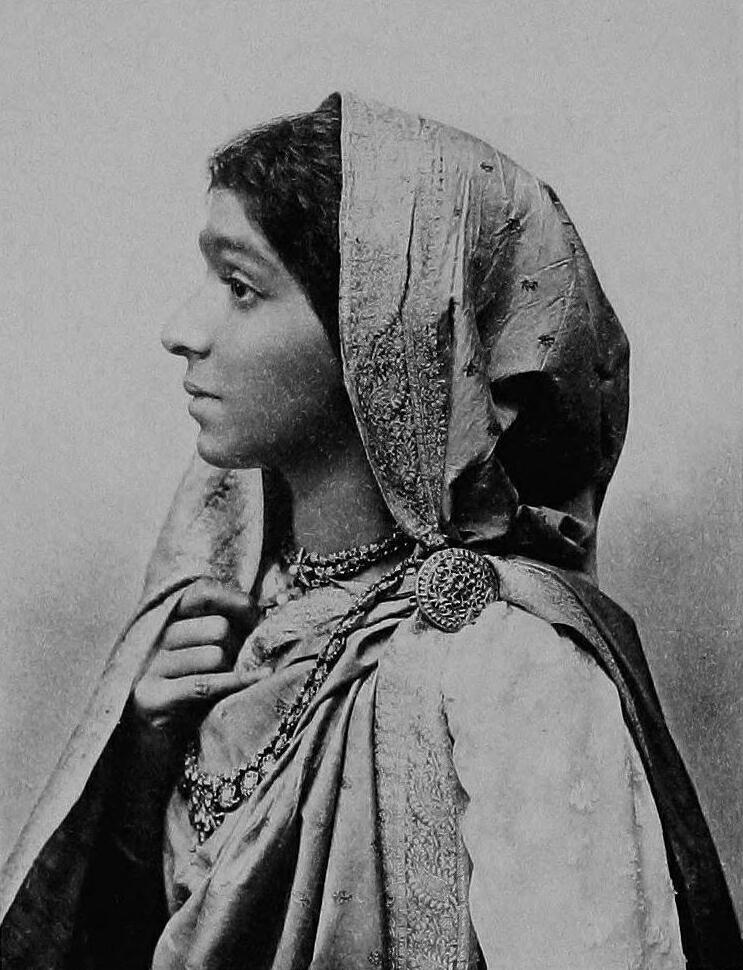





![Birds and Nature, Vol. 12 No. 1 [June 1902]illustrated by Color Photography](/_next/image?url=https%3A%2F%2Fd3b2n8gj62qnwr.cloudfront.net%2FCOVERS%2Fgutenberg_covers75k%2Febook-47881.png&w=3840&q=75)