The Glory of the Pharaohs
1923
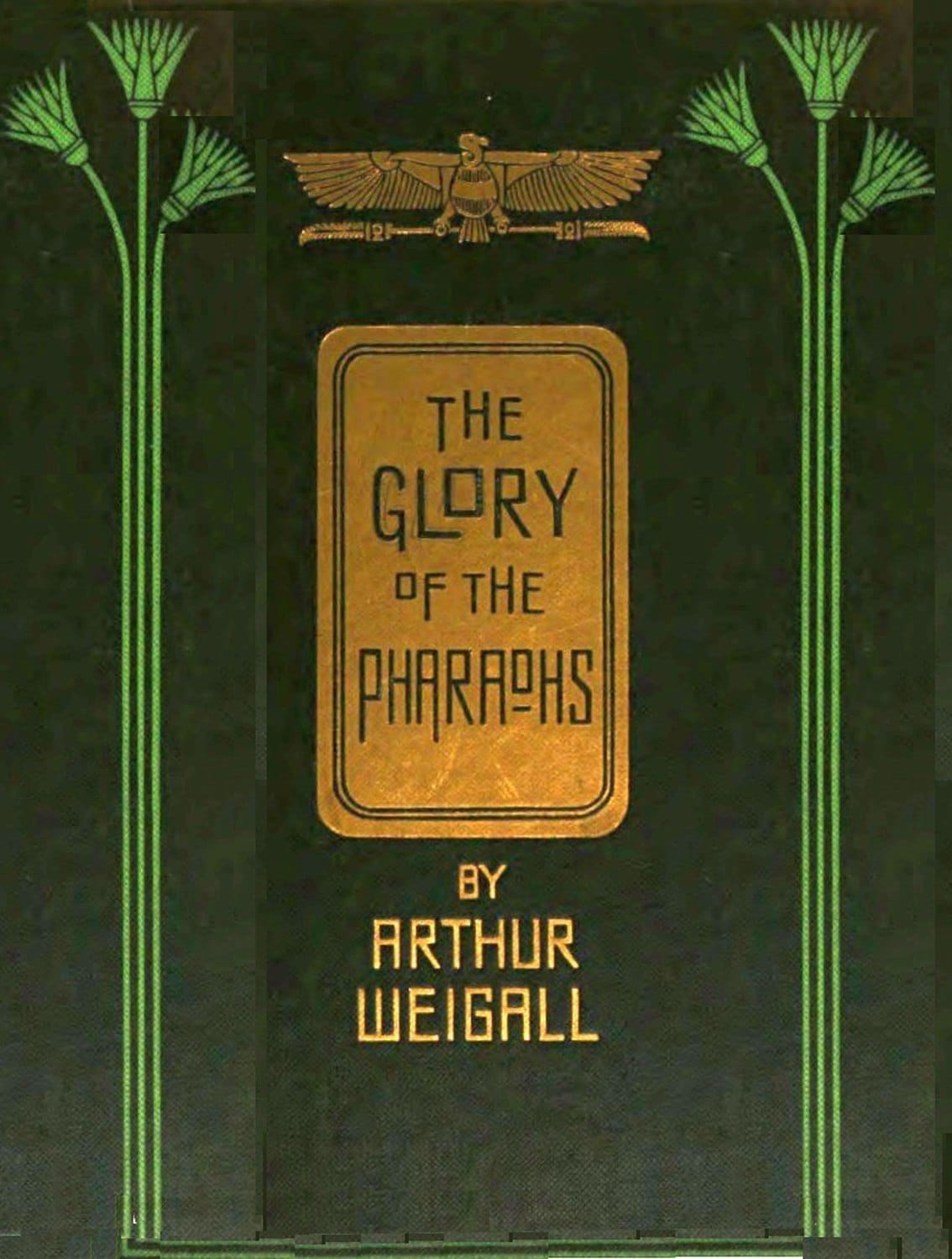
The Glory of the Pharaohs
1923
In the early 1920s, as Tutankhamun's tomb still echoed with recent discovery, Arthur Weigall made a passionate argument for a kind of archaeology that was disappearing: the rough, sun-blistered, deeply human work of excavation in the Egyptian desert, versus the comfortable scholarship of museums and libraries. This is not a dry academic treatise but a fiercely personal defense of getting your hands dirty. Weigall believed that understanding ancient Egypt meant living among its ruins, parsing the faces of modern Egyptians for traces of their ancestors, and feeling the weight of history beneath your feet. He contrasts the field Egyptologist, battling heat and bureaucracy and the slow revelation of buried temples, with the armchair scholar who never left London. The book captures a transitional moment in the discipline, before archaeology became systematized into what we recognize today, when it was still partly science and partly romance. For readers who dream of dust-caked explorers and the thrill of finding something the world had forgotten, Weigall's manifesto remains electrifying.
Editions

Link to this book
Add a free, dofollow link to Lex on your blog, forum, syllabus, or reading list.

<a href="https://lex-books.com/book/the-glory-of-the-pharaohs-5514492d-bbd0-4dda-8fc8-8c37243fe0a7"><img src="https://lex-books.com/badges/read-on-lex.svg" alt="Read The Glory of the Pharaohs by Arthur E. P. Brome Weigall free on Lex" width="160" height="40"></a>[](https://lex-books.com/book/the-glory-of-the-pharaohs-5514492d-bbd0-4dda-8fc8-8c37243fe0a7)[url=https://lex-books.com/book/the-glory-of-the-pharaohs-5514492d-bbd0-4dda-8fc8-8c37243fe0a7][img]https://lex-books.com/badges/read-on-lex.svg[/img][/url]Read The Glory of the Pharaohs by Arthur E. P. Brome Weigall free on Lex: https://lex-books.com/book/the-glory-of-the-pharaohs-5514492d-bbd0-4dda-8fc8-8c37243fe0a7Cite this book
Reading this edition for a paper or guide? Copy a citation.
Weigall, Arthur E. P. Brome. The Glory of the Pharaohs. Lex, lex-books.com/book/the-glory-of-the-pharaohs-5514492d-bbd0-4dda-8fc8-8c37243fe0a7.Weigall, A. E. P. B. (1923). The Glory of the Pharaohs. Lex. https://lex-books.com/book/the-glory-of-the-pharaohs-5514492d-bbd0-4dda-8fc8-8c37243fe0a7Weigall, Arthur E. P. Brome. The Glory of the Pharaohs. Lex. https://lex-books.com/book/the-glory-of-the-pharaohs-5514492d-bbd0-4dda-8fc8-8c37243fe0a7.