The Foundations of Personality
1921
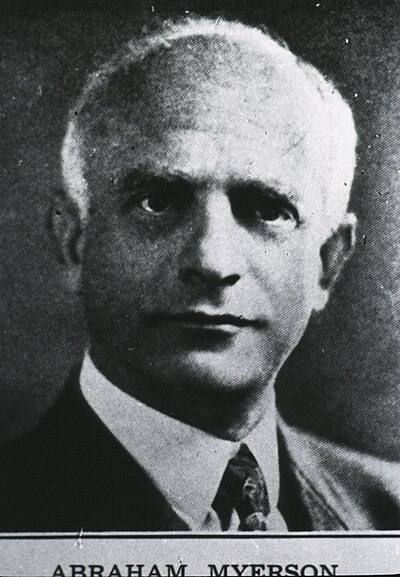
Before personality became a field, there was chaos: physiognomists reading faces, phrenologists mapping skulls, mystics invoking souls. In 1921, neurologist Abraham Myerson attempted something radical: he tried to impose scientific order on the study of who we are. Writing at a moment when psychology was still carving out its territory, Myerson systematically dismantles the pseudoscientific approaches that had dominated for centuries, arguing that understanding character requires neither metaphysics nor fortune-telling, but rigorous attention to the body and the world it inhabits. He makes the case that brain health, hormonal activity, and social environment together shape identity in ways that palm readers and phrenologists never grasped. What emerges is a fascinating artifact of early twentieth-century thought, at once pioneering and period-specific. Myerson's insistence on biological underpinnings feels remarkably modern, yet his framework also reflects the era's confident faith in scientific explanation. The book stands as a window into how serious thinkers once attempted to resolve the ancient puzzle of what makes a person a person, before the field fractured into the competing schools we know today. For readers interested in the history of psychology, neuroscience, or the evolution of scientific thinking about human nature, it offers a compelling glimpse of an ambitious mind wrestling with questions we still cannot fully answer.
Editions
X-Ray
“We like or dislike too readily, we are blinded by the race, sex and age of the one studied, and, most fatal of all, we judge by standards of beauty that are totally misleading. The sweetest face may hide the most arrant egoist, for facial beauty has very little to do with the nature behind the face. In fact, facial make-up is more influenced by diet, disease and racial tendency than by character.””
— Abraham Myerson
“The prime result of the growth of intelligence and of experience is to make one, as it were, objective toward oneself, to view one's own thoughts, beliefs and emotions with some humor and skepticism.””
— Abraham Myerson
“The race and the nation has its generous enthusiasms and its bursts of admiration for the noble, but its real admiration it gives to those whom it best understands. Fortunately the leaders of the race have more of generosity and fine admiration than have the mass they lead. Left to itself, the mass of the race limits its hero-worship to the lesser, unworthy race of heroes.””
— Abraham Myerson
“A vigorous mind shut out from outer stimuli finds in this circumstance the time to develop leisurely, finds a freedom from distraction that leads to clear views of life and a proper expression.””
— Abraham Myerson
“In reality, man is a mosaic of wills; and the will of each instinct, each desire, each purpose, is the intensity of that instinct, desire or purpose.””
— Abraham Myerson
“From infancy one sees the war of purposes and desires and the gradual rise of one purpose or set of purposes into dominance,”
— Abraham Myerson
“For it is this plurality of contact that vitalizes, and he who has not drawn his universals of character out of the particulars of everyday life is a cloistered theorist, aloof from reality.””
— Abraham Myerson
“The pleasure of praise and reward must energize, the pain of blame and punishment. must teach, else teacher and society have misused these social tools.””
— Abraham Myerson
“Unless the home combines interest and freedom, together with teaching, certain children become violent rebels, and, seeking freedom and interest outside of the home, find themselves in a conflict, both with their home teaching and the home teachers, that shakes the unity and the happiness of parent and child.””
— Abraham Myerson
Link to this book
Add a free, dofollow link to Lex on your blog, forum, syllabus, or reading list.

<a href="https://lex-books.com/book/the-foundations-of-personality-0da48af9-e1d7-4bea-8f2e-d6f0c623c71d"><img src="https://lex-books.com/badges/read-on-lex.svg" alt="Read The Foundations of Personality by Abraham Myerson free on Lex" width="160" height="40"></a>[](https://lex-books.com/book/the-foundations-of-personality-0da48af9-e1d7-4bea-8f2e-d6f0c623c71d)[url=https://lex-books.com/book/the-foundations-of-personality-0da48af9-e1d7-4bea-8f2e-d6f0c623c71d][img]https://lex-books.com/badges/read-on-lex.svg[/img][/url]Read The Foundations of Personality by Abraham Myerson free on Lex: https://lex-books.com/book/the-foundations-of-personality-0da48af9-e1d7-4bea-8f2e-d6f0c623c71dCite this book
Reading this edition for a paper or guide? Copy a citation.
Myerson, Abraham. The Foundations of Personality. Lex, lex-books.com/book/the-foundations-of-personality-0da48af9-e1d7-4bea-8f2e-d6f0c623c71d.Myerson, A. (1921). The Foundations of Personality. Lex. https://lex-books.com/book/the-foundations-of-personality-0da48af9-e1d7-4bea-8f2e-d6f0c623c71dMyerson, Abraham. The Foundations of Personality. Lex. https://lex-books.com/book/the-foundations-of-personality-0da48af9-e1d7-4bea-8f2e-d6f0c623c71d.