The Elder Son Explained, and the Romish Church Exposed
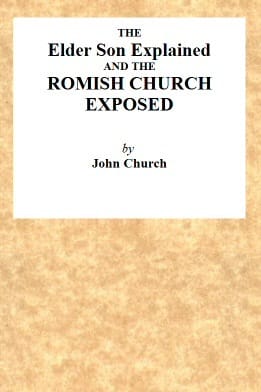
This 19th-century Protestant treatise offers a fiery interpretation of one of Jesus' most provocative parables. Church argues that the elder son in Luke 15 represents not a cautionary tale about laziness, but a devastating portrait of self-righteousness: the moralist who boasts of obedience while harboring spiritual pride that blinds them to their own need for grace. He dissects the elder son's resentment toward his father's mercy, using it as a lens to examine how religious observance can mask a heart far from God. The second half pivots to an equally passionate critique of Roman Catholic doctrine, which Church views as institutionalizing the very self-righteousness he anatomizes in the parable. Written in an era of intense Protestant-Catholic division, this work reflects a theological moment when defending 'true' faith meant combative opposition to error. For readers interested in 19th-century religious polemic, the history of Protestant thought, or the long tradition of biblical interpretation as cultural critique, this remains a striking document of faith and fervor.
Editions
Link to this book
Add a free, dofollow link to Lex on your blog, forum, syllabus, or reading list.

<a href="https://lex-books.com/book/the-elder-son-explained-and-the-romish-church-exposed-14f234d0-0ac6-4de7-a802-0f4a8c9c0d3d"><img src="https://lex-books.com/badges/read-on-lex.svg" alt="Read The Elder Son Explained, and the Romish Church Exposed by J. Church free on Lex" width="160" height="40"></a>[](https://lex-books.com/book/the-elder-son-explained-and-the-romish-church-exposed-14f234d0-0ac6-4de7-a802-0f4a8c9c0d3d)[url=https://lex-books.com/book/the-elder-son-explained-and-the-romish-church-exposed-14f234d0-0ac6-4de7-a802-0f4a8c9c0d3d][img]https://lex-books.com/badges/read-on-lex.svg[/img][/url]Read The Elder Son Explained, and the Romish Church Exposed by J. Church free on Lex: https://lex-books.com/book/the-elder-son-explained-and-the-romish-church-exposed-14f234d0-0ac6-4de7-a802-0f4a8c9c0d3dCite this book
Reading this edition for a paper or guide? Copy a citation.
Church, J.. The Elder Son Explained, and the Romish Church Exposed. Lex, lex-books.com/book/the-elder-son-explained-and-the-romish-church-exposed-14f234d0-0ac6-4de7-a802-0f4a8c9c0d3d.Church, J. (n.d.). The Elder Son Explained, and the Romish Church Exposed. Lex. https://lex-books.com/book/the-elder-son-explained-and-the-romish-church-exposed-14f234d0-0ac6-4de7-a802-0f4a8c9c0d3dChurch, J.. The Elder Son Explained, and the Romish Church Exposed. Lex. https://lex-books.com/book/the-elder-son-explained-and-the-romish-church-exposed-14f234d0-0ac6-4de7-a802-0f4a8c9c0d3d.

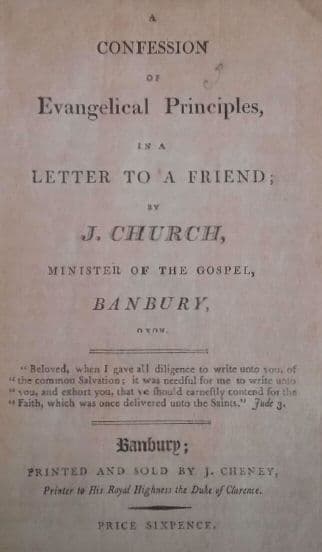





![The Voice of Faith in the Valley of Achor: Vol. 2 [Of 2]being a Series of Letters to Several Friends on Religious Subjects](/_next/image?url=https%3A%2F%2Fd3b2n8gj62qnwr.cloudfront.net%2FCOVERS%2Fgutenberg_covers75k%2Febook-58618.png&w=3840&q=75)
![The Voice of Faith in the Valley of Achor: Vol. 1 [Of 2]being a Series of Letters to Several Friends on Religious Subjects](/_next/image?url=https%3A%2F%2Fd3b2n8gj62qnwr.cloudfront.net%2FCOVERS%2Fgutenberg_covers75k%2Febook-58616.png&w=3840&q=75)