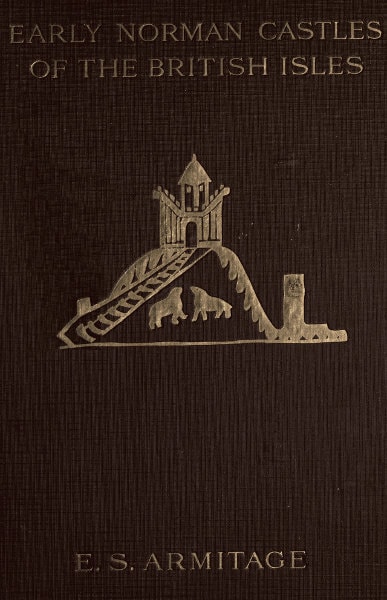
The Early Norman Castles of the British Isles.
1912
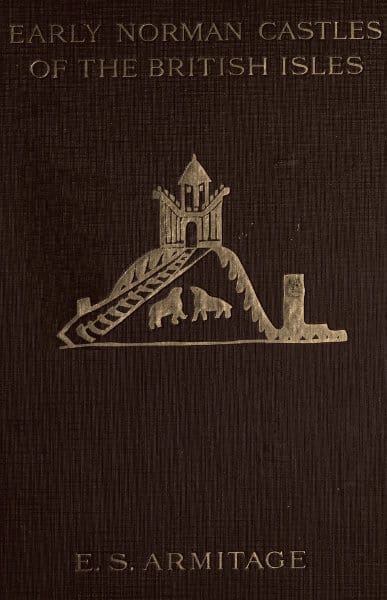
The Early Norman Castles of the British Isles.
1912
At a time when archaeology was still finding its feet, Ella Sophia Armitage undertook the ambitious task of mapping Britain's Norman inheritance. This 1912 study traces the seismic architectural shift that followed 1066, showing how the Normans transformed a landscape of Anglo-Saxon and Danish earthworks into something altogether more permanent: the stone castle that would dominate European defense for centuries. Armitage turns her attention to what others had overlooked. The forgotten earthworks, the moated mounds, the subtle earthworks that preceded the great stone keeps. She understood these were not mere precursors but essential threads in a feudal tapestry, clues to how castles functioned as expressions of Norman power stitched across the British landscape. For the reader willing to dig into its pages, this remains a foundational text on how one conquest literally reshaped the ground beneath a nation's feet.
Editions
X-Ray
The author and scholar who presents the comprehensive study of early Norman castles. She methodically argues against previous theories and establishes the Norman origin of motte-and-bailey castles through extensive archaeological and documentary evidence.
Previous scholar whose theory that moated mounds were Saxon burhs is systematically dismantled by Armitage. Represents the old guard of archaeological thinking that she seeks to correct.
The Norman king whose invasion of England in 1066 brought the motte-and-bailey castle system to Britain. Central historical figure whose military strategy of castle-building forms the backbone of Armitage's argument.
Saxon king who built burhs (fortified towns) for community defense, contrasting with the private Norman castles. His defensive strategy represents the pre-Norman approach to fortification.
About The Early Norman Castles of the British Isles.
Chapter Summaries
- I
- Armitage introduces the neglected study of earthworks and criticizes previous unscientific approaches. She outlines the characteristics of motte-and-bailey castles and argues they represent the work of invaders rather than native inhabitants.
- II
- Examines Saxon defensive works, particularly the burhs built by Alfred and his successors. Armitage demonstrates these were fortified towns for community defense, not private castles, and systematically refutes Clark's theory.
- III
- Continues detailed analysis of specific Saxon burhs, providing archaeological descriptions and historical context. Shows how these communal fortifications differed fundamentally from Norman private castles.
Key Themes
- Scientific Method vs. Traditional Authority
- Armitage champions rigorous archaeological methodology over accepted wisdom, systematically dismantling theories based on speculation rather than evidence. She demonstrates how scientific observation can overturn long-held scholarly assumptions.
- Norman Transformation of Britain
- The book reveals how the Norman Conquest fundamentally altered British society through the introduction of feudalism and private fortification. The motte-and-bailey castle becomes a symbol of this revolutionary social change.
- Community vs. Individual Defense
- Armitage contrasts Saxon burhs, built for community protection, with Norman castles designed for individual lords. This reflects the broader shift from tribal to feudal society in medieval Britain.
Characters
- Ella S. Armitage(protagonist)
- The author and scholar who presents the comprehensive study of early Norman castles. She methodically argues against previous theories and establishes the Norman origin of motte-and-bailey castles through extensive archaeological and documentary evidence.
- G. T. Clark(antagonist)
- Previous scholar whose theory that moated mounds were Saxon burhs is systematically dismantled by Armitage. Represents the old guard of archaeological thinking that she seeks to correct.
- William the Conqueror(major)
- The Norman king whose invasion of England in 1066 brought the motte-and-bailey castle system to Britain. Central historical figure whose military strategy of castle-building forms the backbone of Armitage's argument.
- Alfred the Great(major)
- Saxon king who built burhs (fortified towns) for community defense, contrasting with the private Norman castles. His defensive strategy represents the pre-Norman approach to fortification.
- Edward the Elder(major)
- Saxon king and son of Alfred who continued the policy of building burhs. His fortifications are contrasted with Norman castles to demonstrate different defensive philosophies.
- Ethelfleda(major)
- Daughter of Alfred who built numerous burhs in Mercia. Her community-focused fortifications contrast sharply with individualistic Norman castles.
Link to this book
Add a free, dofollow link to Lex on your blog, forum, syllabus, or reading list.

<a href="https://lex-books.com/book/the-early-norman-castles-of-the-british-isles-930aff4b-1d3a-40f6-9128-1221e85a068b"><img src="https://lex-books.com/badges/read-on-lex.svg" alt="Read The Early Norman Castles of the British Isles. by Ella Sophia Armitage free on Lex" width="160" height="40"></a>[](https://lex-books.com/book/the-early-norman-castles-of-the-british-isles-930aff4b-1d3a-40f6-9128-1221e85a068b)[url=https://lex-books.com/book/the-early-norman-castles-of-the-british-isles-930aff4b-1d3a-40f6-9128-1221e85a068b][img]https://lex-books.com/badges/read-on-lex.svg[/img][/url]Read The Early Norman Castles of the British Isles. by Ella Sophia Armitage free on Lex: https://lex-books.com/book/the-early-norman-castles-of-the-british-isles-930aff4b-1d3a-40f6-9128-1221e85a068bCite this book
Reading this edition for a paper or guide? Copy a citation.
Armitage, Ella Sophia. The Early Norman Castles of the British Isles.. Lex, lex-books.com/book/the-early-norman-castles-of-the-british-isles-930aff4b-1d3a-40f6-9128-1221e85a068b.Armitage, E. S. (1912). The Early Norman Castles of the British Isles.. Lex. https://lex-books.com/book/the-early-norman-castles-of-the-british-isles-930aff4b-1d3a-40f6-9128-1221e85a068bArmitage, Ella Sophia. The Early Norman Castles of the British Isles.. Lex. https://lex-books.com/book/the-early-norman-castles-of-the-british-isles-930aff4b-1d3a-40f6-9128-1221e85a068b.