The Discovery and Decipherment of the Trilingual Cuneiform Inscriptions
1902
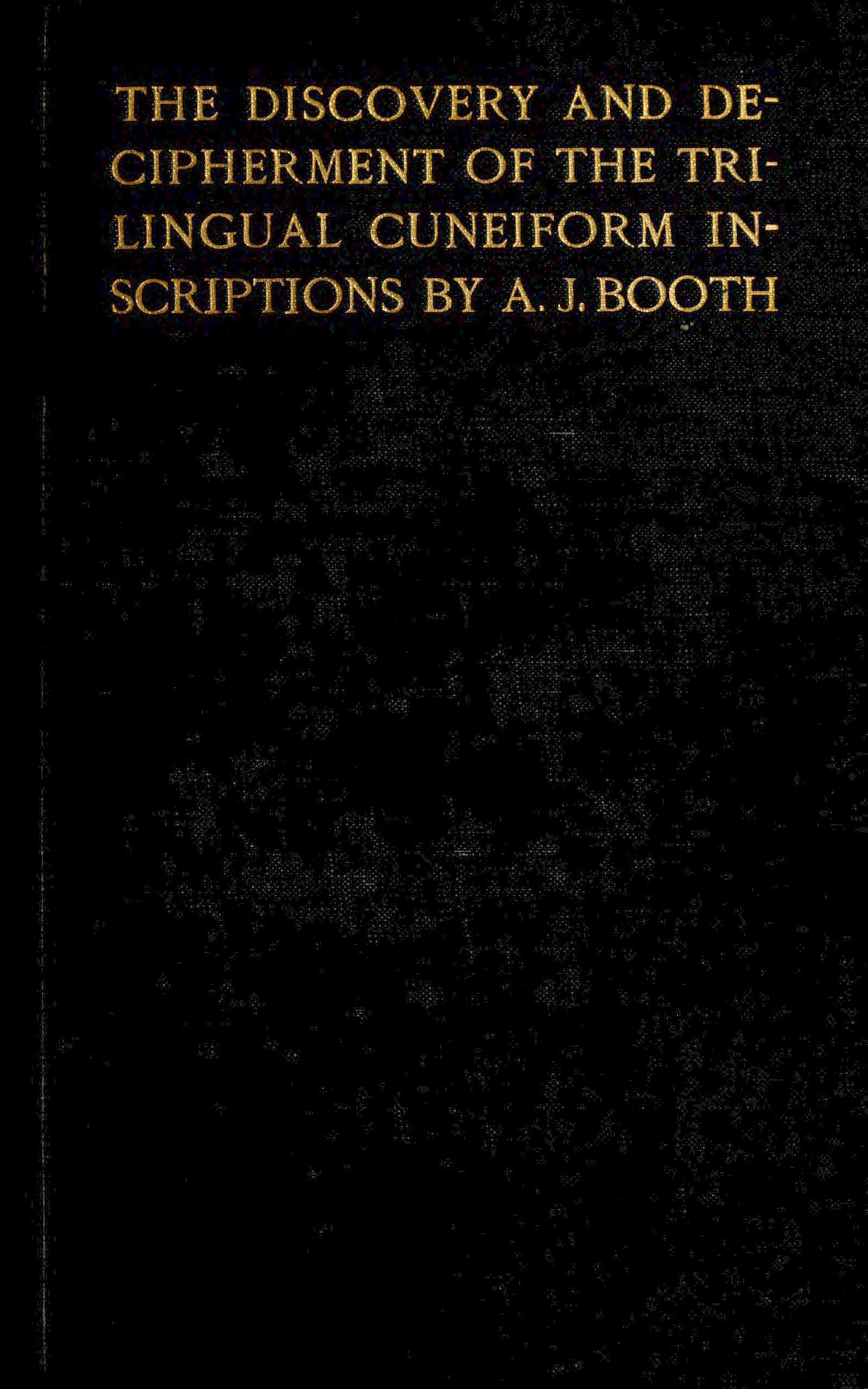
The Discovery and Decipherment of the Trilingual Cuneiform Inscriptions
1902
The decipherment of cuneiform in the 19th century ranks among the greatest intellectual adventures in human history. For centuries, the wedge-shaped marks carved into stone across ancient Persia and Mesopotamia were dismissed as decorative ornamentation, their meaning lost to time. Then, through extraordinary persistence and linguistic brilliance, a handful of scholars unlocked a writing system older than any alphabet, restoring voices that had been silent for over two millennia. Arthur John Booth's 1902 account traces this achievement from the first fumbling attempts through the breakthrough at Behistun Rock, where a three-language inscription became the key to everything. He follows Rawlinson, Hincks, and others who reconstructed a dead language from scratch, using only their knowledge of related tongues and sheer intellectual determination. The trilingual Achaemenian inscriptions emerged from this labor, revealing the genealogies, conquests, and religious practices of the great Persian emperors. This book captures a pivotal moment when the ancient Near East became readable again. It remains essential for anyone curious about how we recovered our oldest written records and what those records tell us about the first world empire.
Editions

Link to this book
Add a free, dofollow link to Lex on your blog, forum, syllabus, or reading list.

<a href="https://lex-books.com/book/the-discovery-and-decipherment-of-the-trilingual-cuneiform-inscriptions-865e78eb-efe0-46fc-85f6-cfddbbb5a0b3"><img src="https://lex-books.com/badges/read-on-lex.svg" alt="Read The Discovery and Decipherment of the Trilingual Cuneiform Inscriptions by Arthur John Booth free on Lex" width="160" height="40"></a>[](https://lex-books.com/book/the-discovery-and-decipherment-of-the-trilingual-cuneiform-inscriptions-865e78eb-efe0-46fc-85f6-cfddbbb5a0b3)[url=https://lex-books.com/book/the-discovery-and-decipherment-of-the-trilingual-cuneiform-inscriptions-865e78eb-efe0-46fc-85f6-cfddbbb5a0b3][img]https://lex-books.com/badges/read-on-lex.svg[/img][/url]Read The Discovery and Decipherment of the Trilingual Cuneiform Inscriptions by Arthur John Booth free on Lex: https://lex-books.com/book/the-discovery-and-decipherment-of-the-trilingual-cuneiform-inscriptions-865e78eb-efe0-46fc-85f6-cfddbbb5a0b3Cite this book
Reading this edition for a paper or guide? Copy a citation.
Booth, Arthur John. The Discovery and Decipherment of the Trilingual Cuneiform Inscriptions. Lex, lex-books.com/book/the-discovery-and-decipherment-of-the-trilingual-cuneiform-inscriptions-865e78eb-efe0-46fc-85f6-cfddbbb5a0b3.Booth, A. J. (1902). The Discovery and Decipherment of the Trilingual Cuneiform Inscriptions. Lex. https://lex-books.com/book/the-discovery-and-decipherment-of-the-trilingual-cuneiform-inscriptions-865e78eb-efe0-46fc-85f6-cfddbbb5a0b3Booth, Arthur John. The Discovery and Decipherment of the Trilingual Cuneiform Inscriptions. Lex. https://lex-books.com/book/the-discovery-and-decipherment-of-the-trilingual-cuneiform-inscriptions-865e78eb-efe0-46fc-85f6-cfddbbb5a0b3.