The Danish History, Books I-IX
1894
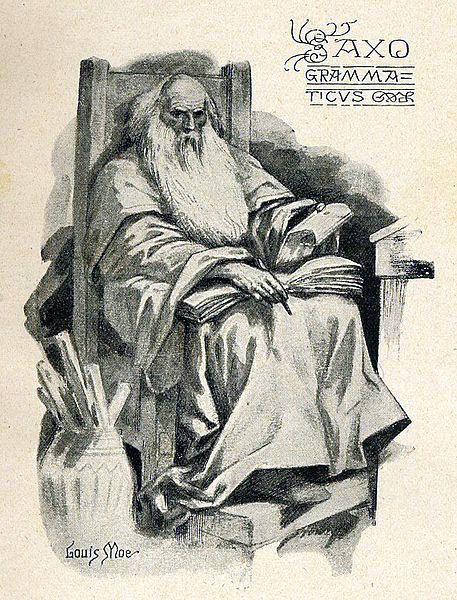
Saxo Grammaticus gave Denmark its memory. Before his work, the Danes possessed no written chronicle, no literary monument to match the sagas flowing from Iceland. In the late 12th century, Bishop Absalon charged his secretary with preserving the deeds of Danish kings, and Saxo produced something far greater than mere chronicle: a sprawling, violent, mythological epic that stretches from the world's creation through legendary rulers to the historical King Gorm. Here lies the raw seed of Hamlet in the tale of Amleth, the slavering fury of warrior kings, gods mingling with mortals, and a nation inventing itself through story. Saxo's Latin is ornate and difficult, his sources messily interwoven, but his ambition is staggering: to prove that Denmark's past could rival any nation's mythology. This is not history as modern readers understand it. It is something more ancient and more alive, where legend and kingship bleed together, and the deeds of the Danes become eternal.
Editions
X-Ray
Legendary founder of the Danish people alongside his brother Angul. Son of Humble, he established the royal lineage from which all Danish kings descended.
First great Danish king, son of Lother. Known for his exceptional valor, wise laws, and founding the Skioldung dynasty. Defeated the giant Skat and married Alfhild.
Son of Skiold, renowned warrior king who defeated giants and conquered Sweden. His name became synonymous with royal dignity in ancient Danish poetry.
Son of Gram, raised by giants after his father's death. A complex hero who journeyed to the underworld, fought gods and monsters, and eventually became king of Denmark.
About The Danish History, Books I-IX
Chapter Summaries
- 1
- Saxo establishes the legendary origins of Denmark through Dan and Angul, sons of Humble. The narrative follows the early kings including Lother's tyranny, Skiold's heroic rise, and Gram's conquests, establishing the foundational myths of Danish royalty.
- 2
- The epic tale of Hadding, son of Gram, who was raised by giants after his father's death. His adventures include a mystical journey to the underworld, battles with supernatural foes, and his eventual rise to kingship through cunning and valor.
- 3
- The reign of Frode, Hadding's son, who becomes the greatest lawgiver and conqueror in Danish history. His campaigns across Europe, establishment of just laws, and creation of a golden age of peace and prosperity define the height of legendary Danish power.
Key Themes
- Vengeance and Justice
- The driving force behind many narratives, from Hadding's quest to avenge his father to Amleth's elaborate scheme against Feng. Saxo presents vengeance as both a moral duty and a dangerous obsession that can consume generations.
- Divine vs. Mortal Power
- The tension between gods and humans permeates the work, with mortals like Hother successfully challenging divine authority. This reflects the transition from pagan to Christian worldview, where earthly courage can triumph over false gods.
- Wisdom Through Deception
- Characters like Amleth and Hadding achieve their goals through cunning rather than brute force. Saxo celebrates intellectual prowess and strategic thinking as noble virtues, especially when used to overcome tyranny.
Characters
- Dan(major)
- Legendary founder of the Danish people alongside his brother Angul. Son of Humble, he established the royal lineage from which all Danish kings descended.
- Skiold(major)
- First great Danish king, son of Lother. Known for his exceptional valor, wise laws, and founding the Skioldung dynasty. Defeated the giant Skat and married Alfhild.
- Gram(major)
- Son of Skiold, renowned warrior king who defeated giants and conquered Sweden. His name became synonymous with royal dignity in ancient Danish poetry.
- Hadding(protagonist)
- Son of Gram, raised by giants after his father's death. A complex hero who journeyed to the underworld, fought gods and monsters, and eventually became king of Denmark.
- Frode(major)
- Son of Hadding, legendary lawgiver and conqueror. Known for establishing just laws, conquering vast territories, and creating a golden age of peace and prosperity.
- Rolf (Hrolf)(major)
- Great Danish king known for his extraordinary height, generosity, and the tragic end brought about by his sister Skulde's treachery. Central figure in the heroic age.
Link to this book
Add a free, dofollow link to Lex on your blog, forum, syllabus, or reading list.

<a href="https://lex-books.com/book/the-danish-history-books-i-ix-dba17ab5-7a81-4072-bb99-511ffa4bc4a8"><img src="https://lex-books.com/badges/read-on-lex.svg" alt="Read The Danish History, Books I-IX by Grammaticus,Saxo free on Lex" width="160" height="40"></a>[](https://lex-books.com/book/the-danish-history-books-i-ix-dba17ab5-7a81-4072-bb99-511ffa4bc4a8)[url=https://lex-books.com/book/the-danish-history-books-i-ix-dba17ab5-7a81-4072-bb99-511ffa4bc4a8][img]https://lex-books.com/badges/read-on-lex.svg[/img][/url]Read The Danish History, Books I-IX by Grammaticus,Saxo free on Lex: https://lex-books.com/book/the-danish-history-books-i-ix-dba17ab5-7a81-4072-bb99-511ffa4bc4a8Cite this book
Reading this edition for a paper or guide? Copy a citation.
Grammaticus,Saxo. The Danish History, Books I-IX. Lex, lex-books.com/book/the-danish-history-books-i-ix-dba17ab5-7a81-4072-bb99-511ffa4bc4a8.Grammaticus, S. (1894). The Danish History, Books I-IX. Lex. https://lex-books.com/book/the-danish-history-books-i-ix-dba17ab5-7a81-4072-bb99-511ffa4bc4a8Grammaticus,Saxo. The Danish History, Books I-IX. Lex. https://lex-books.com/book/the-danish-history-books-i-ix-dba17ab5-7a81-4072-bb99-511ffa4bc4a8.