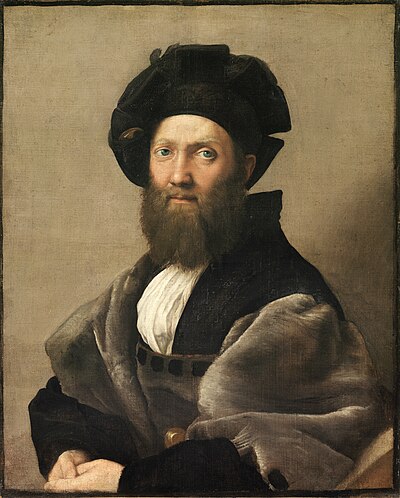
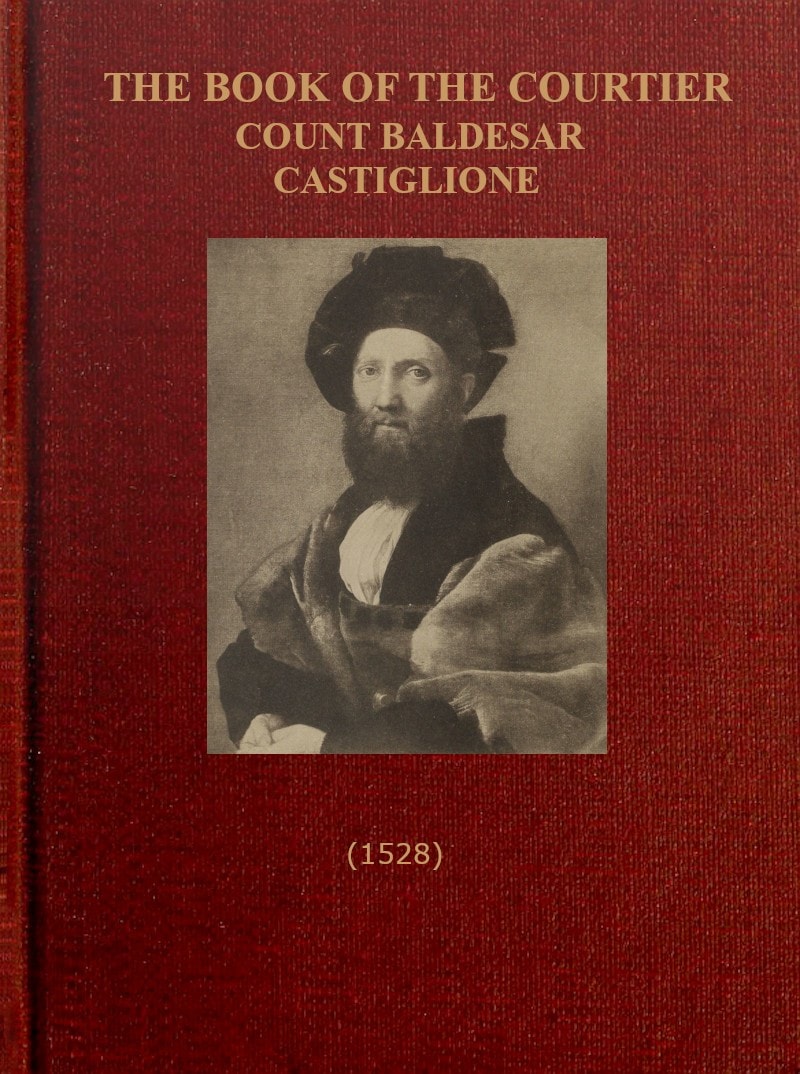
The Book of the Courtier
1528
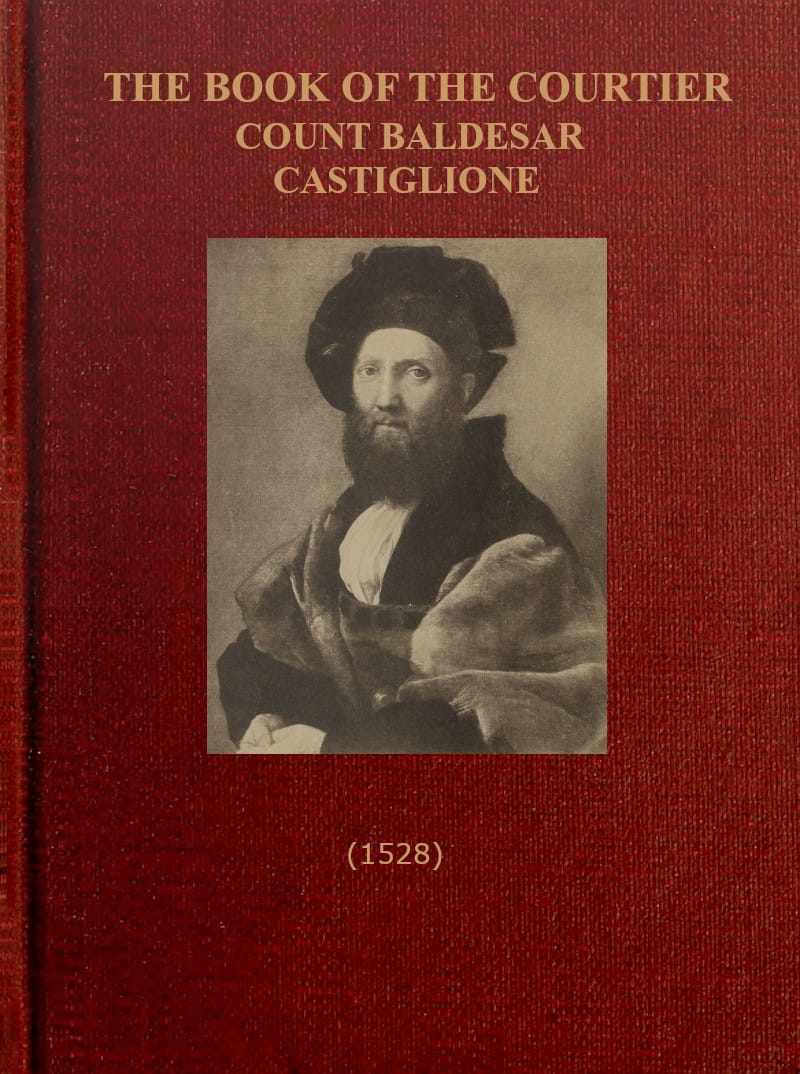
The Book of the Courtier
Baldassarre, conte Castiglione
1528
Translated by Leonard Eckstein Opdycke
Castiglione's masterpiece reads less like a manual of manners than a philosophical drama about the tension between authentic selfhood and the performance of nobility. Set at the glittering court of Urbino in 1507, the book records several days of conversation among the Duke's retinue as they debate what qualities constitute the ideal courtier: not mere polish or fluency, but a harder-won equilibrium of physical grace, intellectual depth, moral seriousness, and what Castiglione famously calls sprezzatura the art of making the difficult appear effortless. The discussions range from fencing to poetry, from witty conversation to the ethics of flattery, from what a court lady should know to how an advisor should counsel a prince. Yet the book transcends its prescriptive origins. It becomes a meditation on how to live beautifully amid the compromises of power, a portrait of a vanishing world of small Italian courts soon to be shattered by war, and a tender tribute to the Duchess Elisabetta Gonzaga, to whom Castiglione addresses some of the most affecting Platonic sonnets of the Renaissance. Five centuries later, its questions about authenticity, influence, and the performed self remain startlingly urgent.
Editions

X-Ray
“Practise in everything a certain nonchalance that shall conceal design and show that what is done and said is done without effort and almost without thought.””
— Baldassarre, conte Castiglione
“Outward beauty is a true sign of inner goodness. This loveliness, indeed, is impressed upon the body in varying degrees as a token by which the soul can be recognized for what it is, just as with trees the beauty of the blossom testifies to the goodness of the fruit.””
— Baldassarre, conte Castiglione
“Men demonstrate their courage far more often in little things than in great.””
— Baldassarre, conte Castiglione
“Who does not know that without women we can feel no content or satisfaction throughout this life of ours, which but for them would be rude and devoid of all sweetness and more savage than that of wild beasts? Who does not know that women alone banish from our hearts all vile and base thoughts, vexations, miseries, and those turbid melancholies that so often are their fellows?””
— Baldassarre, conte Castiglione
“Take care lest perchance you fall into the mistake of thinking to gain more by being merciful than by being just; for to pardon him too easily that has transgressed is to wrong him that transgresses not.””
— Baldassarre, conte Castiglione
“Then the soul, freed from vice, purged by studies of true philosophy, versed in spiritual life, and practised in matters of the intellect, devoted to the contemplation of her own substance, as if awakened from deepest sleep, opens those eyes which all possess but few use, and sees in herself a ray of that light which is the true image of the angelic beauty communicated to her, and of which she then communicates a faint shadow to the body.””
— Baldassarre, conte Castiglione
“For since a kiss is a knitting together both of body and soul, it is to be feared lest the sensual lover will be more inclined to the part of the body than of the soul; but the reasonable lover wotteth well that although the mouth be a parcel of the body, yet is it an issue for the words that be the interpreters of the soul, and for the inward breath, which is also called soul; and therefore hath a delight to join his mouth with the woman’s beloved with a kiss – not to stir him to any unhonest desire, but because he feeleth that that bond is the opening of an entry to the souls, which drawn with a coveting the one of the other, pour themselves by turn the one into the other’s body, and be so mingled together that each of them hath two souls, and one alone so framed of them both ruleth, in a manner, two bodies. Whereupon a kiss may be said to be rather a coupling together of the soul than of the body, because it hath such force in her that it draweth her unto it, and, as it were, separateth her from the body. For this do all chaste lovers covet a kiss as a coupling of souls together.””
— Baldassarre, conte Castiglione
“There be also many wicked men that have the comeliness of a beautiful countenance, and it seemeth that nature hath so shaped them because they may be the readier to deceive, and that this amiable look were like a bait that covereth the hook.””
— Baldassarre, conte Castiglione
“And what,” replied my lord Gaspar, “do you say of the game of chess?” “It is certainly a pleasant and ingenious amusement,” said messer Federico. But I think there is one defect in it. And that is, there is too much to know, so that whoever would excel in the game of chess must spend much time on it, methinks, and give it as much study as if he would learn some noble science or do anything else of importance you please; and yet in the end with all his pains he has learned nothing but a game. Therefore I think a very unusual thing is true of it, namely that mediocrity is more praiseworthy than excellence.””
— Baldassarre, conte Castiglione
Link to this book
Add a free, dofollow link to Lex on your blog, forum, syllabus, or reading list.

<a href="https://lex-books.com/book/the-book-of-the-courtier-e56beb31-4879-489e-9839-1b6c12fa6941"><img src="https://lex-books.com/badges/read-on-lex.svg" alt="Read The Book of the Courtier by Baldassarre, conte Castiglione free on Lex" width="160" height="40"></a>[](https://lex-books.com/book/the-book-of-the-courtier-e56beb31-4879-489e-9839-1b6c12fa6941)[url=https://lex-books.com/book/the-book-of-the-courtier-e56beb31-4879-489e-9839-1b6c12fa6941][img]https://lex-books.com/badges/read-on-lex.svg[/img][/url]Read The Book of the Courtier by Baldassarre, conte Castiglione free on Lex: https://lex-books.com/book/the-book-of-the-courtier-e56beb31-4879-489e-9839-1b6c12fa6941Cite this book
Reading this edition for a paper or guide? Copy a citation.
Baldassarre, conte Castiglione. The Book of the Courtier. Lex, lex-books.com/book/the-book-of-the-courtier-e56beb31-4879-489e-9839-1b6c12fa6941.Baldassarre, C. C. (1528). The Book of the Courtier. Lex. https://lex-books.com/book/the-book-of-the-courtier-e56beb31-4879-489e-9839-1b6c12fa6941Baldassarre, conte Castiglione. The Book of the Courtier. Lex. https://lex-books.com/book/the-book-of-the-courtier-e56beb31-4879-489e-9839-1b6c12fa6941.