The Atom and the Bohr Theory of Its Structure: An Elementary Presentation
1923
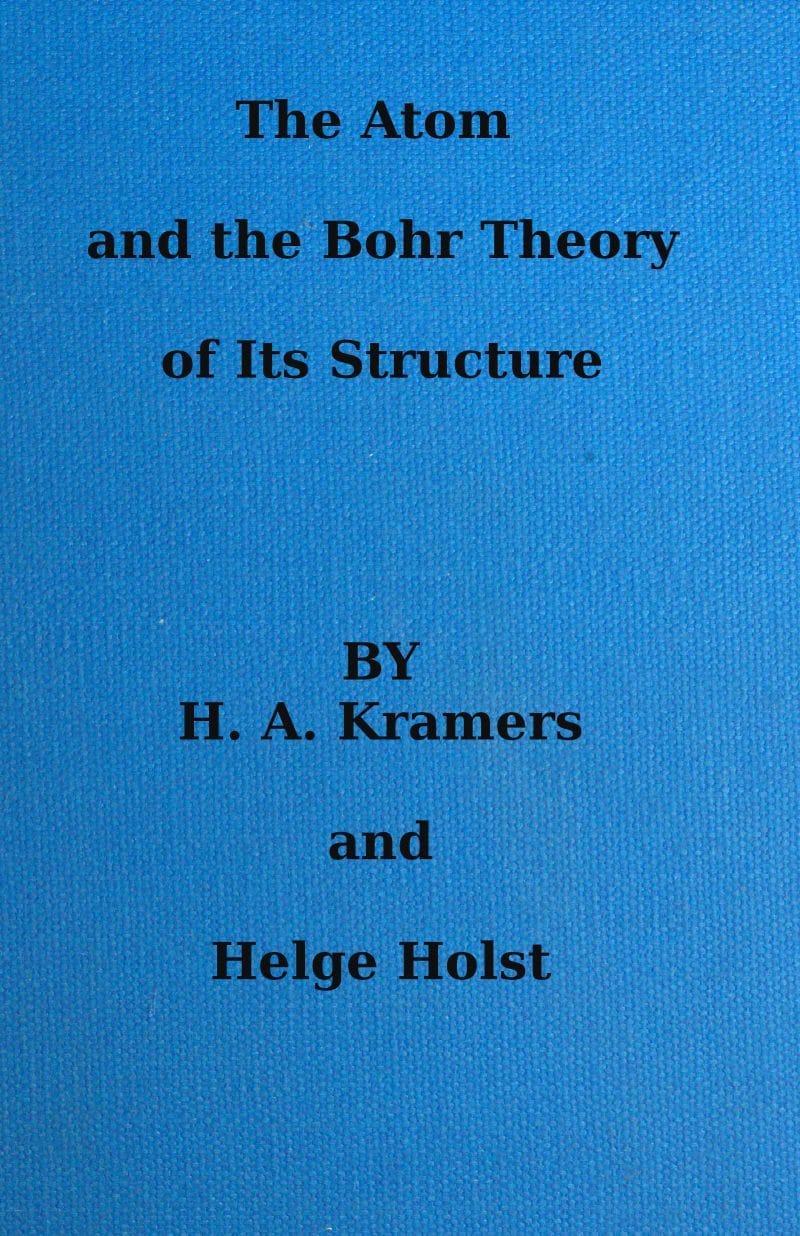
The Atom and the Bohr Theory of Its Structure: An Elementary Presentation
1923
Translated by Rachel T. Lindsay
In 1913, a young Danish physicist fundamentally rewrote our understanding of matter itself. Niels Bohr proposed that electrons orbit the nucleus in discrete energy levels, jumping between them by absorbing or emitting light at precise frequencies. This radical marriage of classical physics and quantum theory shattered centuries of scientific assumption and laid the cornerstone of modern atomic physics. Helge Holst, writing just a decade after Bohr's breakthrough, captures the electricity of that moment when the atom transitioned from philosophical abstraction to measurable reality. The book traces the intellectual journey from Democritus's ancient speculation through Thomson's electron discovery to Bohr's revolutionary model, making the extraordinary accessible to any curious reader willing to follow a carefully paced argument. For anyone who has ever wondered how we know what atoms look like, or why quantum mechanics proved so strange, this elementary presentation offers both history and revelation.
Editions
Link to this book
Add a free, dofollow link to Lex on your blog, forum, syllabus, or reading list.

<a href="https://lex-books.com/book/the-atom-and-the-bohr-theory-of-its-structure-an-elementary-presentation-6a6d5251-fca8-432e-827b-46661f552bc7"><img src="https://lex-books.com/badges/read-on-lex.svg" alt="Read The Atom and the Bohr Theory of Its Structure: An Elementary Presentation by Helge Holst free on Lex" width="160" height="40"></a>[](https://lex-books.com/book/the-atom-and-the-bohr-theory-of-its-structure-an-elementary-presentation-6a6d5251-fca8-432e-827b-46661f552bc7)[url=https://lex-books.com/book/the-atom-and-the-bohr-theory-of-its-structure-an-elementary-presentation-6a6d5251-fca8-432e-827b-46661f552bc7][img]https://lex-books.com/badges/read-on-lex.svg[/img][/url]Read The Atom and the Bohr Theory of Its Structure: An Elementary Presentation by Helge Holst free on Lex: https://lex-books.com/book/the-atom-and-the-bohr-theory-of-its-structure-an-elementary-presentation-6a6d5251-fca8-432e-827b-46661f552bc7Cite this book
Reading this edition for a paper or guide? Copy a citation.
Holst, Helge. The Atom and the Bohr Theory of Its Structure: An Elementary Presentation. Lex, lex-books.com/book/the-atom-and-the-bohr-theory-of-its-structure-an-elementary-presentation-6a6d5251-fca8-432e-827b-46661f552bc7.Holst, H. (1923). The Atom and the Bohr Theory of Its Structure: An Elementary Presentation. Lex. https://lex-books.com/book/the-atom-and-the-bohr-theory-of-its-structure-an-elementary-presentation-6a6d5251-fca8-432e-827b-46661f552bc7Holst, Helge. The Atom and the Bohr Theory of Its Structure: An Elementary Presentation. Lex. https://lex-books.com/book/the-atom-and-the-bohr-theory-of-its-structure-an-elementary-presentation-6a6d5251-fca8-432e-827b-46661f552bc7.