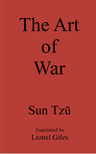
The Art of War

Written in the 5th century B.C. by a Chinese military commander known only as Sunzi, this terse and ruthless treatise has shaped empires, revolutions, and boardrooms for twenty-five centuries. Composed of thirteen brief chapters, it examines warfare not as a test of brute force but as a psychological and strategic art: know your enemy, know yourself, and victory will come without battle. Sunzi's principles are startlingly modern. He favors indirect attacks over direct confrontation, intelligence over strength, and winning before the first soldier steps onto the field. The text argues that the supreme act of generalship is to conquer the enemy's plans, the next to disrupt his alliances, and only the last resort to storm his fortifications. For centuries, generals, CEOs, politicians, and coaches have turned to these pages for the same ruthless clarity. The Art of War endures because it offers not just military doctrine but a philosophy of竞争中求生存: in competition, survive by being smarter, faster, and more adaptable than your opponent.
Editions


X-Ray
“Appear weak when you are strong, and strong when you are weak.””
— active 6th century B.C. Sunzi
“The supreme art of war is to subdue the enemy without fighting.””
— active 6th century B.C. Sunzi
“If you know the enemy and know yourself, you need not fear the result of a hundred battles. If you know yourself but not the enemy, for every victory gained you will also suffer a defeat. If you know neither the enemy nor yourself, you will succumb in every battle.””
— active 6th century B.C. Sunzi
“Let your plans be dark and impenetrable as night, and when you move, fall like a thunderbolt.””
— active 6th century B.C. Sunzi
“In the midst of chaos, there is also opportunity””
— active 6th century B.C. Sunzi
“All warfare is based on deception. Hence, when we are able to attack, we must seem unable; when using our forces, we must appear inactive; when we are near, we must make the enemy believe we are far away; when far away, we must make him believe we are near.””
— active 6th century B.C. Sunzi
“Supreme excellence consists of breaking the enemy's resistance without fighting.””
— active 6th century B.C. Sunzi
“Victorious warriors win first and then go to war, while defeated warriors go to war first and then seek to win””
— active 6th century B.C. Sunzi
“The greatest victory is that which requires no battle.””
— active 6th century B.C. Sunzi
Link to this book
Add a free, dofollow link to Lex on your blog, forum, syllabus, or reading list.

<a href="https://lex-books.com/book/the-art-of-war-5140c016-3e3d-4d6e-80b9-617f2b46c583"><img src="https://lex-books.com/badges/read-on-lex.svg" alt="Read The Art of War by active 6th century B.C. Sunzi free on Lex" width="160" height="40"></a>[](https://lex-books.com/book/the-art-of-war-5140c016-3e3d-4d6e-80b9-617f2b46c583)[url=https://lex-books.com/book/the-art-of-war-5140c016-3e3d-4d6e-80b9-617f2b46c583][img]https://lex-books.com/badges/read-on-lex.svg[/img][/url]Read The Art of War by active 6th century B.C. Sunzi free on Lex: https://lex-books.com/book/the-art-of-war-5140c016-3e3d-4d6e-80b9-617f2b46c583Cite this book
Reading this edition for a paper or guide? Copy a citation.
Sunzi, active 6th century B.C.. The Art of War. Lex, lex-books.com/book/the-art-of-war-5140c016-3e3d-4d6e-80b9-617f2b46c583.Sunzi, A. 6. C. B. (n.d.). The Art of War. Lex. https://lex-books.com/book/the-art-of-war-5140c016-3e3d-4d6e-80b9-617f2b46c583Sunzi, active 6th century B.C.. The Art of War. Lex. https://lex-books.com/book/the-art-of-war-5140c016-3e3d-4d6e-80b9-617f2b46c583.