Studies in Central American Picture-Writing: First Annual Report of the Bureau of Ethnology to The: Secretary of the Smithsonian Institution, 1879-80,: Government Printing Office, Washington, 1881, Pages 205-245
Studies in Central American Picture-Writing: First Annual Report of the Bureau of Ethnology to The: Secretary of the Smithsonian Institution, 1879-80,: Government Printing Office, Washington, 1881, Pages 205-245
In 1879, when the Maya script remained one of the world's great unsolved puzzles, Edward S. Holden undertook something audacious: the first systematic attempt by an American scholar to decipher the hieroglyphs of Copan and Palenque. This report, presented to the Smithsonian, captures the intellectual drama of a young scientist confronting an alien writing system, knowing that almost everything hangs in the balance between breakthrough and blunder. Holden approaches his task with striking caution, acutely aware that his predecessors had often confused interpretation with imagination. He maps the glyph blocks, debates whether they should be read left-to-right or in columns, and wrestles with the fundamental question: do these signs represent sounds, concepts, or something else entirely? Reading this report today is like watching a lantern carried through a dark temple. The light flickers and casts strange shadows, but you can feel the architecture taking shape around you. For anyone fascinated by the history of archaeology, the making of epigraphy, or the stubborn human urge to read what has never been read, this slim volume is a quietly thrilling artifact.
Editions
X-Ray
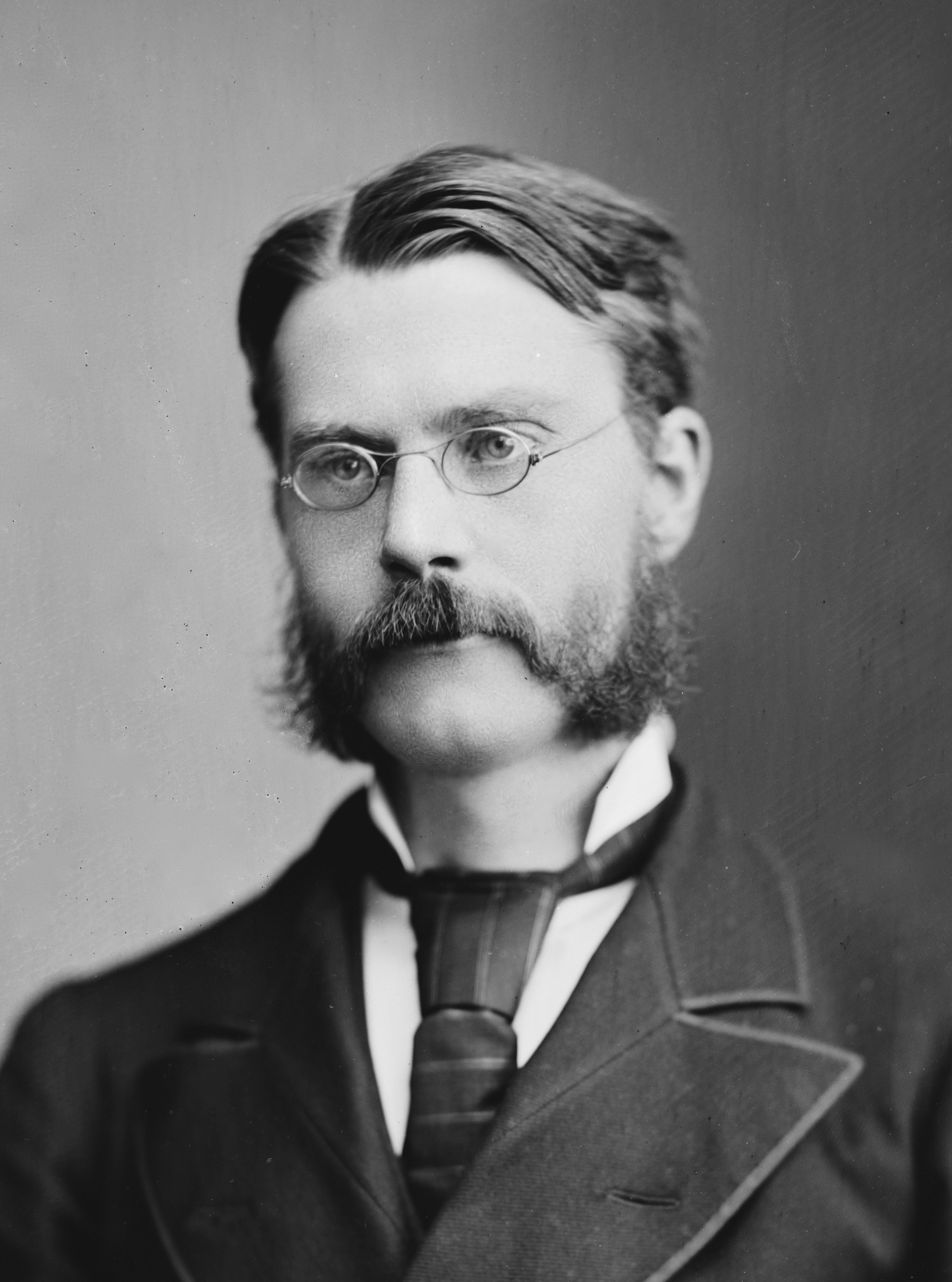
Professor of Mathematics at U.S. Naval Observatory and author of this scholarly work. He applies systematic cipher-deciphering principles to Maya hieroglyphs, establishing methodological foundations for future research.
Director of the Smithsonian Institution's Bureau of Ethnology. He provides institutional support and oversight for Holden's research into Central American picture-writing.
Explorer and author whose 1842 work on Central American antiquities provides the primary source material. Though not present in the narrative, his accurate drawings and observations form the foundation of Holden's analysis.
Previous scholar whose methods Holden criticizes as unreliable and dangerous. Represents the flawed approaches that Holden seeks to replace with more rigorous methodology.
About Studies in Central American Picture-Writing: First Annual Report of the Bureau of Ethnology to The: Secretary of the Smithsonian Institution, 1879-80,: Government Printing Office, Washington, 1881, Pages 205-245
Chapter Summaries
- I
- Holden explains his motivation to apply cipher-deciphering principles to Maya hieroglyphs and outlines his systematic approach. He criticizes previous unreliable methods and establishes his focus on stone inscriptions rather than manuscripts.
- II
- Holden establishes John L. Stephens' 1842 work as the most trustworthy source, containing over 1,500 hieroglyphs. He notes the remarkable faithfulness of Maya artists to standardized forms, which enables systematic comparison.
- III
- Holden presents his numbering system for plates and individual hieroglyphs, creating a systematic method for referencing and comparing symbols across different sites and tablets.
Key Themes
- Scientific Methodology vs. Speculation
- Holden emphasizes the need for rigorous, demonstrable methods over imaginative conjecture. He criticizes previous scholars for allowing preconceived ideas to influence their interpretations and insists on staying within provable limits.
- Cultural Preservation and Loss
- The work mourns the destruction of Maya manuscripts by Spanish conquistadors and priests, while celebrating the preservation of stone carvings. Holden sees his work as vindicating the efforts of forgotten Maya sculptors.
- Cross-Cultural Religious Connections
- The study reveals deep connections between Maya and Aztec religious systems, showing how deities like Huitzilopochtli, Tlaloc, and Quetzalcoatl appear in both cultures with similar attributes and symbols.
Characters
- Edward S. Holden(protagonist)
- Professor of Mathematics at U.S. Naval Observatory and author of this scholarly work. He applies systematic cipher-deciphering principles to Maya hieroglyphs, establishing methodological foundations for future research.
- J. W. Powell(minor)
- Director of the Smithsonian Institution's Bureau of Ethnology. He provides institutional support and oversight for Holden's research into Central American picture-writing.
- John L. Stephens(major)
- Explorer and author whose 1842 work on Central American antiquities provides the primary source material. Though not present in the narrative, his accurate drawings and observations form the foundation of Holden's analysis.
- Brasseur de Bourbourg(minor)
- Previous scholar whose methods Holden criticizes as unreliable and dangerous. Represents the flawed approaches that Holden seeks to replace with more rigorous methodology.
- Dr. Harrison Allen(minor)
- Scholar who successfully applied scientific methods to Central American remains. One of the few researchers Holden respects for methodological rigor.
- Miss Mary Lockwood(minor)
- Assistant who faithfully and intelligently performed the crucial work of creating the card catalogue system. Her accuracy was essential to Holden's success.
Link to this book
Add a free, dofollow link to Lex on your blog, forum, syllabus, or reading list.

<a href="https://lex-books.com/book/studies-in-central-american-picture-writing-first-annual-report-of-the-bureau-of-24c1c081-9358-427a-99d8-7056ab6b4404"><img src="https://lex-books.com/badges/read-on-lex.svg" alt="Read Studies in Central American Picture-Writing: First Annual Report of the Bureau of Ethnology to The: Secretary of the Smithsonian Institution, 1879-80,: Government Printing Office, Washington, 1881, Pages 205-245 by Edward S. Holden free on Lex" width="160" height="40"></a>[](https://lex-books.com/book/studies-in-central-american-picture-writing-first-annual-report-of-the-bureau-of-24c1c081-9358-427a-99d8-7056ab6b4404)[url=https://lex-books.com/book/studies-in-central-american-picture-writing-first-annual-report-of-the-bureau-of-24c1c081-9358-427a-99d8-7056ab6b4404][img]https://lex-books.com/badges/read-on-lex.svg[/img][/url]Read Studies in Central American Picture-Writing: First Annual Report of the Bureau of Ethnology to The: Secretary of the Smithsonian Institution, 1879-80,: Government Printing Office, Washington, 1881, Pages 205-245 by Edward S. Holden free on Lex: https://lex-books.com/book/studies-in-central-american-picture-writing-first-annual-report-of-the-bureau-of-24c1c081-9358-427a-99d8-7056ab6b4404Cite this book
Reading this edition for a paper or guide? Copy a citation.
Holden, Edward S.. Studies in Central American Picture-Writing: First Annual Report of the Bureau of Ethnology to The: Secretary of the Smithsonian Institution, 1879-80,: Government Printing Office, Washington, 1881, Pages 205-245. Lex, lex-books.com/book/studies-in-central-american-picture-writing-first-annual-report-of-the-bureau-of-24c1c081-9358-427a-99d8-7056ab6b4404.Holden, E. S. (n.d.). Studies in Central American Picture-Writing: First Annual Report of the Bureau of Ethnology to The: Secretary of the Smithsonian Institution, 1879-80,: Government Printing Office, Washington, 1881, Pages 205-245. Lex. https://lex-books.com/book/studies-in-central-american-picture-writing-first-annual-report-of-the-bureau-of-24c1c081-9358-427a-99d8-7056ab6b4404Holden, Edward S.. Studies in Central American Picture-Writing: First Annual Report of the Bureau of Ethnology to The: Secretary of the Smithsonian Institution, 1879-80,: Government Printing Office, Washington, 1881, Pages 205-245. Lex. https://lex-books.com/book/studies-in-central-american-picture-writing-first-annual-report-of-the-bureau-of-24c1c081-9358-427a-99d8-7056ab6b4404.