Something About Sugar: Its History, Growth, Manufacture and Distribution
1917
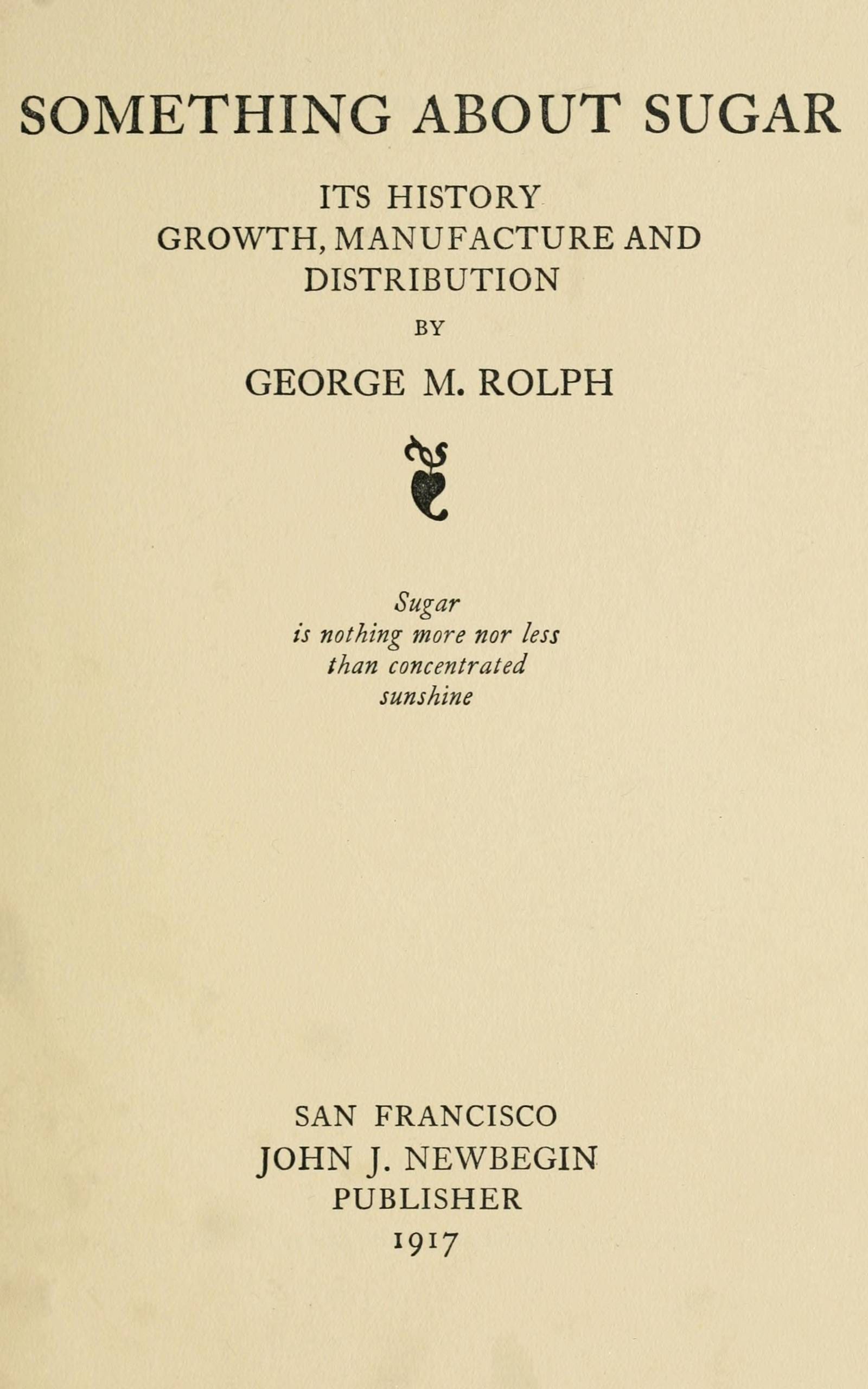
Something About Sugar: Its History, Growth, Manufacture and Distribution
1917
Sugar built empires. It fueled the transatlantic slave trade, transformed agriculture across three continents, and became the first truly global commodity. George M. Rolph's 1917 account captures a pivotal moment: when sugar was transitioning from a luxury good to a household staple, and when the scientific cultivation and industrial manufacture of sucrose were revolutionizing global trade. This is neither a dry technical manual nor a nostalgic reverie, but something rarer: a clear-eyed, early twentieth-century examination of how a crystal reshaped the world. Rolph walks readers through the chemistry of sucrose and glucose, the labor-intensive cultivation of cane and beet, and the intricate logistics of moving raw material from tropical fields to refined product on tables everywhere. He provides statistics and processes that now read as both historical artifact and fascinating window into early global economics. For readers curious about the invisible infrastructures of modern life, or for anyone who has ever wondered how something so ordinary became so essential, this book offers an unexpectedly compelling answers.
Editions
Link to this book
Add a free, dofollow link to Lex on your blog, forum, syllabus, or reading list.

<a href="https://lex-books.com/book/something-about-sugar-its-history-growth-manufacture-and-distribution-4f533f6b-619e-4f45-aefb-db8bd221afb7"><img src="https://lex-books.com/badges/read-on-lex.svg" alt="Read Something About Sugar: Its History, Growth, Manufacture and Distribution by George M. Rolph free on Lex" width="160" height="40"></a>[](https://lex-books.com/book/something-about-sugar-its-history-growth-manufacture-and-distribution-4f533f6b-619e-4f45-aefb-db8bd221afb7)[url=https://lex-books.com/book/something-about-sugar-its-history-growth-manufacture-and-distribution-4f533f6b-619e-4f45-aefb-db8bd221afb7][img]https://lex-books.com/badges/read-on-lex.svg[/img][/url]Read Something About Sugar: Its History, Growth, Manufacture and Distribution by George M. Rolph free on Lex: https://lex-books.com/book/something-about-sugar-its-history-growth-manufacture-and-distribution-4f533f6b-619e-4f45-aefb-db8bd221afb7Cite this book
Reading this edition for a paper or guide? Copy a citation.
Rolph, George M.. Something About Sugar: Its History, Growth, Manufacture and Distribution. Lex, lex-books.com/book/something-about-sugar-its-history-growth-manufacture-and-distribution-4f533f6b-619e-4f45-aefb-db8bd221afb7.Rolph, G. M. (1917). Something About Sugar: Its History, Growth, Manufacture and Distribution. Lex. https://lex-books.com/book/something-about-sugar-its-history-growth-manufacture-and-distribution-4f533f6b-619e-4f45-aefb-db8bd221afb7Rolph, George M.. Something About Sugar: Its History, Growth, Manufacture and Distribution. Lex. https://lex-books.com/book/something-about-sugar-its-history-growth-manufacture-and-distribution-4f533f6b-619e-4f45-aefb-db8bd221afb7.