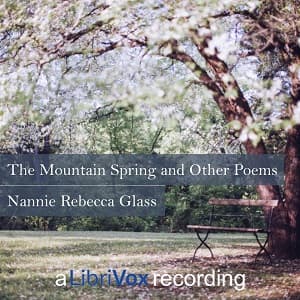
Sleet

A poem of stark atmospheric beauty from the early twentieth century, "Sleet" captures a moment of meteorological transition in verse that feels both intimate and vast. Glass renders the suspended state between snow and rain with careful attention to sound and sensation, finding in gray skies and falling ice a quiet existential weight. The poem operates in that liminal space where weather becomes metaphor: neither fully winter nor spring, neither storm nor calm. Written in the tradition of early American nature poetry, this brief work invites slow reading. Its power lies not in dramatic declaration but in precise observation, the kind that makes a reader see familiar phenomena anew. For those who trust that the most profound poetry often lives in modest subjects handled with care, "Sleet" offers a meditation on thresholds and in-between states, rendered in language as crisp as its titular weather.
Editions

Read by
Group Narration
17 readers
Bruce Kachuk, Caitlin Buckley, Chris Pyle, David Lawrence +13 more
Link to this book
Add a free, dofollow link to Lex on your blog, forum, syllabus, or reading list.

<a href="https://lex-books.com/book/sleet-523f38d9-e012-4b46-a938-902352795aa1"><img src="https://lex-books.com/badges/read-on-lex.svg" alt="Read Sleet by Nannie Rebecca Glass free on Lex" width="160" height="40"></a>[](https://lex-books.com/book/sleet-523f38d9-e012-4b46-a938-902352795aa1)[url=https://lex-books.com/book/sleet-523f38d9-e012-4b46-a938-902352795aa1][img]https://lex-books.com/badges/read-on-lex.svg[/img][/url]Read Sleet by Nannie Rebecca Glass free on Lex: https://lex-books.com/book/sleet-523f38d9-e012-4b46-a938-902352795aa1Cite this book
Reading this edition for a paper or guide? Copy a citation.
Glass, Nannie Rebecca. Sleet. Lex, lex-books.com/book/sleet-523f38d9-e012-4b46-a938-902352795aa1.Glass, N. R. (n.d.). Sleet. Lex. https://lex-books.com/book/sleet-523f38d9-e012-4b46-a938-902352795aa1Glass, Nannie Rebecca. Sleet. Lex. https://lex-books.com/book/sleet-523f38d9-e012-4b46-a938-902352795aa1.
![Birds and Nature, Vol. 12 No. 1 [June 1902]illustrated by Color Photography](/_next/image?url=https%3A%2F%2Fd3b2n8gj62qnwr.cloudfront.net%2FCOVERS%2Fgutenberg_covers75k%2Febook-47881.png&w=3840&q=75)