Six Centuries of Painting
1914
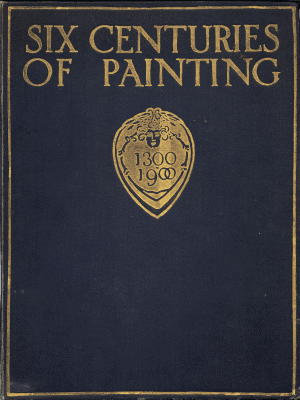
Published in 1914, this ambitious survey traces the arc of European painting from the late thirteenth century through the nineteenth century, beginning with the pioneering work of Cimabue and unfolding across six transformative centuries of artistic innovation. Davies, writing with the confidence of a scholar who has lived among these paintings, guides readers through the seismic shifts in how humans learned to represent themselves and their world: from the rigid hierarchies of Byzantine religious art to the revolutionary naturalism of the Renaissance, from the dramatic chiaroscuro of Caravaggio to the luminous atmospheres of Turner. The author places particular emphasis on the church's paradoxical role as both guardian and constraint of artistic development, and on the gradual emancipation of painting from purely devotional purposes toward emotional expression and aesthetic rebellion. This is not merely a catalog of masters but an argument about how painting became modern. For readers who have stood before a Titian or a Vermeer and wondered how such seeing came to be, Davies offers a rigorous, readable genealogy of that miracle.
Editions

Link to this book
Add a free, dofollow link to Lex on your blog, forum, syllabus, or reading list.

<a href="https://lex-books.com/book/six-centuries-of-painting-657f8756-9344-4c8d-8af7-42a9a4304c66"><img src="https://lex-books.com/badges/read-on-lex.svg" alt="Read Six Centuries of Painting by Randall Davies free on Lex" width="160" height="40"></a>[](https://lex-books.com/book/six-centuries-of-painting-657f8756-9344-4c8d-8af7-42a9a4304c66)[url=https://lex-books.com/book/six-centuries-of-painting-657f8756-9344-4c8d-8af7-42a9a4304c66][img]https://lex-books.com/badges/read-on-lex.svg[/img][/url]Read Six Centuries of Painting by Randall Davies free on Lex: https://lex-books.com/book/six-centuries-of-painting-657f8756-9344-4c8d-8af7-42a9a4304c66Cite this book
Reading this edition for a paper or guide? Copy a citation.
Davies, Randall. Six Centuries of Painting. Lex, lex-books.com/book/six-centuries-of-painting-657f8756-9344-4c8d-8af7-42a9a4304c66.Davies, R. (1914). Six Centuries of Painting. Lex. https://lex-books.com/book/six-centuries-of-painting-657f8756-9344-4c8d-8af7-42a9a4304c66Davies, Randall. Six Centuries of Painting. Lex. https://lex-books.com/book/six-centuries-of-painting-657f8756-9344-4c8d-8af7-42a9a4304c66.