Sex variant women in literature : A historical and quantitative survey

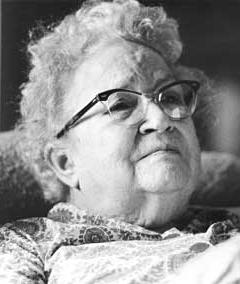
Published in 1956, this landmark work stands as the first serious scholarly attempt to document and analyze representations of same-sex-attracted women in world literature. Jeannette H. Foster, a librarian and researcher, spent decades compiling evidence from ancient Greek poetry through mid-twentieth-century fiction, tracing a hidden literary tradition that mainstream critics had largely ignored or suppressed. Using what she termed a "sex variant" framework, Foster catalogued hundreds of works featuring lesbian and bisexual female characters, examining how literary portrayals shifted across centuries and cultures. The quantitative rigor is striking for its era: Foster meticulously tracked publication dates, authorial identities, and narrative patterns where others saw only scandal. This is not merely a bibliography but an act of literary archaeology, recovering voices that existed outside the heteronormative canon. For readers interested in the history of sexuality, the evolution of queer representation, or the foundations of LGBTQ+ studies, Foster's work remains essential reading. It demonstrates that same-sex female desire has always found expression in literature, even when forced into euphemism, subtext, or underground circulation.
Editions

Link to this book
Add a free, dofollow link to Lex on your blog, forum, syllabus, or reading list.

<a href="https://lex-books.com/book/sex-variant-women-in-literature-a-historical-and-quantitative-survey-f819be7e-9921-4fd7-83f5-e4d6f9a3a09c"><img src="https://lex-books.com/badges/read-on-lex.svg" alt="Read Sex variant women in literature : A historical and quantitative survey by Jeannette H. Foster free on Lex" width="160" height="40"></a>[](https://lex-books.com/book/sex-variant-women-in-literature-a-historical-and-quantitative-survey-f819be7e-9921-4fd7-83f5-e4d6f9a3a09c)[url=https://lex-books.com/book/sex-variant-women-in-literature-a-historical-and-quantitative-survey-f819be7e-9921-4fd7-83f5-e4d6f9a3a09c][img]https://lex-books.com/badges/read-on-lex.svg[/img][/url]Read Sex variant women in literature : A historical and quantitative survey by Jeannette H. Foster free on Lex: https://lex-books.com/book/sex-variant-women-in-literature-a-historical-and-quantitative-survey-f819be7e-9921-4fd7-83f5-e4d6f9a3a09cCite this book
Reading this edition for a paper or guide? Copy a citation.
Foster, Jeannette H.. Sex variant women in literature : A historical and quantitative survey. Lex, lex-books.com/book/sex-variant-women-in-literature-a-historical-and-quantitative-survey-f819be7e-9921-4fd7-83f5-e4d6f9a3a09c.Foster, J. H. (n.d.). Sex variant women in literature : A historical and quantitative survey. Lex. https://lex-books.com/book/sex-variant-women-in-literature-a-historical-and-quantitative-survey-f819be7e-9921-4fd7-83f5-e4d6f9a3a09cFoster, Jeannette H.. Sex variant women in literature : A historical and quantitative survey. Lex. https://lex-books.com/book/sex-variant-women-in-literature-a-historical-and-quantitative-survey-f819be7e-9921-4fd7-83f5-e4d6f9a3a09c.