Seven Statesmen of the Later Republic
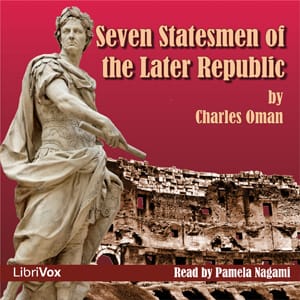
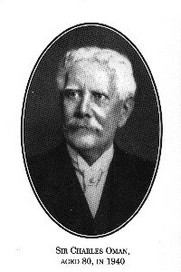
In the century before Augustus seized power, Rome's republic collapsed in blood and ambition. Seven men shaped that catastrophe. This is their story. Charles Oman, the great Oxford historian, abandoned broad political narrative to examine what he called "the personal element" in history. The result is a vivid collective portrait: the Gracchi brothers, reformers cut down for challenging senatorial greed; Marius, the soldier who revolutionized the Roman army and opened it to the landless poor; Sulla, the first general to march on Rome and number his victims by the hundreds. Crassus, the wealthiest man in the republic, who bought his way into power only to lose his head in Syria. Cato, rigid and virtuous, watching his world die. Pompey, the boy general who became a political mediocrity. And Caesar, who did more than any man to reshape the future of the world. Oman shows how personal ambition, ideological conviction, and the simple hunger for glory combined with structural rot to end a thousand-year experiment in self-government. History, he suggests, is made by individuals acting within systems they can neither fully control nor escape.
Editions

Link to this book
Add a free, dofollow link to Lex on your blog, forum, syllabus, or reading list.

<a href="https://lex-books.com/book/seven-statesmen-of-the-later-republic-19cce8a3-bf26-401c-9888-6c63e3035399"><img src="https://lex-books.com/badges/read-on-lex.svg" alt="Read Seven Statesmen of the Later Republic by Charles William Chadwick Oman free on Lex" width="160" height="40"></a>[](https://lex-books.com/book/seven-statesmen-of-the-later-republic-19cce8a3-bf26-401c-9888-6c63e3035399)[url=https://lex-books.com/book/seven-statesmen-of-the-later-republic-19cce8a3-bf26-401c-9888-6c63e3035399][img]https://lex-books.com/badges/read-on-lex.svg[/img][/url]Read Seven Statesmen of the Later Republic by Charles William Chadwick Oman free on Lex: https://lex-books.com/book/seven-statesmen-of-the-later-republic-19cce8a3-bf26-401c-9888-6c63e3035399Cite this book
Reading this edition for a paper or guide? Copy a citation.
Oman, Charles William Chadwick. Seven Statesmen of the Later Republic. Lex, lex-books.com/book/seven-statesmen-of-the-later-republic-19cce8a3-bf26-401c-9888-6c63e3035399.Oman, C. W. C. (n.d.). Seven Statesmen of the Later Republic. Lex. https://lex-books.com/book/seven-statesmen-of-the-later-republic-19cce8a3-bf26-401c-9888-6c63e3035399Oman, Charles William Chadwick. Seven Statesmen of the Later Republic. Lex. https://lex-books.com/book/seven-statesmen-of-the-later-republic-19cce8a3-bf26-401c-9888-6c63e3035399.