Serbia: A Sketch
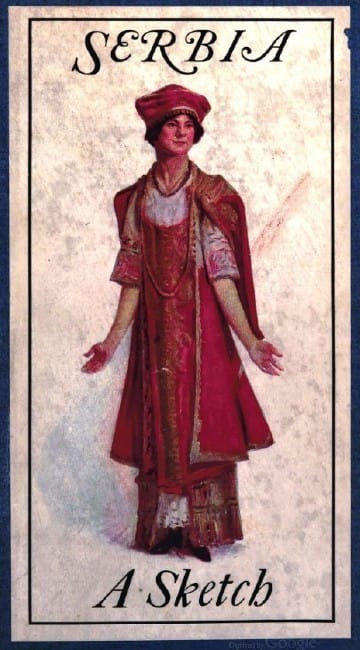
An American writer's passionate portrait of a young nation fighting for its place in the world, Helen Leah Reed's 1915 work arrives at a moment of existential crisis for Serbia. Writing with the urgency of someone who sees a small democracy besieged by empires, Reed frames Serbia as the «younger sister» of nations, a people whose ancient pride and modern aspirations have been systematically crushed by larger neighbors. She traces the arc of Serbian identity from the legendary Battle of Kosovo through centuries of Ottoman occupation to the turbulent early twentieth century, revealing how collective memory becomes a form of resistance. This is not neutral history; it is advocacy dressed in scholarly garb, a plea for Western nations to recognize and support a people who have endured unimaginable hardship while holding fast to their language, their Orthodox faith, and their dream of independence. Reed writes with empathy and immediacy, making the struggles of a distant nation feel immediate and personal to her American readers. For anyone seeking to understand the roots of Balkan conflict, the formation of national identity under oppression, or the ways literature can become a tool of diplomatic persuasion, this slim volume remains a compelling artifact of its moment.
Editions
Link to this book
Add a free, dofollow link to Lex on your blog, forum, syllabus, or reading list.

<a href="https://lex-books.com/book/serbia-a-sketch-4463b6a0-4f79-46e4-8c10-9017ed50b886"><img src="https://lex-books.com/badges/read-on-lex.svg" alt="Read Serbia: A Sketch by Helen Leah Reed free on Lex" width="160" height="40"></a>[](https://lex-books.com/book/serbia-a-sketch-4463b6a0-4f79-46e4-8c10-9017ed50b886)[url=https://lex-books.com/book/serbia-a-sketch-4463b6a0-4f79-46e4-8c10-9017ed50b886][img]https://lex-books.com/badges/read-on-lex.svg[/img][/url]Read Serbia: A Sketch by Helen Leah Reed free on Lex: https://lex-books.com/book/serbia-a-sketch-4463b6a0-4f79-46e4-8c10-9017ed50b886Cite this book
Reading this edition for a paper or guide? Copy a citation.
Reed, Helen Leah. Serbia: A Sketch. Lex, lex-books.com/book/serbia-a-sketch-4463b6a0-4f79-46e4-8c10-9017ed50b886.Reed, H. L. (n.d.). Serbia: A Sketch. Lex. https://lex-books.com/book/serbia-a-sketch-4463b6a0-4f79-46e4-8c10-9017ed50b886Reed, Helen Leah. Serbia: A Sketch. Lex. https://lex-books.com/book/serbia-a-sketch-4463b6a0-4f79-46e4-8c10-9017ed50b886.