Scottish Cathedrals and Abbeys
1901
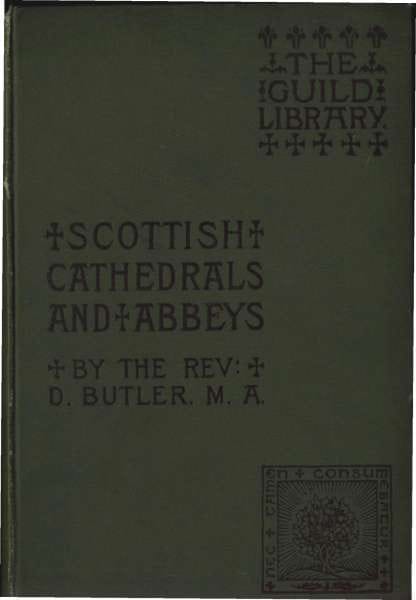
Scottish Cathedrals and Abbeys
1901
Stone remembers what history forgets. Scotland's medieval cathedrals and abbeys stand as stubborn witnesses to a faith that shaped a nation, their weathered walls holding secrets of Celtic monks, royal intrigue, and the violent upheaval of the Reformation. Dugald Butler, writing in 1901, guides readers through these sacred spaces not as mere architectural surveys but as portals into Scotland's soul, tracing how the intimate hilltop monasteries of the Celtic Church gave way to the grand Roman cathedrals that still dominate Edinburgh, Glasgow, and the ancient burghs. The book maps a cultural transformation: the slow assimilation of Roman influence following Queen Margaret's reign, the rise of powerful monastic orders, and the catastrophic sixteenth-century rupture that left so many magnificent structures in ruins. Butler writes with scholarly reverence but also urgency, arguing that these surviving fragments, however diminished, offer essential lessons about medieval faith, artistic ambition, and the fragile persistence of the sacred. For anyone who has stood in the nave of Kelso or wandered the roofless choir of Whitcombe, this book provides the historical depth that transforms architectural sightseeing into genuine understanding of Scotland's spiritual landscape.
Editions
X-Ray
Saint and Queen of Scotland (1047-1093) who brought Roman Catholic influence to Scotland. She founded churches and introduced English monks, fundamentally changing Scottish ecclesiastical architecture and practice.
King of Scotland who continued his mother's ecclesiastical reforms. He founded numerous bishoprics, established cathedrals, and introduced monastic orders throughout Scotland.
Bishop of St. Andrews (1121-1159) who founded the Priory of St. Andrews and built St. Rule's Church. He introduced Augustinian canons and helped establish the new ecclesiastical order.
6th century saint and first Bishop of Glasgow. He established the see at Glasgow and founded the early church on the banks of the Molendinar.
About Scottish Cathedrals and Abbeys
Chapter Summaries
- Introduction
- Principal Story introduces the work and laments the destruction of Scotland's ecclesiastical heritage through war, internal violence, and misguided religious zeal. He argues that reformed faith could have flourished in the same buildings without destroying the architectural legacy.
- 1
- Butler explains how Queen Margaret's influence began the transformation from Celtic to Roman Christianity in Scotland. The Celtic Church was undermined by internal decay and external pressure, leading to the establishment of territorial dioceses and Roman monastic orders.
- 2
- An overview of Scottish architectural periods from Norman through Late Pointed styles. Butler describes architecture as a stone book recording national history and explains the characteristics of each period from the 12th through 16th centuries.
Key Themes
- Religious Transformation
- The book chronicles Scotland's religious evolution from Celtic Christianity through Roman Catholicism to Protestantism. Each transition brought architectural changes and often destruction of previous religious structures.
- Architecture as Historical Record
- Butler presents medieval architecture as a 'great stone book' that records the faith, aspirations, and civilization of past generations more authentically than written records.
- Destruction and Preservation
- The tension between iconoclastic destruction during religious reforms and later efforts to preserve and restore ancient buildings reflects changing attitudes toward heritage and sacred spaces.
Characters
- Queen Margaret(major)
- Saint and Queen of Scotland (1047-1093) who brought Roman Catholic influence to Scotland. She founded churches and introduced English monks, fundamentally changing Scottish ecclesiastical architecture and practice.
- David I(major)
- King of Scotland who continued his mother's ecclesiastical reforms. He founded numerous bishoprics, established cathedrals, and introduced monastic orders throughout Scotland.
- Bishop Robert(major)
- Bishop of St. Andrews (1121-1159) who founded the Priory of St. Andrews and built St. Rule's Church. He introduced Augustinian canons and helped establish the new ecclesiastical order.
- St. Kentigern (St. Mungo)(major)
- 6th century saint and first Bishop of Glasgow. He established the see at Glasgow and founded the early church on the banks of the Molendinar.
- Bishop Joceline(major)
- Bishop of Glasgow (1175-1199) who restored the cathedral after fire and designed much of the current structure. He formed a society to collect funds for restoration.
- St. Columba(major)
- 6th century Irish missionary and founder of Iona monastery. He evangelized the Picts and established the Celtic Church system that was later superseded by Roman practices.
Link to this book
Add a free, dofollow link to Lex on your blog, forum, syllabus, or reading list.

<a href="https://lex-books.com/book/scottish-cathedrals-and-abbeys-9cae55ab-8a00-4e51-97f1-1ecff453fa73"><img src="https://lex-books.com/badges/read-on-lex.svg" alt="Read Scottish Cathedrals and Abbeys by Dugald Butler free on Lex" width="160" height="40"></a>[](https://lex-books.com/book/scottish-cathedrals-and-abbeys-9cae55ab-8a00-4e51-97f1-1ecff453fa73)[url=https://lex-books.com/book/scottish-cathedrals-and-abbeys-9cae55ab-8a00-4e51-97f1-1ecff453fa73][img]https://lex-books.com/badges/read-on-lex.svg[/img][/url]Read Scottish Cathedrals and Abbeys by Dugald Butler free on Lex: https://lex-books.com/book/scottish-cathedrals-and-abbeys-9cae55ab-8a00-4e51-97f1-1ecff453fa73Cite this book
Reading this edition for a paper or guide? Copy a citation.
Butler, Dugald. Scottish Cathedrals and Abbeys. Lex, lex-books.com/book/scottish-cathedrals-and-abbeys-9cae55ab-8a00-4e51-97f1-1ecff453fa73.Butler, D. (1901). Scottish Cathedrals and Abbeys. Lex. https://lex-books.com/book/scottish-cathedrals-and-abbeys-9cae55ab-8a00-4e51-97f1-1ecff453fa73Butler, Dugald. Scottish Cathedrals and Abbeys. Lex. https://lex-books.com/book/scottish-cathedrals-and-abbeys-9cae55ab-8a00-4e51-97f1-1ecff453fa73.