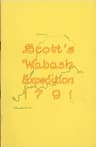
Scott's Wabash Expedition, 1791
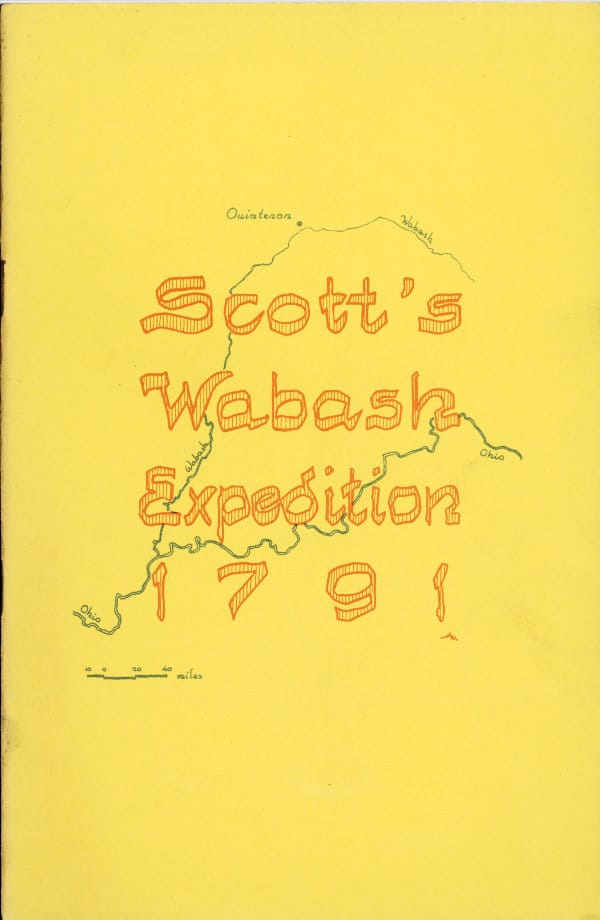
In the summer of 1791, Brigadier General Charles Scott led a force of roughly 800 Kentucky militia soldiers into the Wabash River valley, striking Native American villages in what would become one of the more aggressive American military expeditions of the Northwest Indian War. This pamphlet, compiled from historical records by the Fort Wayne Public Library, documents that campaign in vivid detail: the grueling march through wilderness, the tactical decisions, the villages burned, and the fragile diplomatic calculations that drove frontier warfare in the early American republic. The expedition came on the heels of General Harmar's defeat and sought to restore American credibility in the Ohio Country, where a confederation of Shawnee, Miami, and other tribes had repeatedly repelled U.S. forces. Scott's men achieved temporary success, but the larger conflict would grind on for years. This account offers an unvarnished look at a forgotten chapter of American expansion, where military ambition met indigenous resistance in the forests and river bottoms of what would become Indiana and Ohio. For readers drawn to early American history, frontier warfare, or the complicated origins of the republic's western ambitions.
Editions
Link to this book
Add a free, dofollow link to Lex on your blog, forum, syllabus, or reading list.

<a href="https://lex-books.com/book/scott-s-wabash-expedition-1791-1542d0ba-c417-4e60-8afe-2682fa8e3bb4"><img src="https://lex-books.com/badges/read-on-lex.svg" alt="Read Scott's Wabash Expedition, 1791 by Public Library of Fort Wayne and Allen County free on Lex" width="160" height="40"></a>[](https://lex-books.com/book/scott-s-wabash-expedition-1791-1542d0ba-c417-4e60-8afe-2682fa8e3bb4)[url=https://lex-books.com/book/scott-s-wabash-expedition-1791-1542d0ba-c417-4e60-8afe-2682fa8e3bb4][img]https://lex-books.com/badges/read-on-lex.svg[/img][/url]Read Scott's Wabash Expedition, 1791 by Public Library of Fort Wayne and Allen County free on Lex: https://lex-books.com/book/scott-s-wabash-expedition-1791-1542d0ba-c417-4e60-8afe-2682fa8e3bb4Cite this book
Reading this edition for a paper or guide? Copy a citation.
County, Public Library of Fort Wayne and Allen. Scott's Wabash Expedition, 1791. Lex, lex-books.com/book/scott-s-wabash-expedition-1791-1542d0ba-c417-4e60-8afe-2682fa8e3bb4.County, P. L. O. F. W. A. A. (n.d.). Scott's Wabash Expedition, 1791. Lex. https://lex-books.com/book/scott-s-wabash-expedition-1791-1542d0ba-c417-4e60-8afe-2682fa8e3bb4County, Public Library of Fort Wayne and Allen. Scott's Wabash Expedition, 1791. Lex. https://lex-books.com/book/scott-s-wabash-expedition-1791-1542d0ba-c417-4e60-8afe-2682fa8e3bb4.