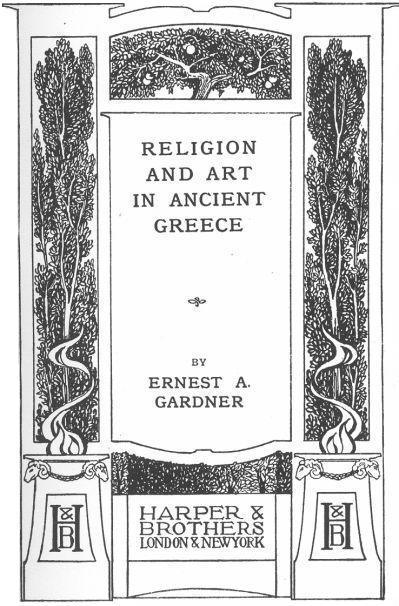
Religion and Art in Ancient Greece
1910
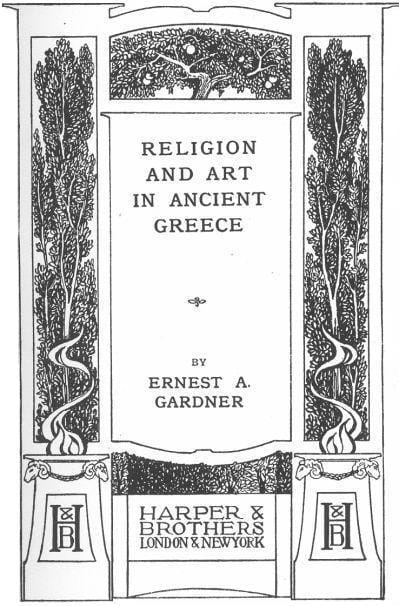
Religion and Art in Ancient Greece
1910
Gardner's 1910 study asks a question that still shapes how we understand classical civilization: how did the Greeks manage to transform their gods into art, and how did that art transform them in return? This is not a dry catalog of sculptures but an inquiry into the spiritual and aesthetic revolution that made Greece unique. Gardner traces how the Greeks moved beyond primitive ritual toward the luminous anthropomorphic deities who would dominate Western imagination - Zeus as ideal man, Athena as wisdom incarnate, Aphrodite as beauty herself. He argues that understanding Greek religion requires understanding Greek art, and vice versa. The book examines how religious images did not merely illustrate myths but actively shaped what the Greeks considered beautiful, holy, and worth fighting for. Gardner covers the full spectrum, from popular worship to philosophical critique, from temple pediments to the most refined poetry. This remains a valuable window into how one civilization decided that its gods should look human, and what that decision cost and created.
Editions
Link to this book
Add a free, dofollow link to Lex on your blog, forum, syllabus, or reading list.

<a href="https://lex-books.com/book/religion-and-art-in-ancient-greece-23fd7c95-242b-45c6-ac3b-050734f9e2a3"><img src="https://lex-books.com/badges/read-on-lex.svg" alt="Read Religion and Art in Ancient Greece by Ernest Arthur Gardner free on Lex" width="160" height="40"></a>[](https://lex-books.com/book/religion-and-art-in-ancient-greece-23fd7c95-242b-45c6-ac3b-050734f9e2a3)[url=https://lex-books.com/book/religion-and-art-in-ancient-greece-23fd7c95-242b-45c6-ac3b-050734f9e2a3][img]https://lex-books.com/badges/read-on-lex.svg[/img][/url]Read Religion and Art in Ancient Greece by Ernest Arthur Gardner free on Lex: https://lex-books.com/book/religion-and-art-in-ancient-greece-23fd7c95-242b-45c6-ac3b-050734f9e2a3Cite this book
Reading this edition for a paper or guide? Copy a citation.
Gardner, Ernest Arthur. Religion and Art in Ancient Greece. Lex, lex-books.com/book/religion-and-art-in-ancient-greece-23fd7c95-242b-45c6-ac3b-050734f9e2a3.Gardner, E. A. (1910). Religion and Art in Ancient Greece. Lex. https://lex-books.com/book/religion-and-art-in-ancient-greece-23fd7c95-242b-45c6-ac3b-050734f9e2a3Gardner, Ernest Arthur. Religion and Art in Ancient Greece. Lex. https://lex-books.com/book/religion-and-art-in-ancient-greece-23fd7c95-242b-45c6-ac3b-050734f9e2a3.