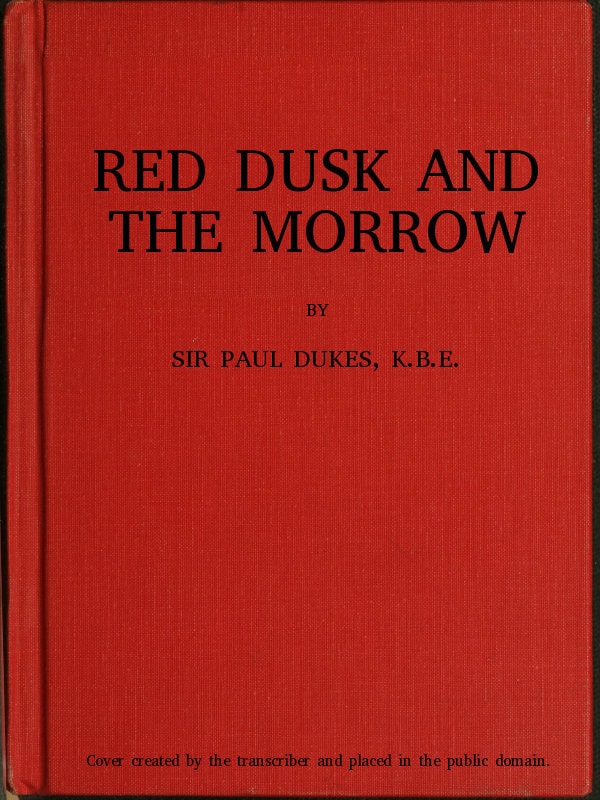
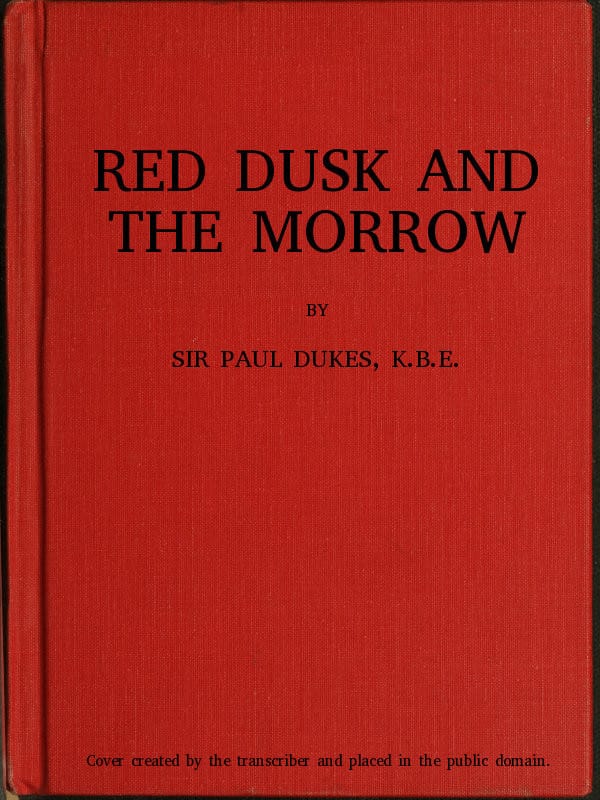
Red Dusk and the Morrow: Adventures and Investigations in Red Russia
1922
Red Dusk and the Morrow: Adventures and Investigations in Red Russia
1922
In the winter of 1918, a British intelligence officer slips into a city in the grip of terror. Petrograd freezes under Bolshevik rule, its streets humming with paranoia, its prisons overflowing. Paul Dukes arrives with orders to maintain British spy networks as the Cheka tightens its stranglehold, and what follows is one of the most audacious espionage narratives of the twentieth century. Dukes moved through the revolutionary capital under false papers, reliant on a web of contacts whose loyalty shifted like smoke. He witnessed the Red Terror's machinery up close: the midnight arrests, the firing squads, the revolutionary rhetoric colliding violently with lived reality. Yet this is no dry historical document. It pulses with the granular danger of a man who knows that a single slip, a betrayed glance, a name uttered under duress, means disappearance. His transformation from observer to active participant in the revolutionary ferment gives the account its extraordinary psychological texture. Written with the immediacy of someone who lived it, Red Dusk and the Morrow captures a civilization tearing itself apart, and one man's precarious passage through its wreckage.
Editions

Link to this book
Add a free, dofollow link to Lex on your blog, forum, syllabus, or reading list.

<a href="https://lex-books.com/book/red-dusk-and-the-morrow-adventures-and-investigations-in-red-russia-11a0a96c-1585-439f-8ffa-9cf25ca362a6"><img src="https://lex-books.com/badges/read-on-lex.svg" alt="Read Red Dusk and the Morrow: Adventures and Investigations in Red Russia by Paul Dukes free on Lex" width="160" height="40"></a>[](https://lex-books.com/book/red-dusk-and-the-morrow-adventures-and-investigations-in-red-russia-11a0a96c-1585-439f-8ffa-9cf25ca362a6)[url=https://lex-books.com/book/red-dusk-and-the-morrow-adventures-and-investigations-in-red-russia-11a0a96c-1585-439f-8ffa-9cf25ca362a6][img]https://lex-books.com/badges/read-on-lex.svg[/img][/url]Read Red Dusk and the Morrow: Adventures and Investigations in Red Russia by Paul Dukes free on Lex: https://lex-books.com/book/red-dusk-and-the-morrow-adventures-and-investigations-in-red-russia-11a0a96c-1585-439f-8ffa-9cf25ca362a6Cite this book
Reading this edition for a paper or guide? Copy a citation.
Dukes, Paul. Red Dusk and the Morrow: Adventures and Investigations in Red Russia. Lex, lex-books.com/book/red-dusk-and-the-morrow-adventures-and-investigations-in-red-russia-11a0a96c-1585-439f-8ffa-9cf25ca362a6.Dukes, P. (1922). Red Dusk and the Morrow: Adventures and Investigations in Red Russia. Lex. https://lex-books.com/book/red-dusk-and-the-morrow-adventures-and-investigations-in-red-russia-11a0a96c-1585-439f-8ffa-9cf25ca362a6Dukes, Paul. Red Dusk and the Morrow: Adventures and Investigations in Red Russia. Lex. https://lex-books.com/book/red-dusk-and-the-morrow-adventures-and-investigations-in-red-russia-11a0a96c-1585-439f-8ffa-9cf25ca362a6.