Q-Ships and Their Story
1922
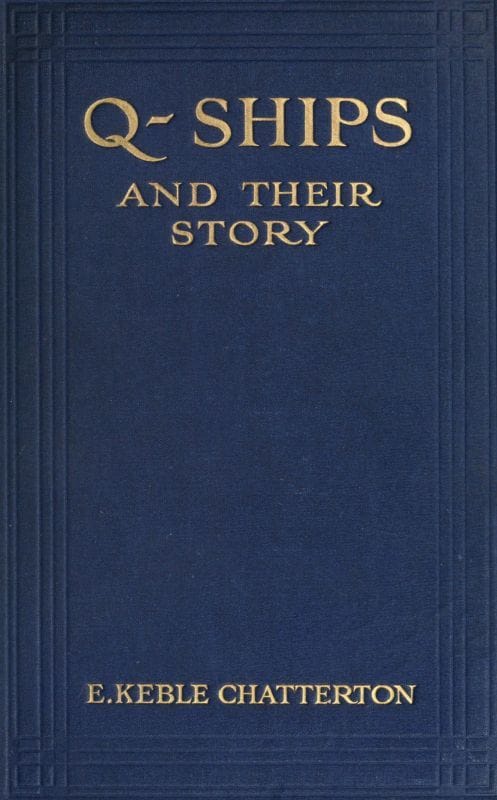
They looked like easy prey. Merchant vessels drifting helplessly across the Atlantic, exactly the sort of ship German U-boats loved to sink. But beneath their ordinary hulls lay a devastating secret: concealed cannons, masked gun crews, and a trap waiting to spring. This is the story of the Q-ships, the British 'mystery ships' that helped turn the tide of World War I's oceanic war. Edward Keble Chatterton served in the Royal Naval Volunteer Reserve during the war, and this 1922 account draws on his firsthand experience to reveal how these decoy vessels worked. The Q-ship would wait, appearing frail and abandoned, until a U-boat surfaced to finish the job with its deck gun. Then came the shattering revelation: the merchantman's coat of harmless paint would drop away, guns would roar from hidden ports, and the submarine would find itself the hunted instead of the hunter. The book details the meticulous deception, the nerve required to sit defenseless while being shelled, and the psychological warfare that made these missions so terrifying and so effective. A vivid slice of naval history that reads like the best war adventure stories, though every word is true.
Editions
Link to this book
Add a free, dofollow link to Lex on your blog, forum, syllabus, or reading list.

<a href="https://lex-books.com/book/q-ships-and-their-story-ffd98146-7c4f-4182-a448-d0de0100ae26"><img src="https://lex-books.com/badges/read-on-lex.svg" alt="Read Q-Ships and Their Story by E. Keble Chatterton free on Lex" width="160" height="40"></a>[](https://lex-books.com/book/q-ships-and-their-story-ffd98146-7c4f-4182-a448-d0de0100ae26)[url=https://lex-books.com/book/q-ships-and-their-story-ffd98146-7c4f-4182-a448-d0de0100ae26][img]https://lex-books.com/badges/read-on-lex.svg[/img][/url]Read Q-Ships and Their Story by E. Keble Chatterton free on Lex: https://lex-books.com/book/q-ships-and-their-story-ffd98146-7c4f-4182-a448-d0de0100ae26Cite this book
Reading this edition for a paper or guide? Copy a citation.
Chatterton, E. Keble. Q-Ships and Their Story. Lex, lex-books.com/book/q-ships-and-their-story-ffd98146-7c4f-4182-a448-d0de0100ae26.Chatterton, E. K. (1922). Q-Ships and Their Story. Lex. https://lex-books.com/book/q-ships-and-their-story-ffd98146-7c4f-4182-a448-d0de0100ae26Chatterton, E. Keble. Q-Ships and Their Story. Lex. https://lex-books.com/book/q-ships-and-their-story-ffd98146-7c4f-4182-a448-d0de0100ae26.