Psychoanalysis, Sleep and Dreams
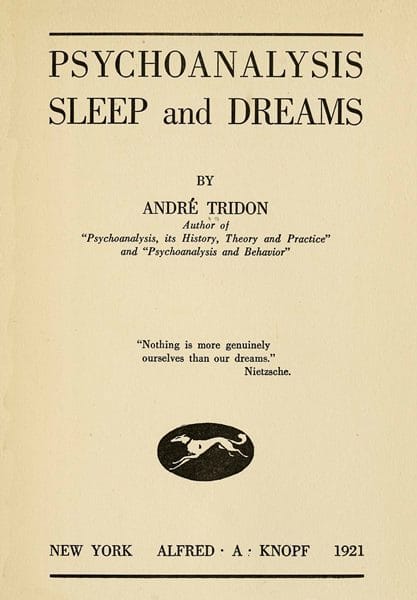
In 1917, when psychoanalysis was still fighting for legitimacy in American medicine, André Tridon made a daring argument: our nights are not escape from waking life, but its essential complement. Dreams are not random neural firings but revelations of the unconscious mind, the mechanism by which repressed wishes find fulfillment and the sleeping mind works through what waking consciousness refuses to acknowledge. Tridon draws on Freudian doctrine while extending it into territories the master himself had not explored, examining how unconscious desires manifest in nightmares, sleeplessness, and the peculiar psychology of modern life. The book gains particular edge from its engagement with then-contemporary anxieties: the trauma of war hysteria and what Tridon, with characteristic boldness, calls "comstockery", the suffocating prudery of Victorian morality. H.L. Mencken praised these chapters as "acute and constructive," and the New York Medical Journal called Tridon's presentation of psychoanalysis admirable. For readers curious about the origins of our understanding of sleep and dream, this early work offers a fascinating window into an era when these ideas were still radical, dangerous, and new.
Editions
Link to this book
Add a free, dofollow link to Lex on your blog, forum, syllabus, or reading list.

<a href="https://lex-books.com/book/psychoanalysis-sleep-and-dreams-273b37fe-6e6d-46a3-abd3-2f4e05818854"><img src="https://lex-books.com/badges/read-on-lex.svg" alt="Read Psychoanalysis, Sleep and Dreams by André Tridon free on Lex" width="160" height="40"></a>[](https://lex-books.com/book/psychoanalysis-sleep-and-dreams-273b37fe-6e6d-46a3-abd3-2f4e05818854)[url=https://lex-books.com/book/psychoanalysis-sleep-and-dreams-273b37fe-6e6d-46a3-abd3-2f4e05818854][img]https://lex-books.com/badges/read-on-lex.svg[/img][/url]Read Psychoanalysis, Sleep and Dreams by André Tridon free on Lex: https://lex-books.com/book/psychoanalysis-sleep-and-dreams-273b37fe-6e6d-46a3-abd3-2f4e05818854Cite this book
Reading this edition for a paper or guide? Copy a citation.
Tridon, André. Psychoanalysis, Sleep and Dreams. Lex, lex-books.com/book/psychoanalysis-sleep-and-dreams-273b37fe-6e6d-46a3-abd3-2f4e05818854.Tridon, A. (n.d.). Psychoanalysis, Sleep and Dreams. Lex. https://lex-books.com/book/psychoanalysis-sleep-and-dreams-273b37fe-6e6d-46a3-abd3-2f4e05818854Tridon, André. Psychoanalysis, Sleep and Dreams. Lex. https://lex-books.com/book/psychoanalysis-sleep-and-dreams-273b37fe-6e6d-46a3-abd3-2f4e05818854.