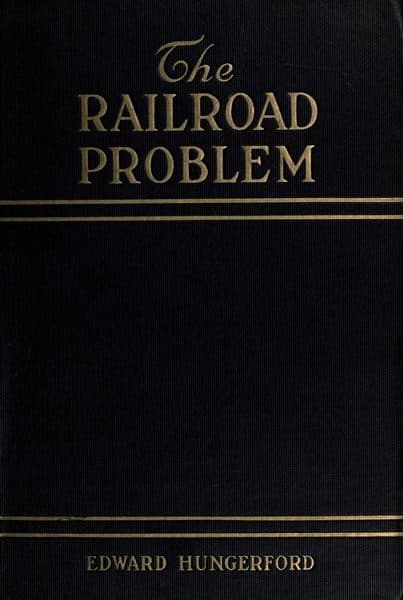
Our Railroads To-Morrow
Our Railroads To-Morrow
In the aftermath of the Great War, America's railroads faced an existential crisis. Edward Hungerford opens his urgent account with a striking metaphor: the railroad, that engine of American commerce and expansion, had become a Frankenstein, an infrastructure so vital yet so neglected that it now threatened to collapse under its own weight. Hungerford systematically diagnoses a system in decay: postwar labor turmoil, escalating operational costs, and creeping obsolescence threaten to strangle the very arteries that made modern America possible. His analysis spans from the struggling New England lines to the more robust Western systems, painting a granular portrait of regional failure and disparity. What emerges is more than historical documentation. It is a cri de cœur for reform before it is too late, arguments about nationalized service, efficiency standards, and the moral obligation to preserve what previous generations built. For readers fascinated by infrastructure history, industrial decline, or the cyclical nature of American crisis, this remains a bracing, pertinent read.
Editions

Link to this book
Add a free, dofollow link to Lex on your blog, forum, syllabus, or reading list.

<a href="https://lex-books.com/book/our-railroads-to-morrow-576e6163-daf6-4d78-afa5-56c905f9fd8a"><img src="https://lex-books.com/badges/read-on-lex.svg" alt="Read Our Railroads To-Morrow by Edward Hungerford free on Lex" width="160" height="40"></a>[](https://lex-books.com/book/our-railroads-to-morrow-576e6163-daf6-4d78-afa5-56c905f9fd8a)[url=https://lex-books.com/book/our-railroads-to-morrow-576e6163-daf6-4d78-afa5-56c905f9fd8a][img]https://lex-books.com/badges/read-on-lex.svg[/img][/url]Read Our Railroads To-Morrow by Edward Hungerford free on Lex: https://lex-books.com/book/our-railroads-to-morrow-576e6163-daf6-4d78-afa5-56c905f9fd8aCite this book
Reading this edition for a paper or guide? Copy a citation.
Hungerford, Edward. Our Railroads To-Morrow. Lex, lex-books.com/book/our-railroads-to-morrow-576e6163-daf6-4d78-afa5-56c905f9fd8a.Hungerford, E. (n.d.). Our Railroads To-Morrow. Lex. https://lex-books.com/book/our-railroads-to-morrow-576e6163-daf6-4d78-afa5-56c905f9fd8aHungerford, Edward. Our Railroads To-Morrow. Lex. https://lex-books.com/book/our-railroads-to-morrow-576e6163-daf6-4d78-afa5-56c905f9fd8a.