Our Intellectual Strength and Weakness
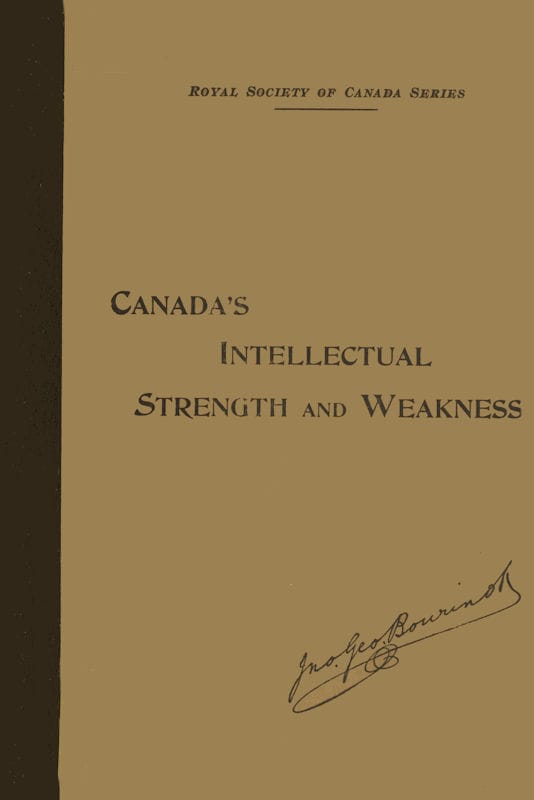
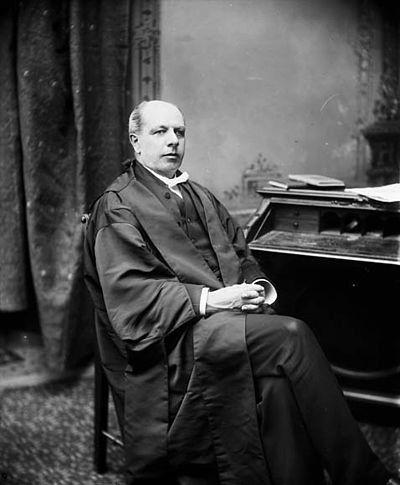
In 1893, a prominent Canadian parliamentarian stood before the Royal Society of Canada and delivered an audacious diagnosis: the young nation had an intellectual problem, and it needed to name it. John George Bourinot's presidential address is a remarkable time capsule of late Victorian anxiety about cultural identity, in which he measures Canadian literature, art, and education against the flourishing intellect of neighbouring New England. The result is neither pure self-congratulation nor hollow self-flagellation. Instead, Bourinot offers a nuanced reckoning with what Canada had achieved and what it conspicuously lacked, caught between British tradition and American commercial energy. Written in an age when Canadians still debated whether their culture would ever be more than a colonial echo, this address reveals the origins of a conversation that continues today: what does it mean to be an intellectual culture in the shadow of a larger neighbour? For readers interested in Canadian history, the evolution of cultural nationalism, or the anxieties that have always accompanied Canadian artistic life, Bourinot's sharp, measured reflections remain strikingly relevant.
Editions
Link to this book
Add a free, dofollow link to Lex on your blog, forum, syllabus, or reading list.

<a href="https://lex-books.com/book/our-intellectual-strength-and-weakness-6d650e44-5cd8-4d94-b631-7a73e3e486fd"><img src="https://lex-books.com/badges/read-on-lex.svg" alt="Read Our Intellectual Strength and Weakness by John George Bourinot free on Lex" width="160" height="40"></a>[](https://lex-books.com/book/our-intellectual-strength-and-weakness-6d650e44-5cd8-4d94-b631-7a73e3e486fd)[url=https://lex-books.com/book/our-intellectual-strength-and-weakness-6d650e44-5cd8-4d94-b631-7a73e3e486fd][img]https://lex-books.com/badges/read-on-lex.svg[/img][/url]Read Our Intellectual Strength and Weakness by John George Bourinot free on Lex: https://lex-books.com/book/our-intellectual-strength-and-weakness-6d650e44-5cd8-4d94-b631-7a73e3e486fdCite this book
Reading this edition for a paper or guide? Copy a citation.
Bourinot, John George. Our Intellectual Strength and Weakness. Lex, lex-books.com/book/our-intellectual-strength-and-weakness-6d650e44-5cd8-4d94-b631-7a73e3e486fd.Bourinot, J. G. (n.d.). Our Intellectual Strength and Weakness. Lex. https://lex-books.com/book/our-intellectual-strength-and-weakness-6d650e44-5cd8-4d94-b631-7a73e3e486fdBourinot, John George. Our Intellectual Strength and Weakness. Lex. https://lex-books.com/book/our-intellectual-strength-and-weakness-6d650e44-5cd8-4d94-b631-7a73e3e486fd.